

People have been vaporizing cannabis for 2,500 years. Not smoking it. Vaporizing it.
That is the thread linking a Siberian burial mound, a Jamaican coconut shell, and the dry herb vape on your coffee table: heat without flame, vapor without combustion.
The story starts with the Scythians, nomadic horsemen of the Eurasian steppe. Around the 5th century BCE, they crawled into felt tents, threw cannabis onto red-hot stones, and breathed the rising vapor.
The Greek historian Herodotus wrote it down around 440 BCE. His word for the result was not smoke. It was vapor.
The first recorded review of a cannabis high
Herodotus described the scene in his Histories: the Scythians cleansing themselves after a burial, building tents over heated stones.
"The Scythians then take the seed of this hemp and, crawling in under the mats, throw it on the red-hot stones, where it smoulders and sends forth such fumes that no Greek vapor-bath could surpass it," he wrote. "The Scythians howl in their joy at the vapor-bath."
That last line may be the world's first recorded review of a cannabis experience. The Scythians howled in their joy.
What matters technically is the method. Cannabis on hot stones in an enclosed space is convection. Heated air, not flame, releasing cannabinoids as vapor. The same principle inside a modern convection vaporizer, minus the temperature dial.
The shaman buried under 13 plants
The physical evidence is older than Herodotus and just as striking.
At the Yanghai Tombs in Xinjiang, China, archaeologists found the grave of a man, likely a shaman, dating to roughly 750 BCE. He was buried with nearly 800 grams of cannabis, about 1.75 pounds, and covered with a shroud of 13 whole cannabis plants.
These were seedless female plants, deliberately grown for potency. Dr. Ethan Russo led the chemical analysis. He confirmed the plants could produce THC, the main psychoactive compound, and were very similar to cannabis cultivated today.
It remains the oldest physical proof of cannabis grown for its mind-altering effects.
Two and a half centuries later, in the Pamir Mountains, the chemistry got sharper. A 2019 study in Science Advances examined 2,500-year-old wooden incense burners from high-altitude tombs at Jirzankal Cemetery.[1] The residue showed higher THC levels than wild cannabis, a match for psychoactive strains. People had burned cannabis on heated stones inside enclosed spaces to commemorate the dead.
The altar that ran on dung
This ancient discovery may be the cleverest, and the easiest to overlook. It sits at the root of vaporizer science.
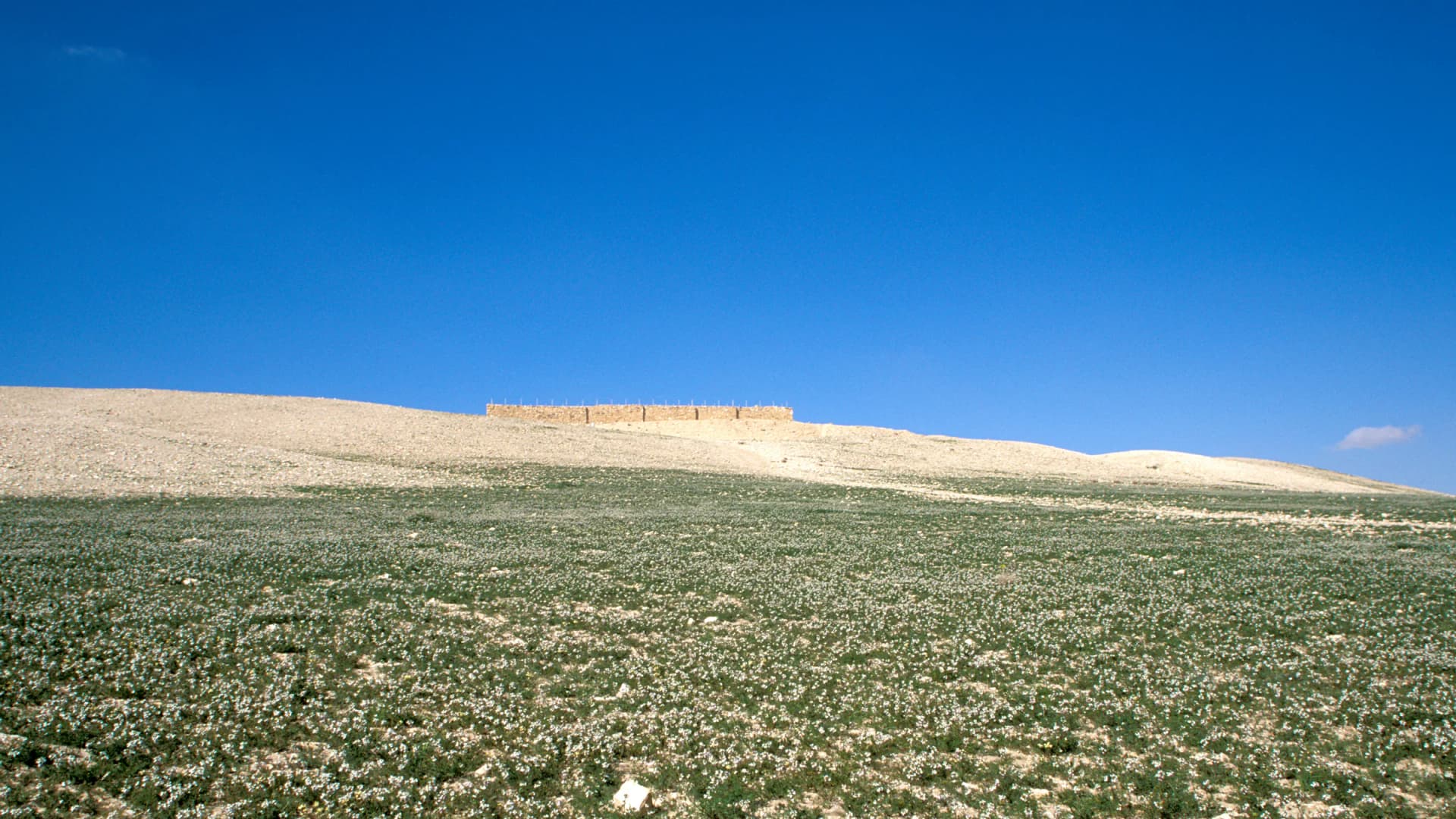
At the Tel Arad shrine in the Kingdom of Judah, two limestone altars yielded residue dated to 760 to 715 BCE. A 2020 study in the journal Tel Aviv found THC, CBD, and CBN on the smaller altar. The larger one held frankincense.
The cannabis was mixed with animal dung. That was not sloppiness. It was technology.
Dung burns slow and low. A low-temperature burn preserves THC for inhalation instead of destroying it in high heat. That is the exact principle behind modern low-temp vaporization: keep the heat down, keep the compounds intact.
The researchers called it "the first known evidence of a hallucinogenic substance found in the Kingdom of Judah."
The steam chalice is the living bridge
The line from ancient vapor ritual to modern vape did not vanish. It survives in Rastafari culture, in a device called the steam chalice.
Built from coconut shells, bamboo, clay, and water, the steam chalice heats cannabis indirectly. Flower sits in a ceramic bowl above a clay grate, warmed by natural coconut charcoal that never touches it. Water in the base cools and filters the vapor.
The result is terpene-rich vapor without combustion byproducts. Functionally, that is what a dry herb vaporizer does with electronics instead of charcoal.
As Leaf Magazine put it, the technique "preserves the integrity of the herb, offering a cleaner, smoother and more intentional experience."
For Rastafari, cannabis is the Tree of Life. Scholar Leonard Barrett wrote that "for Rastafari, the use of ganja was not merely social, it was sacramental." Reasoning sessions and multi-day Nyabinghi gatherings center on drumming, prayer, and herb around a fire. The structural echo of solstice bonfire traditions is hard to miss.
Ancient ritual, modern technique
Lay the old practices beside the new ones and the parallels stop feeling like coincidence.
| Ancient practice | Modern parallel |
|---|---|
| Scythian felt-tent vapor baths | Vaporizer sessions in enclosed rooms |
| Cannabis on heated stones | Convection vaporizer heating |
| Tel Arad low-temp dung mix | Temperature-controlled vaping |
| Rastafari steam chalice | Portable dry herb vaporizers |
| Cannabis with frankincense | Aromatherapy herb blending |
| Intention before ceremony | Set and setting |
The intentional-use movement borrows directly from this lineage. Cannabis ceremony guides now advise a five-to-seven-day break before a session, breath work, and slow inhales, no more than two or three per round, followed by silent sitting.
That mirrors how a vaporizer rewards patience. Temperature stepping, starting around 330°F and climbing, is a staged, deliberate escalation rather than a single burst of combustion. For a longer look at how the hardware arrived here, see our history of vaporizers.
Why the solstice, and why now
Cannabis reaches peak growth around the summer solstice in northern climates, which made it a natural centerpiece for midsummer abundance.
The 2026 solstice falls on Sunday, June 21. Culture is leaning into the timing. MARY Fest 2026 runs its Summer Solstice Edition on June 19 in Bushwick, Brooklyn, a deliberate shift from the 4/20 stoner holiday toward a seasonal celebration.
The law is moving too. President Trump signed an executive order in December 2025 directing the expedited rescheduling of marijuana.[3] On April 23, 2026, the Justice Department announced that FDA-approved marijuana products and state-licensed medical marijuana would move to Schedule III, effective April 28.[4]
A broader rescheduling hearing before an administrative law judge is set for June 29, 2026, eight days after the solstice. The order does not create a religious exemption for cannabis. But a parallel shift hints at where things could go: in May 2025, the DEA approved a Washington State church's petition to use ayahuasca in religious ceremonies, the first such exemption granted without a lawsuit.
Why this matters
If you vape cannabis, you are not using a gadget that arrived with lithium batteries. You are practicing a method humans have refined for two and a half millennia.
The ancients figured out what we relearned with thermostats: keep the heat low, skip the flame, and the plant gives you more. Cannabis cultivation itself goes back more than 10,000 years, by the way.[2] The vapor came later. The Scythians howled in their joy at it.
This solstice, that is a worthy thing to think about between draws.