


The federal hearing on moving all cannabis to Schedule III ended July 15 in Arlington, Virginia. Nothing changed on dispensary shelves. Adult-use flower, concentrates and cannabis vape cartridges remain Schedule I drugs. The only cannabis that has moved is medical product covered by qualifying state licenses, which shifted to Schedule III on April 28, 2026.[1]
The hearing's close is a procedural milestone, not an effective date. Here is what happens next, and what it means for prices, flower and vaporizer hardware.
August 17 is the next date that matters
Chief Administrative Law Judge Derek C. Julius set one deadline in his July 16 post-hearing order. Designated parties may file briefs of up to 50 pages by August 17, 2026. Proposed transcript corrections are due the same day.[2]
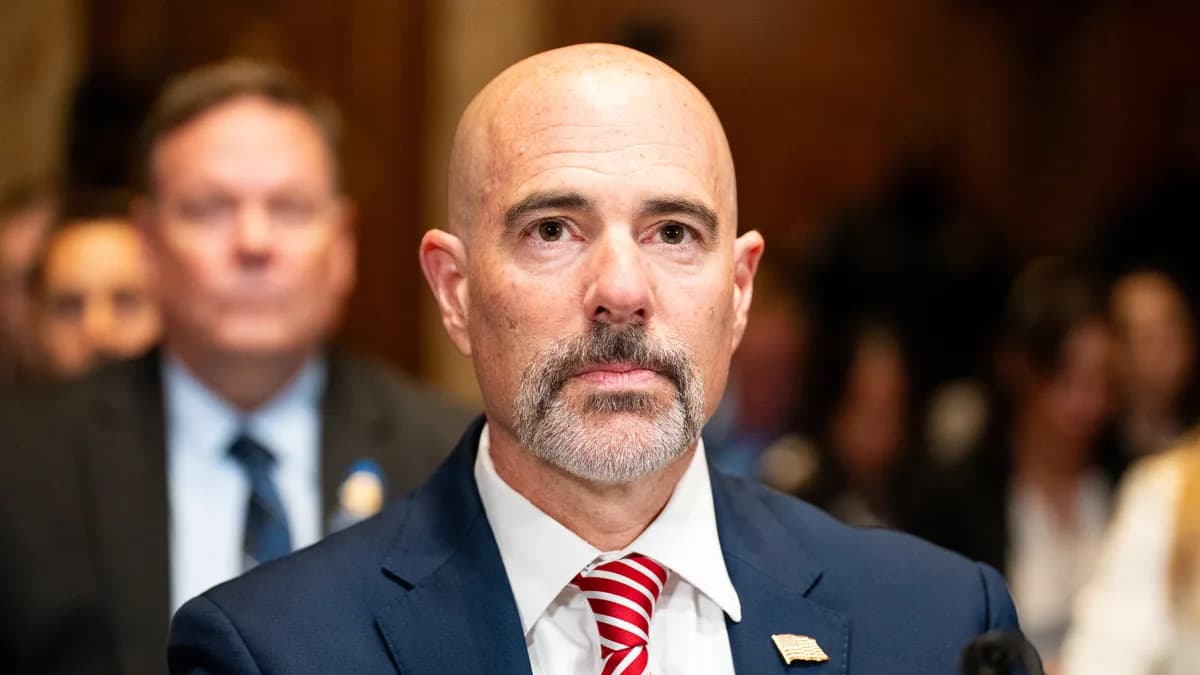
Photo: Bill Clark CQ Roll Call/Newscom
DEA Administrator Terrance Cole appears before a Senate subcommittee in the Dirksen Senate Office Building in Washington in May 2026.
Filing is optional. Julius wrote that a brief is a "nonmandatory submission" and that no party will be penalized for skipping it.[2]
After that, Julius prepares a recommended decision. He gave no date for it. The regulations say "as soon as practicable." Parties then get 20 days to file exceptions. The final call belongs to DEA Administrator Terrance Cole, not Julius. Any final rule would ordinarily take effect at least 30 days after publication in the Federal Register.[7]
The hearing itself ran from June 29 to July 15. The federal government argued for broader Schedule III placement. All seven outside participants Cole selected, including Smart Approaches to Marijuana and the states of Nebraska, Idaho and Indiana, opposed it.[7] We covered the testimony from those opponents in our earlier hearing coverage.
Oct. 6, 2022
President Joe Biden directed HHS and DOJ to review marijuana scheduling.
Aug. 29, 2023
HHS recommended moving marijuana to Schedule III.
May 21, 2024
DOJ published the proposed rule to reschedule marijuana.
Jan. 13, 2025
An administrative law judge stayed the original hearing.
Dec. 18, 2025
President Donald Trump ordered expedited completion of the process.
Apr. 28, 2026
The partial medical-cannabis Schedule III order took effect.
July 15, 2026
The broader rescheduling hearing concluded at DEA headquarters.
Aug. 17, 2026
Post-hearing briefs and transcript corrections are due.
Medical is Schedule III. Adult-use is not.
Acting Attorney General Todd Blanche signed the April order that created today's two-tier system. It covers FDA-approved marijuana products and cannabis covered by qualifying state medical licenses. The final order is blunt about everything else: "Any form of marijuana other than in an FDA-approved drug product or marijuana subject to a state medical marijuana license remains a schedule I controlled substance."[1] We broke down that order when it landed in April.
Even the medical tier is not automatic. The Washington State Liquor and Cannabis Board warned licensees in a June 16 bulletin that the state's unified adult-use licensing system may leave its businesses outside the carve-out. "Federal rescheduling in its current form does not appear to apply to Washington's cannabis licensees due to the statutory framework predominately regulating recreational cannabis," the board said.

Photo: VapeExperts/AI
Katharine Neill Harris, drug policy fellow at Rice University's Baker Institute, described the bind for businesses that sell in both markets. "There is now a gray zone in which some of their activity is moving into Schedule III and some of it is not," she said. "This matters for tax purposes, as activities involving Schedule III substances can take advantage of standard business tax breaks, while those involving Schedule I substances cannot."[8]
Tax relief does not mean lower prices
The April order freed qualifying medical licensees from Section 280E, the tax rule that bars ordinary business deductions for Schedule I and II activity. Whitney Economics estimated cannabis businesses paid $2.24 billion in excess federal tax for 2025 because of 280E, though that is a private analyst figure.
Jonathan Caulkins, a drug policy researcher at Carnegie Mellon University, told MJBizDaily the change matters. "280E does not apply to Schedule 3. That's kind of a big deal. This will greatly reduce the cost structure of the industry, specifically the retailers," he said.[9]
But no federal rule requires operators to pass savings to customers. Businesses can cut prices, repay debt, restore margins or reinvest in stores and staff. The U.S. Treasury has said guidance is coming on how mixed medical and adult-use businesses should allocate expenses, and it has signaled 280E may still apply to the Schedule I portion of a mixed business.[4] Until that guidance lands, operators cannot even calculate their savings, let alone promise cheaper flower.
Wholesale data suggests scheduling is not the main force on prices anyway. National spot prices for flower have moved within a narrow band since 2024.
U.S. wholesale cannabis spot price snapshots
Source: Cannabis Benchmarks
These are selected snapshots per pound, not annual averages. The narrow 2024 to 2026 range points to supply and competition, not federal scheduling, as the main price drivers.
Vapes and flower stay in their lanes
The proceeding concerns the scheduling of cannabis, not hardware. A vaporizer, a battery or a heating element is not rescheduled marijuana. A medical cartridge covered by a qualifying license can fall within the Schedule III category. The identical cartridge sold through an adult-use license stays Schedule I. Flower works the same way. The license lane decides, not the product format.
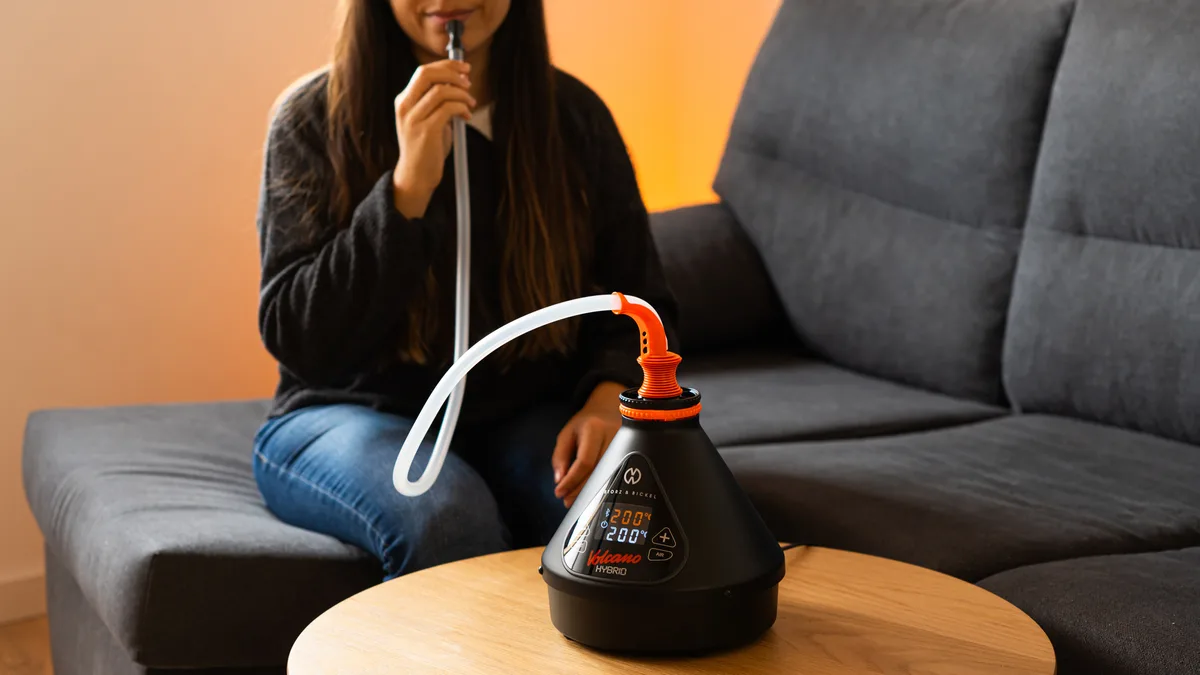
Photo: VapeExperts
A woman uses a Storz & Bickel Volcano Classic vaporizer at home. With cannabis still Schedule I after the DEA hearing, any tax relief for the industry is unlikely to translate into lower prices for consumers.
Rescheduling also does not turn dispensary cartridges into federally authorized inhalation products. The FDA has stated: "No vaping product has been approved by the FDA for therapeutic uses or authorized for marketing by the FDA."[5] Consumers should not expect national vape standards, interstate cartridge brands or insurance coverage from a Schedule III move. The Congressional Research Service concluded that meaningful federal financial and legal risks would remain for the industry even after Schedule III placement.[6]
Interstate shipping stays closed too. Schedule III is not descheduling, and moving cannabis across state lines would still run into DEA registration rules, FDA drug law and state import bans.[6]
Courts could still scramble the medical side
Three petitions challenging the April medical order are consolidated in the D.C. Circuit under case numbers 26-1106, 26-1130 and 26-1136. Petitioners include drug-testing interests, Smart Approaches to Marijuana, pharmaceutical interests and states including Nebraska and Indiana.[3] A drug-testing association and MMJ entities asked the court on June 9 to stay the order. DOJ opposed on July 2, disputing the challengers' standing.[3]
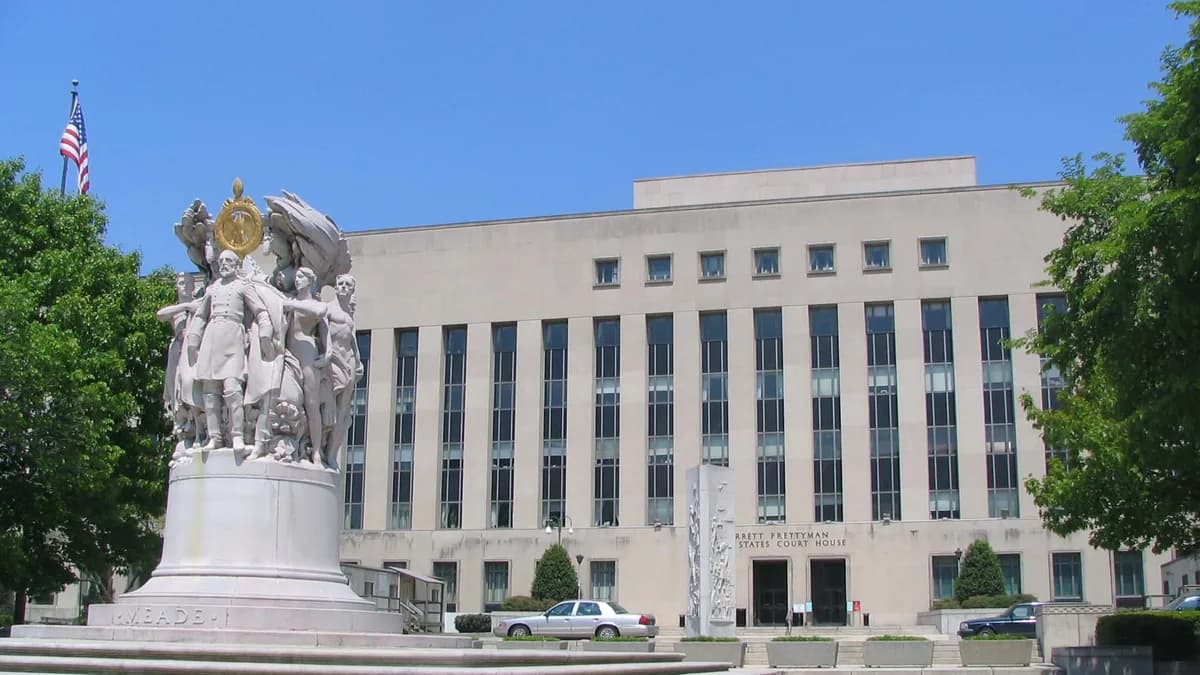
The E. Barrett Prettyman U.S. Courthouse in Washington stands behind the George Meade Memorial. Federal courts could still shape the medical side of cannabis scheduling.
A stay or an adverse ruling could disrupt the medical tier even while DEA weighs the broader rule. That leaves three scenarios on the table: a broad Schedule III rule, a long-running two-tier system, or a medical order partly unwound in court.
Rachael Rzasa Lynn, a pain medicine physician at the University of Colorado Anschutz, sees the whole debate through one common error. "I think this is the big misunderstanding many people have around rescheduling: It won't eliminate that need to get federal approval of the product."