

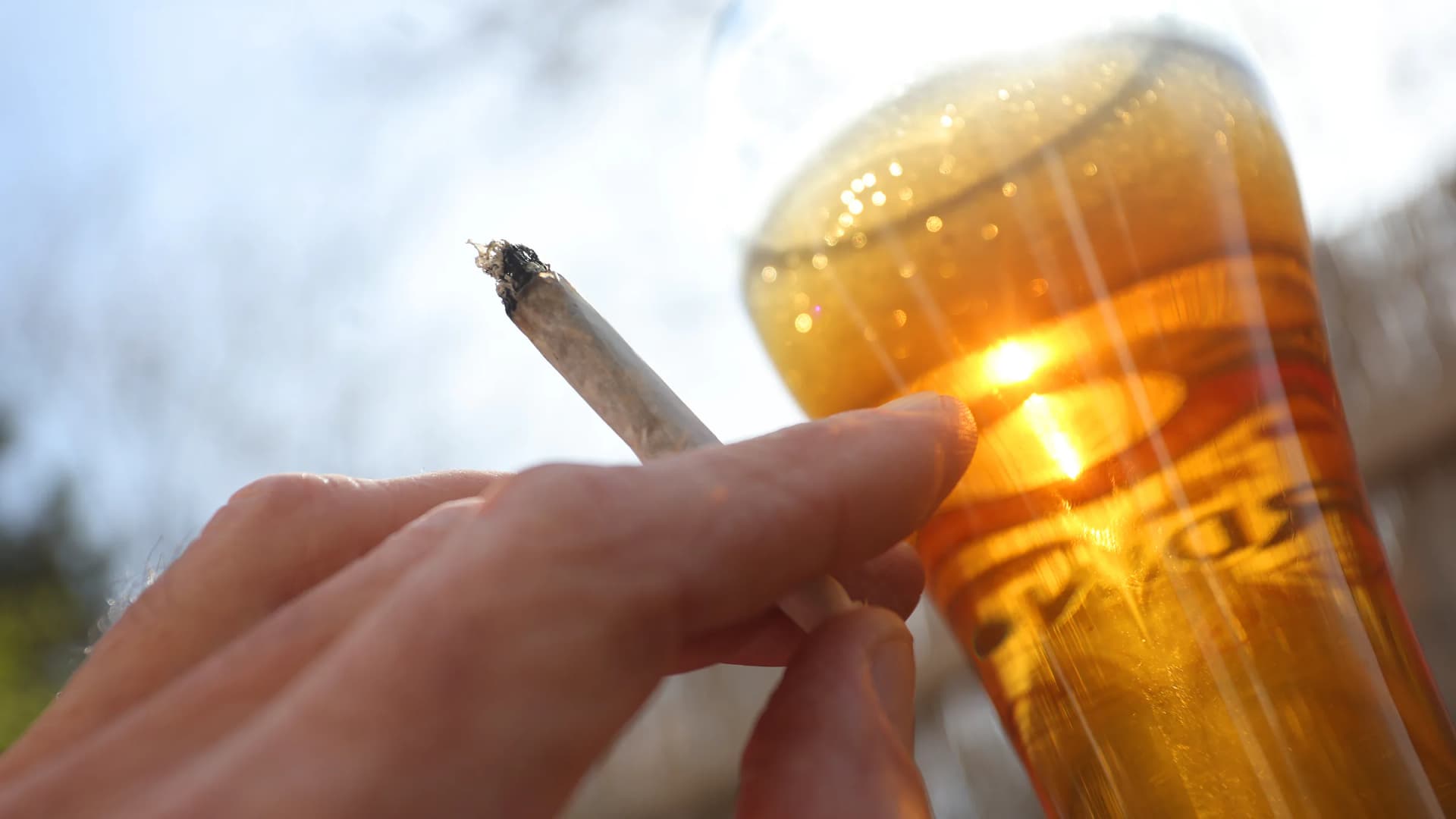
For the first time in recorded US history, more adults use cannabis daily than drink alcohol daily. The crossover happened in 2022, and the gap has widened since.
That shift matters for one group in particular: adults aged 35 to 50, the core "dad" demographic, where cannabis and alcohol have now converged to nearly identical levels.
In 2022, the National Survey on Drug Use and Health counted 17.7 million daily or near-daily cannabis users versus 14.7 million daily drinkers among US adults. Cannabis pulled ahead for the first time, a finding quantified by Jonathan Caulkins of Carnegie Mellon University in a 2024 study in the journal Addiction.[2]
"It is striking that high-frequency cannabis use is now more commonly reported than is high-frequency drinking," Caulkins said.
Dads sit right at the crossover point
The data on middle-aged adults is the heart of this story, the people most likely to be parents.
A 2025 University of Michigan study in Addiction broke the numbers down by age.[1] Among adults aged 35 to 50, daily cannabis and daily alcohol use have converged at 7.5% versus 7.8%.
Among younger adults aged 19 to 30, cannabis already won outright: 10.4% use it daily versus 3.6% for alcohol, nearly three times the rate.
"Early midlife adults have had a convergence, but not yet a crossover," wrote lead author Megan Patrick.
Men drive much of this. Federal data shows men use cannabis at higher rates than women across every age group, with men holding roughly 1.5 times the odds of use.
Drinking is at a 90-year low
While cannabis climbs, alcohol is falling fast.
A Gallup poll from August 2025 found only 54% of US adults drink alcohol, the lowest figure in Gallup's nearly 90-year trend. That is down from 62% in 2023.
Among those who still drink, weekly consumption dropped to 2.8 drinks, the lowest since 1996. Men's drinking fell 5 points to 57% since 2023.
For the first time, a majority of Americans (53%) say moderate drinking is bad for your health, up from 28% in 2018.
The sober curious wave hits middle age
The cultural backdrop is a broad pullback from alcohol.
A Circana and NCSolutions survey found nearly 1 in 2 Americans are trying to drink less in 2025, a 44% jump since 2023. One quarter of US adults drank no alcohol at all in 2024.
The top reason people cut back: physical health, cited by 62%. Saving money and mental health followed.
This is the mindset behind a quieter swap. People who once cracked a beer after work are reaching for something else.
THC drinks give dads a familiar ritual
The fastest-growing replacement is the cannabis beverage.
Cannabis beverage sales in regulated markets grew 78% year over year in 2025, outpacing every other category by a factor of three, according to BDSA data cited by Green Rush News. Combined regulated and hemp-derived sales approached $4 billion annually by early 2026.
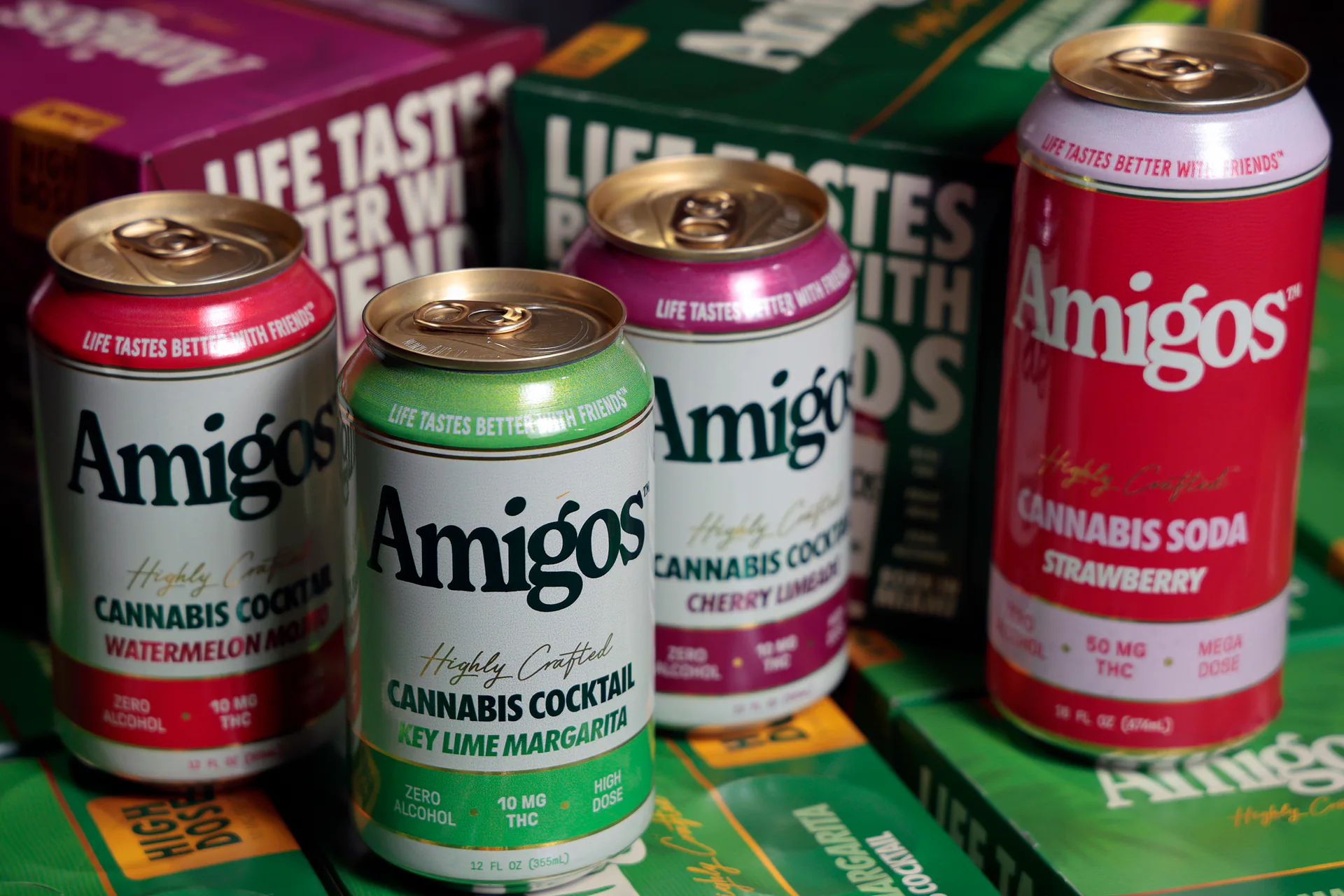
Photo: Amy Beth Bennett/South Florida Sun Sentinel/TNS/Newscom
Amigos cannabis-infused cocktails and sodas in 10mg and 50mg THC doses per can are shown in the warehouse at Funky Buddha Brewery in Oakland Park, Fla., on Thursday, April 16, 2026.
These drinks skew older, aged 35 to 55, and slightly more affluent than the typical dispensary shopper. Over 40% had not bought any cannabis product in the prior year before trying a THC drink.
And 4 in 5 beverage consumers report cutting their alcohol intake.
The appeal is the ritual. A can to open, a drink to sip, no need to identify as a cannabis user. For the consumer who never liked smoking, beverages, edibles, and other consumption methods lower the barrier.
The lab evidence is early but real
A Brown University study in November 2025 offered the first controlled experimental evidence of substitution.[4]
Participants given cannabis at 3.1% THC drank 19% less alcohol. At 7.2% THC, alcohol intake fell 27%.
The researchers were cautious. They said cannabis "may reduce alcohol consumption in the lab, but more study is warranted before cannabis can be considered a tool to help people cut back or stop drinking altogether."
A real caveat: no one surveyed dads directly
No published survey asks fathers whether they swapped beer for cannabis. This story is built from converging data, not a single finding.
Gallup itself pushed back on a simple substitution story, noting that marijuana use "has been fairly steady over the past four years and thus doesn't appear to be a factor in people choosing not to drink alcohol" at the population level. That caveat may not capture the THC beverage boom, but it is worth holding in mind.
The health picture is not one-sided
Cannabis avoids alcohol's acute toxicity and calories. It is not risk-free.
SAMHSA notes that roughly 1 in 10 cannabis users develop an addiction, rising to 1 in 6 for those who start before age 18. Marijuana use disorder is rising among adults 26 and older, now affecting 20 million Americans.
There is a household dimension too. NIH-funded research found over 6 million US children live with a parent who has cannabis use disorder.
And kids notice. A Washington State University study of teens aged 13 to 17 found 32% believed their father used cannabis[5], versus 25% for their mother. Closeness to a cannabis-using parent raised a teen's own favorable attitudes toward use.
What this means for you
If you are part of the dad demographic and curious about swapping a nightcap for cannabis, you are not alone. The data shows your peers making the same move.
But "healthier than alcohol" does not mean "harmless." Daily use carries real addiction and mental health risks, and your kids are watching more closely than you think. Treat it the way you would treat drinking around the house.
What happens next
A regulatory cloud hangs over the THC drink boom. A federal redefinition of hemp, closing the 2018 Farm Bill loophole, is set to take effect November 12, 2026, and could restrict the hemp-derived beverages sold nationwide.
Bills from Sen. Rand Paul, Sen. Ron Wyden, and Sen. Jeff Merkley aim to preserve access, some with new rules like a 5mg per serving cap and a 21-and-over age gate. How that fight resolves will decide whether the can in dad's hand stays on the shelf.