

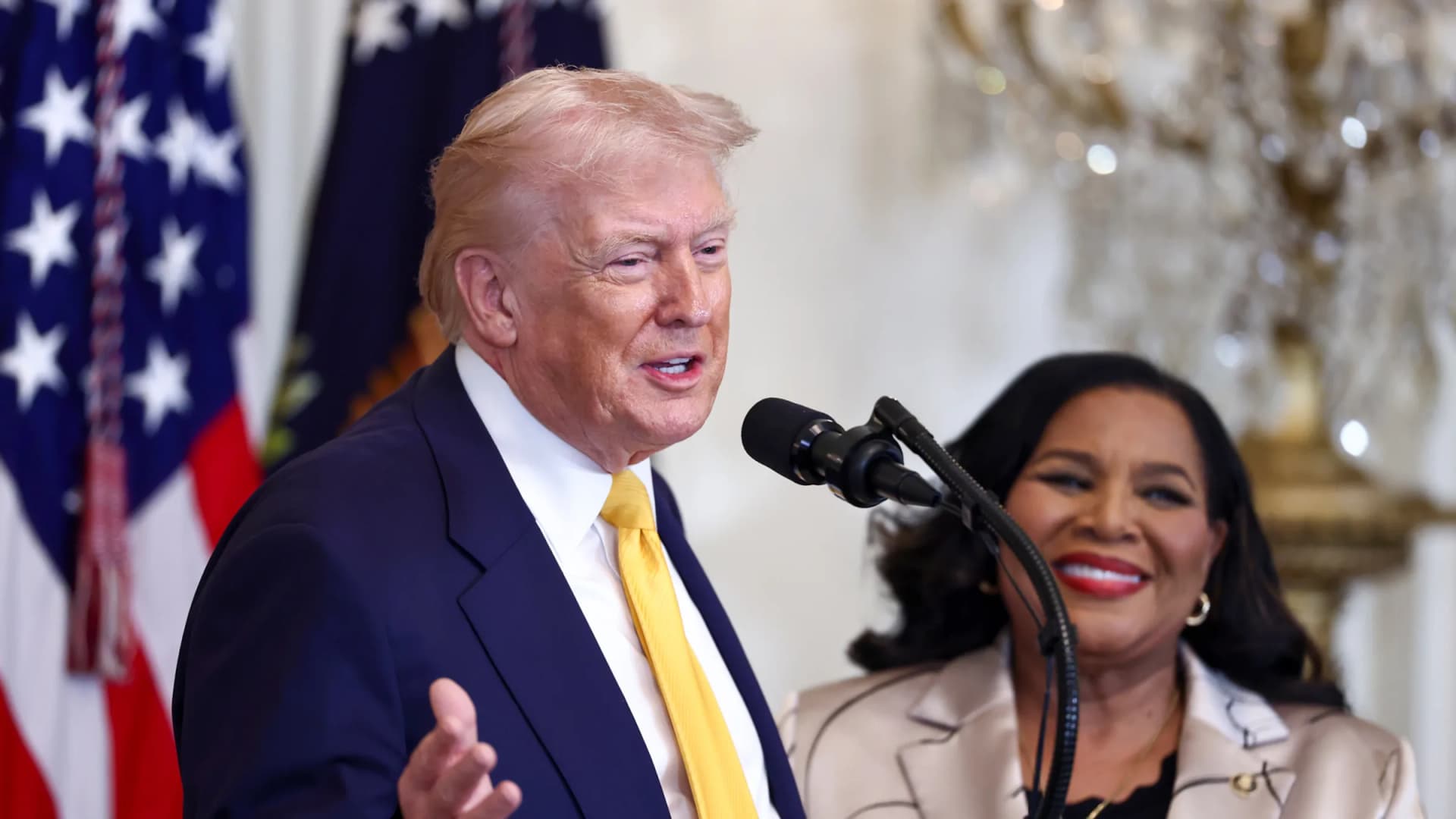
President Donald Trump commuted the federal marijuana sentences of Jerry Haymon IV and Kevin Harden on September 3, according to reporting by Marijuana Moment and High Times.[2] The two men were part of a clemency batch covering 30 people.
Reuters confirmed the 30-person batch and reported that Trump has granted pardons or commutations to more than 1,700 people since his second term began in January 2025.[1] White House pardon adviser Alice Marie Johnson announced the grants publicly.
"Yesterday was a powerful day for second chances," Johnson wrote, thanking Trump for "granting clemency and pardons to 30 deserving individuals whose cases we carefully reviewed and brought forward."
The clemencies arrive while the bigger question, whether cannabis moves to Schedule III, remains open. As of September 9, the Drug Enforcement Administration had issued no final rescheduling decision.
A 10-year sentence and a 30-year sentence, both cut short
Haymon was convicted of conspiring to distribute at least 1,000 kilograms of marijuana, shipped from California to Virginia, Maryland and Washington, D.C. between 2013 and 2017, according to High Times' review of court records. He received 120 months, the statutory mandatory minimum, and had reportedly spent about a year in home confinement when Trump commuted the remainder.

Photo: Jérémy-Günther-Heinz Jähnick/Wikimedia Commons (CC BY-SA 3.0)
A gray electronic monitoring bracelet is strapped around a person's ankle above a striped sock and a black and blue sneaker. Such devices are often used to supervise people released from prison early.
Harden was sentenced in 2013 to 360 months, 30 years, plus five years of supervised release in another 1,000-kilogram conspiracy case. A court rejected his sentence-reduction request in February 2025. His co-defendant James Romans received clemency from Trump on the last day of Trump's first term in January 2021.
One gap remains in the record: the White House has not published clemency warrants naming either man, so their identification rests on Marijuana Moment's original report and High Times' court-record review.
Clemency changes two lives, not the law
The commutations shorten two sentences. They do not erase either conviction, create a resentencing path for other federal marijuana prisoners, or expand consumer access in any state.
Two earlier administration actions speak more directly to where rescheduling stands. Trump signed Executive Order 14370 on December 18, 2025, directing the attorney general to complete Schedule III rulemaking "in the most expeditious manner."[5]
DEA itself argued for rescheduling in its August closing brief. But no public statement from Trump, the White House or DEA has connected the two commutations to the rescheduling proceeding.
Two Schedule III tracks, neither finished
Federal cannabis policy now runs on two tracks. In April, Acting Attorney General Todd Blanche signed an order, effective April 28, that placed two narrow categories in Schedule III: marijuana in an FDA-approved drug product, and marijuana covered by a qualifying state medical license.[4] Adult-use cannabis stayed in Schedule I.
Photo: VapeExperts/AI
The broader proceeding covers everything the April order left out. DEA held an 11-day evidentiary hearing from June 29 to July 15, and the parties filed closing briefs on August 17.
DEA's brief stated the agency's position directly. "The government agrees: marijuana should remain a controlled substance but should be transferred from Schedule I to Schedule III," it stated, asking Chief Administrative Law Judge Derek C. Julius to "expeditiously recommend" the transfer.[3]
May 21, 2024
DOJ and DEA published the proposed rule to move marijuana from Schedule I to Schedule III.
Dec. 18, 2025
Trump signed Executive Order 14370 directing expedited completion of the rulemaking.
Apr. 28, 2026
A limited order took effect, placing FDA-approved and qualifying state-medical marijuana in Schedule III.
June 29, 2026
DEA opened its 11-day evidentiary hearing on broader rescheduling.
Aug. 17, 2026
DEA and opposing parties filed closing briefs.
Sept. 9, 2026
No recommended decision from the administrative law judge had been made public.
Julius corrected the hearing transcript on August 20 but had not issued his recommendation as of September 9.[8] His recommendation will be advisory. DEA Administrator Terrance Cole makes the final call, and neither man operates under a statutory deadline. The White House's "expeditious" language sets a political expectation, not a completion date.
The courts could still unwind the April order
The medical-only order faces three consolidated challenges in the D.C. Circuit, filed by Smart Approaches to Marijuana, drug-testing groups, Nebraska, Indiana, treatment organizations and drug developer MMJ International Holdings. We covered the litigation in detail in our earlier report on the D.C. Circuit test.
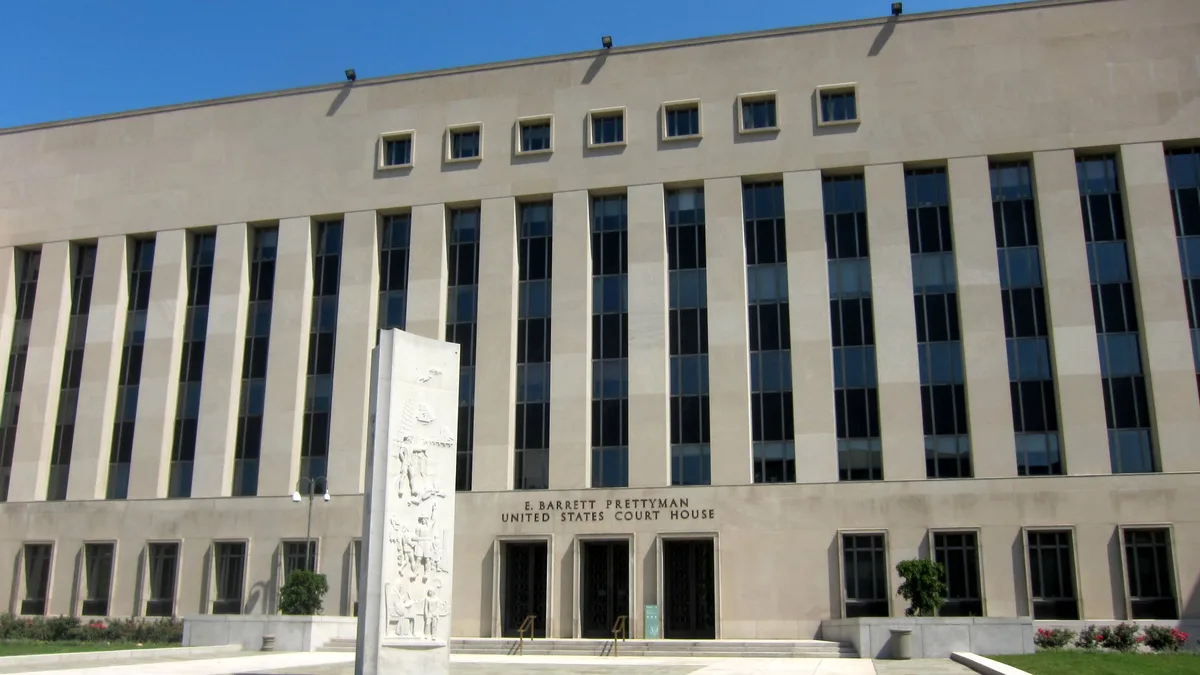
Photo: AgnosticPreachersKid/Wikimedia Commons (CC BY-SA 3.0)
The E. Barrett Prettyman U.S. Courthouse in Washington stands behind a carved stone monument on a sunny day. The federal courts here could weigh challenges to the April cannabis order.
The challengers argue DOJ misused a treaty provision to skip normal rulemaking. DOJ counters that the statute allows scheduling by order to satisfy the 1961 Single Convention, and that the petitioners have shown no concrete injury. Briefing on a stay request closed July 17; the court had ruled on neither the stay nor the merits as of September 8.
What Schedule III would and would not change
Even a broad move to Schedule III would not legalize cannabis federally. Nonmedical production, distribution and possession would remain prohibited, dispensaries would not become pharmacies, and there would be no automatic prescription pathway for flower, concentrates or cannabis vapes.
The clearest near-term effect is tax. Internal Revenue Code Section 280E denies deductions to businesses trafficking in Schedule I or II substances, so Schedule III status could improve after-tax cash flow for qualifying operators in a roughly $30 billion state-regulated industry.[9]

Photo: VapeExperts/AI
The scope question matters commercially. Vanderbilt law professor Robert Mikos notes that in Colorado, adult-use sales made up nearly 90% of the state's $1.3 billion market in 2025, up from 66% about a decade earlier, meaning a medical-only federal approach leaves most of the market in Schedule I.[6]
Researchers see a separate catch. Writing in the New England Journal of Medicine, Rebecca L. Haffajee, Mikos and Ziva D. Cooper cautioned that rescheduling "can accomplish its primary purpose of generating clinically meaningful data only if the U.S. Congress and executive branch allocate more funding for doing that work. Rescheduling does not provide that funding."[7]
The administration stopped at medical marijuana in April
The administration had a chance to go broad in April and limited Schedule III to medical categories instead. Mikos reads that choice as significant. "Trump himself has never called for relaxing federal controls on adult-use marijuana," he wrote.
For Haymon and Harden, September 3 ended years of federal incarceration. For everyone else, the pieces are still in motion: a judge's pending recommendation, an administrator's final call, and an appeals court weighing whether the April order survives at all. Mikos offers a skeptical assessment of where that leaves things: "In short, DEA's proposal to reschedule all marijuana may never become law under the current administration."