

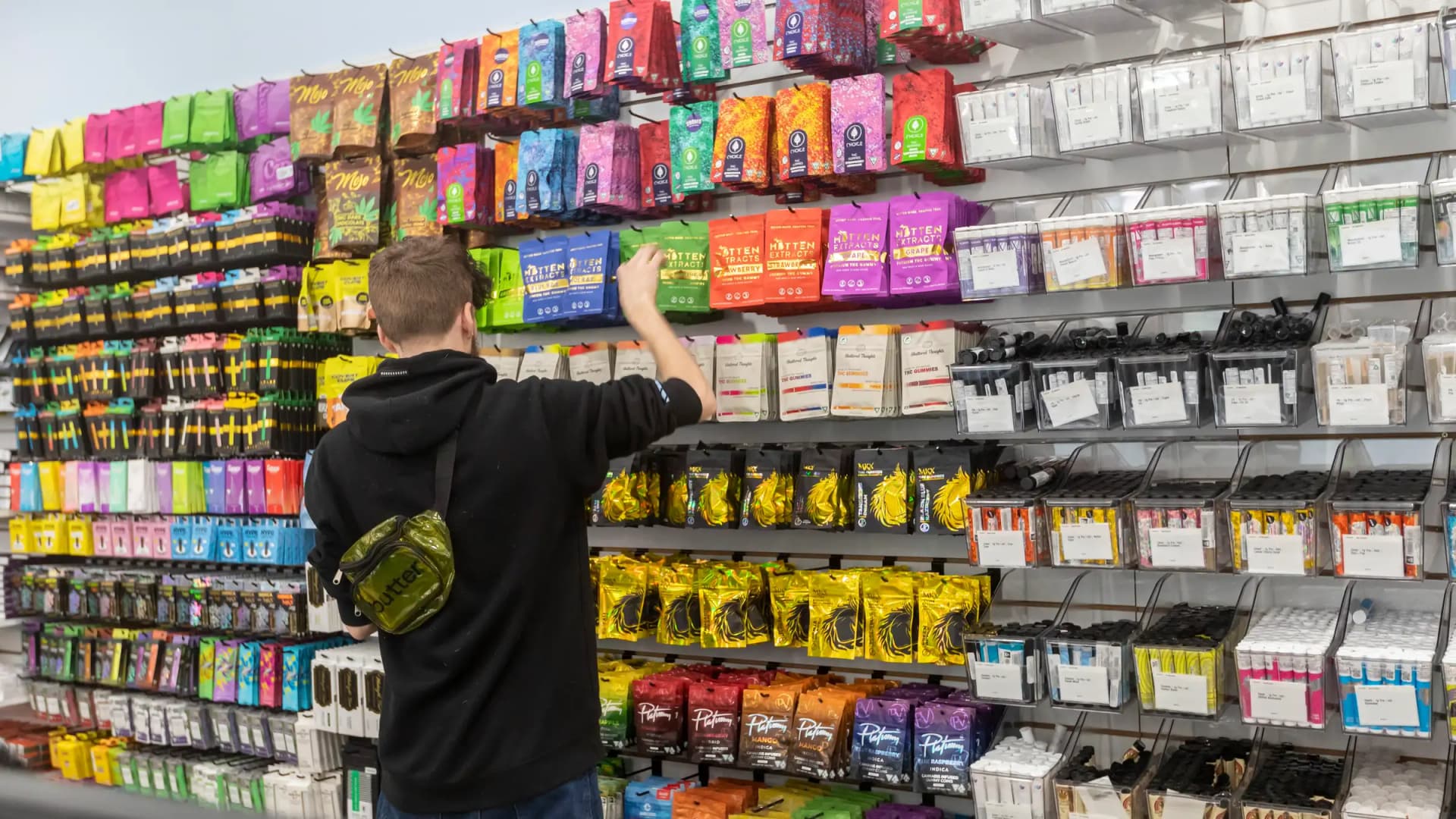
Cannabis consumers are cooling on the Trump administration's marijuana record. In a NuggMD survey of 510 consumers in state-legal markets, conducted July 9 to July 15, 48% approved of the administration's cannabis actions. That is down 25 percentage points from 73% in the previous quarterly wave.[1]
The drop follows a three-month stretch in which the government moved FDA-approved cannabis drugs and state-licensed medical cannabis to Schedule III, held its hearing on the rest of the plant, and has announced no timetable for a final decision. We covered where the DEA process stood after the hearing closed in our earlier report.
Neutral, not hostile
The decline is not a swing to opposition. Only 13% disapproved of the administration's cannabis actions. The biggest bloc, 40%, said they were neutral or had no opinion. The poll's reported margin of error was plus or minus 4.34 points.
Consumer views of the administration's cannabis actions, July 2026
Source: NuggMD/Marijuana Moment, n=510
Tyler Elson, NuggMD's director of content, told Marijuana Moment the fall from the post-April high did not shock him. "I'm not surprised that support among consumers is down from the highs we saw after medical cannabis rescheduling. There have always been cannabis voters who draw a line between medical and recreational use," he said. Elson works for the poll's sponsor, and the results have not been confirmed by an independent pollster.
Industry commentator Shadd Dales pushed back on the gloomier readings of the numbers on July 22, arguing that approval and confidence in the government's timetable are different measures, and that a 40% neutral share is not the same as disapproval.
The earlier 73% approval figure came right after the April order that moved FDA-approved cannabis drugs and state-licensed medical cannabis to Schedule III. White House Press Secretary Karoline Leavitt said at the time that the administration acted because cannabis reform was "overwhelmingly popular."
The timetable splits consumers down the middle
A separate NuggMD survey of 1,063 consumers, run July 2 to July 6, asked whether broader rescheduling would be finished by the end of 2026. 52.5% said no, while 47.5% said yes.[6]

Photo: VapeExperts/AI
The "no" share sits only 2.5 points above 50%, less than the poll's plus or minus 3.01-point margin of error, so the result reads as an even split, not a firm majority. The two surveys used different respondents on different dates, so the disapproval and delay results cannot be tied to the same people.
Elson offered a second reading of the approval slide: "That or we're seeing consumers declare that they don't believe the DEA will get rescheduling done."
Blanche declines to name a date
In written answers published July 21 as part of his nomination to become permanent attorney general, Acting Attorney General Todd Blanche declined to commit to broader rescheduling. Asked by Sen. Alex Padilla (D-Calif.) about moving adult-use marijuana and reducing penalties, Blanche said he would "give the matter careful consideration after conferring with all relevant stakeholders, including DEA personnel."[2]
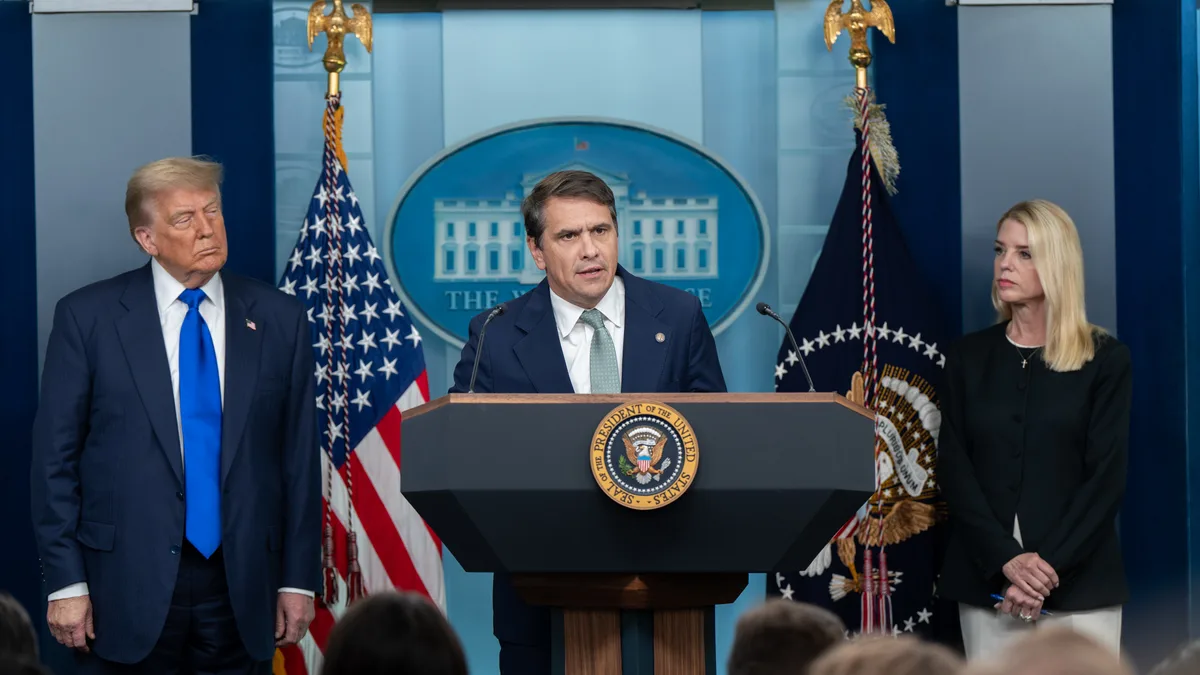
Photo: The White House/Wikimedia Commons (Public domain)
Deputy Attorney General Todd Blanche speaks at a podium in the White House press briefing room, flanked by President Donald Trump and Attorney General Pam Bondi. Blanche has declined to name a date for cannabis rescheduling.
Blanche defended the April medical action. "The Department of Justice delivered on President Trump's promise to expand Americans' access to medical treatment options," he said.
Where the rescheduling case stands
The DEA hearing on moving the rest of marijuana to Schedule III ran June 29 through July 15.[3] Chief Administrative Law Judge Derek C. Julius set August 17 as the deadline for optional post-hearing briefs, capped at 50 pages, and transcript corrections. No deadline has been announced for his recommended decision or for the DEA administrator's final action.
Oct. 2022
President Biden directed HHS and the attorney general to review marijuana federal scheduling.
Aug. 2023
HHS recommended moving marijuana from Schedule I to Schedule III.
May 2024
DOJ published the proposed Schedule III rule, drawing more than 42,000 public comments.
Dec. 2025
Trump signed an executive order directing expedited completion of the rulemaking.
April 2026
Blanche signed the order moving medical cannabis categories to Schedule III.
June 2026
DEA opened its expedited hearing on rescheduling the remainder of marijuana.
Aug. 2026
Post-hearing briefs and transcript corrections are due August 17.
The process history is tracked by Ohio State's Drug Enforcement and Policy Center.[4] Three consolidated petitions challenging the April order are pending in the D.C. Circuit, filed by Smart Approaches to Marijuana, the states of Nebraska and Indiana, and a group including treatment providers and drug developer MMJ International Holdings. The challengers argue DOJ improperly bypassed ordinary rulemaking procedures and unlawfully split the plant between two schedules.[5] A stay or an adverse ruling could add delay, though neither has happened.
Riana Durrett, director of the UNLV Cannabis Policy Institute, has cautioned that implementation will outlast any single decision. "It's both scientifically and legally very complicated, and that's another reason it will continue to take years to figure out how to legalize and regulate within our current federal structures," she said in June.
The scheduling outcome carries direct tax consequences. Under 26 U.S.C. §280E, businesses trafficking in Schedule I or II substances cannot take ordinary tax deductions. Qualifying Schedule III medical operators can. Adult-use-only operators, still in Schedule I, cannot.
Photo: VapeExperts/AI
A further question in the approval poll asked whether fuller legalization would change respondents' support for the administration. 54% of consumers said it would increase it. Of 510 respondents, exactly one said it would make them support the administration less.