

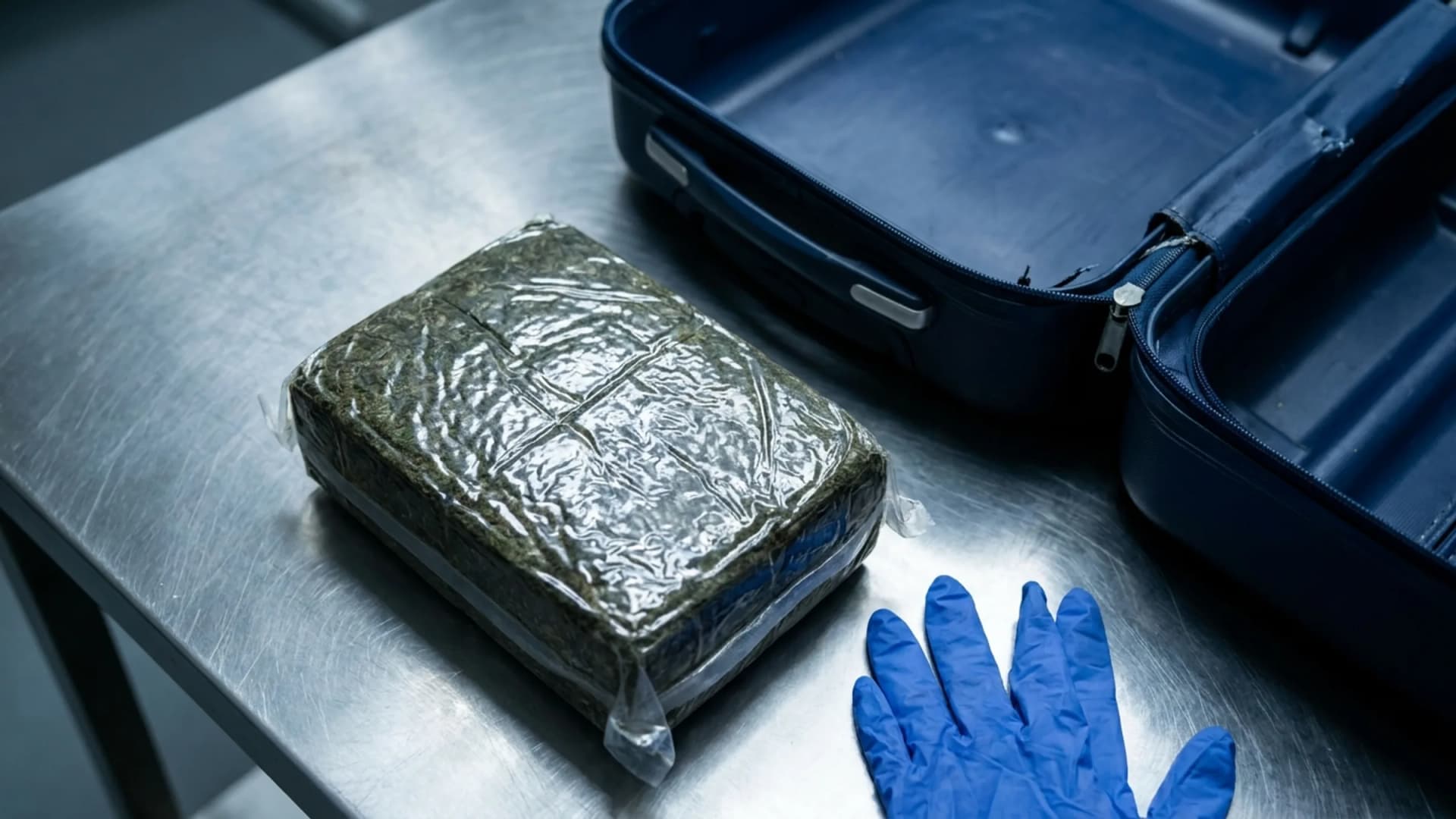
Six hundred cannabis couriers were arrested at UK airports in the first six months of 2026, all after flying in from Thailand. That pace would break last year's record of 976 arrests, which itself followed 801 in 2024 and just 142 in 2023.[1] Thailand's answer, in force since June 17, is a fine of 30,000 baht per kilogram and detention for anyone who cannot pay. Four years after Thailand delisted cannabis flower, its airports have become the choke point where a legal domestic market meets an illegal export boom.
Four out of five UK seizures trace to Thailand
The National Crime Agency says cannabis seized from air passengers rose from 2.1 tonnes in 2022 to more than 28 tonnes in 2025, and that four out of five cannabis seizures at UK airports now originate in Thailand.[1] Heathrow alone accounted for roughly 19 tonnes and 530 arrests in 2025; Manchester added about 5 tonnes and 145 arrests.[2]
Cannabis couriers caught arriving at UK airports from Thailand
Source: UK National Crime Agency
The air-passenger haul is only part of the picture. The Home Office counted more than 167,000kg of cannabis flower seized across all UK border channels in 2025, worth an estimated more than £2 billion and up 52% from 2024.[2] The courts have followed: 840 people were sentenced for importing a Class B drug in England and Wales in the year to June 2025, against 209 the year before, and 80% went to prison.[2]
Thai figures point the same way. Thai Customs logged 3,309 cannabis cases involving 37,210kg from October 2025 through June 2026. Nearly all were export cases, and the UK was the destination in 2,133 of them, or 65%, covering 13,960kg that Customs valued at more than 6.2 billion baht on the UK market.
£350 in, £3,500 out
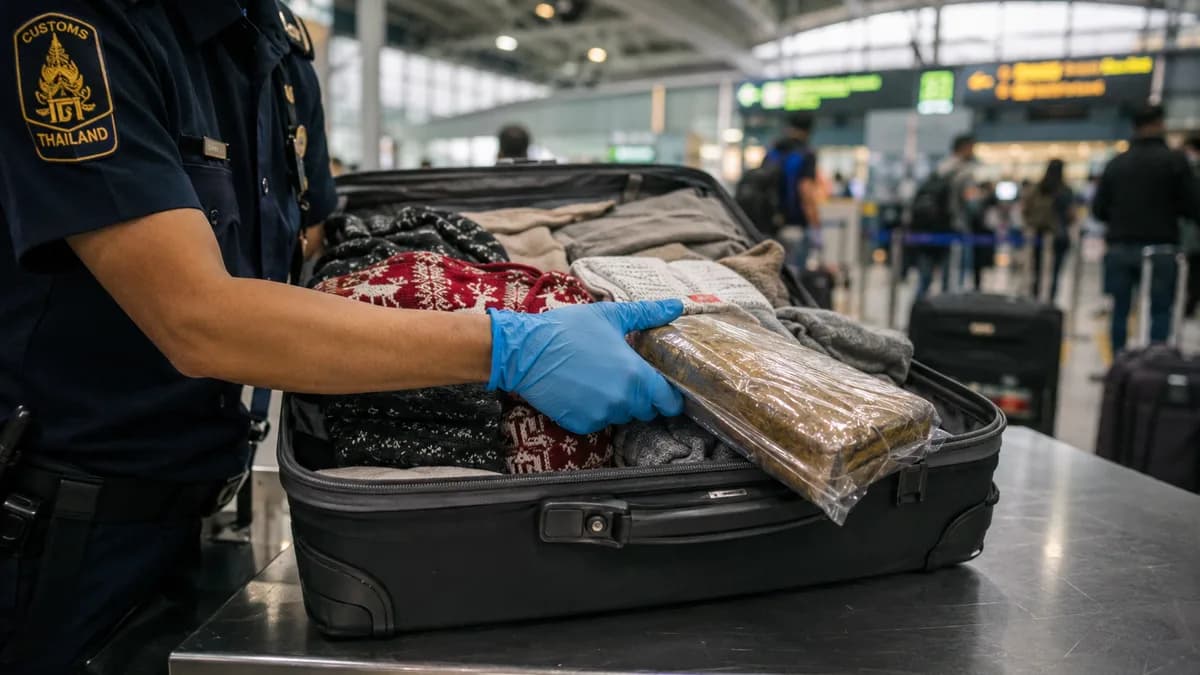
Photo: VapeExperts/AI
The economics explain the volume. A trafficker identified as "Zee" told the BBC: "It costs me about £350 to produce a kilo. My buyers in the UK will pay 10 times that, up to £3,500 a kilo." He said couriers typically carried two suitcases of about 20kg each, earned around £10,000 per successful run, and moved consignments worth as much as £250,000.[2] Those are one trafficker's self-reported numbers, not audited data, but they match a market where a Thai business report estimates growers outnumber domestic demand by 30 to 40 times.
UK Border Force says recruiters find couriers on social media and offer free holidays, business-class flights, spending money and reassurances that cannabis is legal in Thailand or that a UK sentence would be minor. Some recruiters take control of passports or check bags in the courier's name.[3] The largest demographic arrested in the first half of 2026 was men aged 18 to 37 travelling from Thailand.[3] The legal trap is simple: buying cannabis lawfully inside Thailand never authorized exporting it, and it never made importing it into Britain legal.
The consequences have landed on named travellers. Amy Jayne Durban, 45, was arrested at Heathrow on July 6 after arriving from Bangkok; prosecutors allege her suitcases held 51.2kg worth at least £512,000, a charge not yet tested in court, with a Crown Court hearing set for August. British teenager Bella Culley spent five months and 24 days in Georgian custody after being arrested in Tbilisi in May 2025 with roughly 12kg of cannabis and 2kg of hashish following a Thailand trip; her family reportedly paid a 500,000-lari fine, about £137,000, to secure her release.[2] In a single week in July, Phuket authorities arrested a Belgian woman with 31.7kg, a Russian man with 17.6kg, and two more women carrying a combined 32kg.
A fine of 30,000 baht per kilogram, payable before you leave
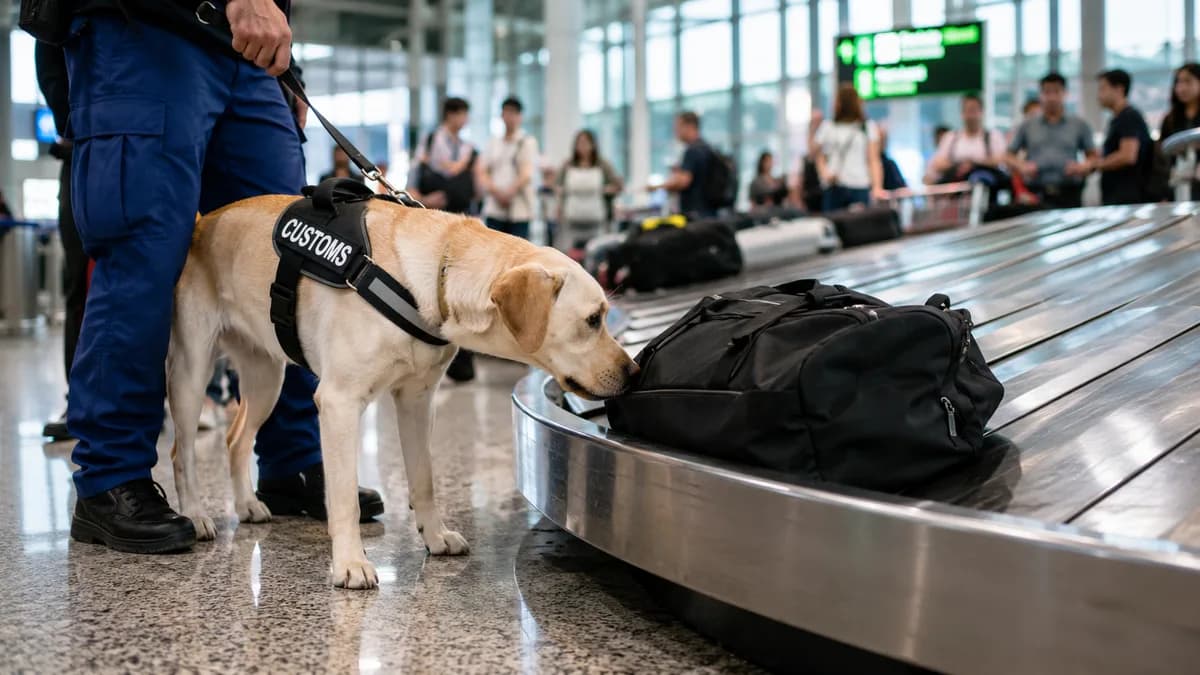
Photo: VapeExperts/AI
Thailand's new Customs settlement regime confiscates the cannabis and fines the carrier 30,000 baht per kilogram. On the NCA's average intercepted load of 26kg, that works out to 780,000 baht, roughly £17,700. Refusal or inability to pay can mean prosecution and detention for up to two years.[1] The U.S. Embassy in Bangkok warned travellers in July that the broader Customs Act carries penalties of up to 10 years' imprisonment.[4]
Enforcement started fast. The NCA counted 55 people fined or detained, including 21 British nationals, between June 17 and July 6.[1] Thai Customs put the running total at 71 people and about 1.3 tonnes by July 8. Round-the-clock K-9 sweeps began at Suvarnabhumi on July 7, alongside expanded outbound X-ray screening and AI-assisted risk profiling. Officials concede the gaps: not every airport has dedicated outbound scanners, and budget limits prevent immediate nationwide rollout.
Whether any of this deters is unproven. Rising arrest counts on both ends can mean better detection, more smuggling attempts, or both. The cleaner test is whether full-year 2026 UK courier arrests come in below 976.
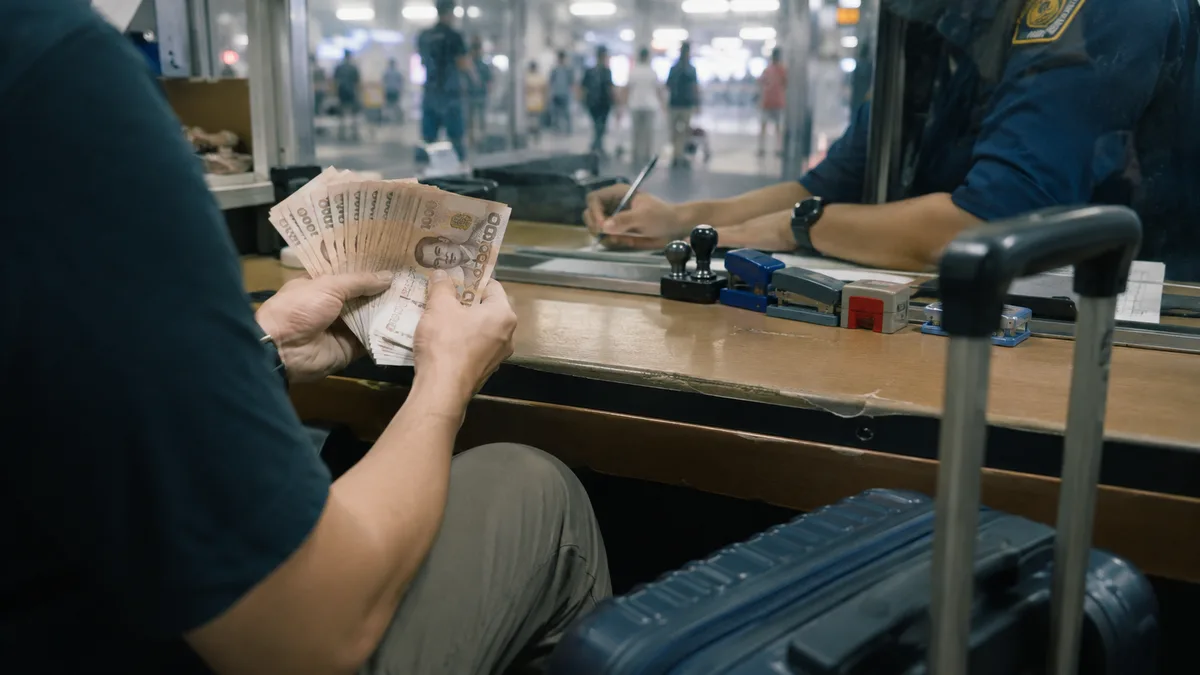
Photo: VapeExperts/AI
The rollback had more than one cause
The smuggling wave is often framed as the reason Thailand pulled back. The record is more tangled. Cannabis flower left the Category 5 narcotics list in June 2022, but no replacement statute followed, and roughly 18,000 shops opened into the vacuum. The medical-only order of June 2025, which we covered in our earlier reporting on Thailand's tourist rules, came shortly after the cannabis-championing Bhumjaithai Party left the governing coalition, clearing the way for a Pheu Thai health minister to act. Its targets were mostly domestic: prescriptions capped at 30 days' treatment, bans on online sales, vending machines, advertising and smoking on shop premises.
Rasmon Kalayasiri, a psychiatry professor at Chulalongkorn University, told the journal Addiction that "commercial activity expanded rapidly while key issues such as product standards, advertising restrictions, public health monitoring and enforcement mechanisms were still evolving." The suitcase pipeline supplied ammunition for the rollback; it was not the only cause.
June 2022
Cannabis flower left the Category 5 narcotics list; extracts above 0.2% THC remained narcotics.
June 2025
A medical-only order took effect, restricting flower sales to prescription holders.
April 2026
Amended regulations covering licences to research, export, sell and process controlled herbs were published.
June 2026
Customs began fining unauthorized cannabis exporters 30,000 baht per kilogram.
July 2026
The government advanced a draft Cannabis and Hemp Act to make the medical-only model statutory.
The squeeze on legal retail is already visible. Of 8,636 shop licences that expired in 2025, only 1,339, or 15.5%, were renewed. Legal exports remain possible but narrow: a Section 46 controlled-herb licence, certified cultivation standards, Thai export approval and destination-country authorization, now checked electronically to catch fake documents. A tourist's medical prescription satisfies none of that.
Photo: VapeExperts/AI
Phanthong Loykulnanta, director-general of Thai Customs, said the new measures "will make cannabis smuggling increasingly difficult and contribute to a significant reduction in the number of offenders."[1] The NCA's message to would-be couriers was blunter. "You will be kept in Thai detention until you have found the money to pay or for two years," said Beki Wright, head of the agency's Borders Threat Team. "The crime group that paid you to smuggle it will leave you high and dry."[1]