
Thailand spent three years as Asia's freewheeling cannabis capital. That era is over. As of mid-2025, cannabis flower needs a doctor's prescription, and 7,297 cannabis shops closed in 2025 alone.
The rules now split cannabis into three legal lanes, and they treat each one very differently. Flower is a controlled herb. Concentrates above 0.2% THC are narcotics. And every kind of vape stays fully banned, just as it has since 2014.
Flower needs a prescription now
On June 25, 2025, Public Health Minister Somsak Thepsuthin signed a notification published in the Royal Gazette that reclassified cannabis flower as a "controlled herb."[1] The rules took effect the next day with no grace period.
Flower was not made a narcotic. But you now need a PT 33 prescription from one of seven licensed practitioner types, including doctors, pharmacists, and traditional medicine practitioners.
That prescription is valid for a maximum of 30 days with no refills. Dispensing is capped at 30 grams per patient per month. You must be at least 20 years old.
Public smoking can bring a fine up to 25,000 baht or three months in jail under the Public Health Act. Cannabis must come from certified farms, and sales are banned online, in vending machines, and near temples, parks, and schools.
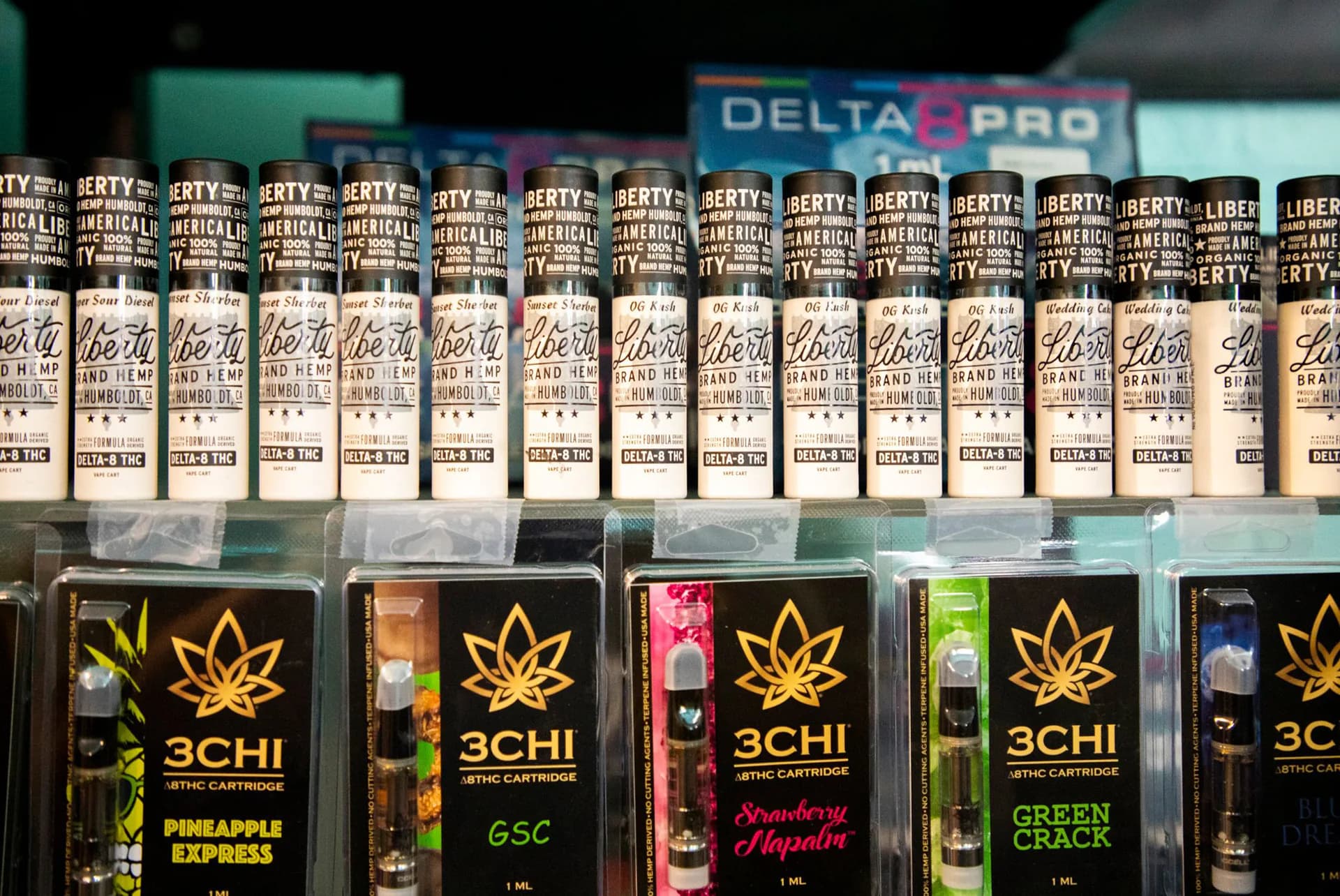
Photo: Casey Toth/The News & Observer/TNS/Newscom
Vape cartridges of Delta 8 THC are displayed on shelves behind the counter in Cannabliss Dispensary on Wednesday, July 7, 2021, in Chapel Hill, North Carolina.
Concentrates are narcotics, not herbs
Flower and concentrates live in different legal worlds. Cannabis and hemp extracts above 0.2% THC by weight are Category 5 narcotics under the Narcotics Act.
A new rule sharpened this. The Ministerial Regulation on Category 5 narcotics was published in the Royal Gazette on March 26, 2026, and took effect April 26, 2026.[3] It limits high-THC extracts to four uses only: narcotics suppression, medical, research, and industrial.
Foreign-owned businesses are explicitly barred from making, importing, or exporting these extracts. Hashish and other high-THC concentrates remain narcotics, as they have since the 2022 decriminalization removed only the plant flower from the list.
Possessing more than 30 grams or 30 milliliters of extract above 0.2% THC counts as intent to distribute. If you want to understand how these products differ from flower, our concentrates explainer breaks it down.
Vapes stay 100% illegal
Here is the part that trips up visitors. None of the cannabis reforms touched vapes.
All vaping gear has been banned in Thailand since 2014. That covers cannabis vapes, THC cartridges, CBD vapes, nicotine e-cigarettes, and heat-not-burn products like IQOS and Glo.
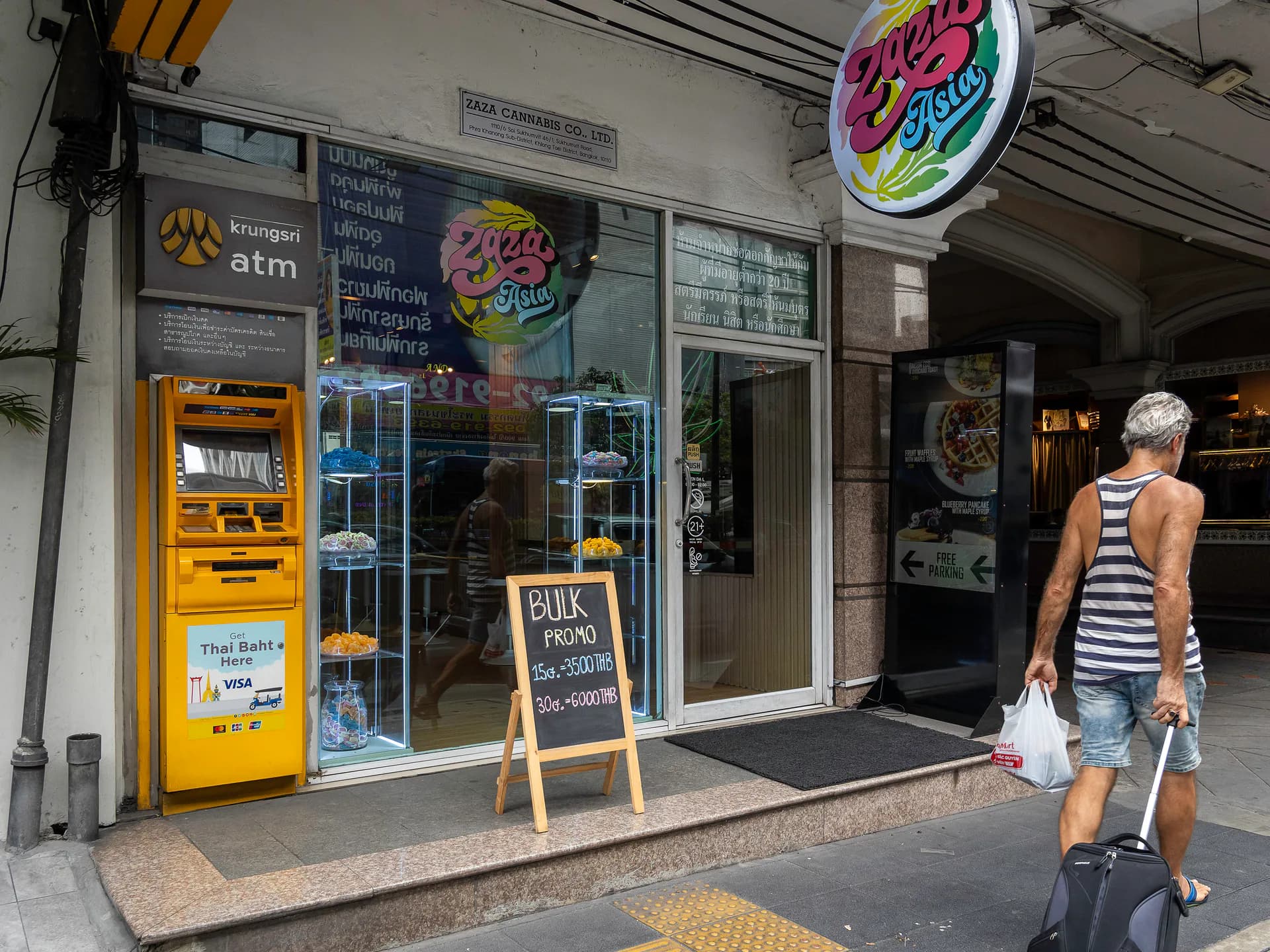
A tourist with his luggage passes in front of the ZaZa Asia cannabis dispensary, which advertises bulk cannabis promotions, near an ATM machine on Sukhumvit Road in Bangkok, Thailand, Friday, May 10, 2024. (Newscom)
Vapes fall under customs and tobacco law, not cannabis law. So when flower and extracts came off the narcotics list in 2022, vapes were left untouched. Licensed dispensaries can sell flower, edibles, and tinctures, but not vape pens.[5]
The penalties are steep. Fines run 20,000 to 30,000 baht, roughly $550 to $830. Importing banned goods can carry up to 10 years in prison, and selling can bring fines up to 600,000 baht.
Why the shops are vanishing
The numbers tell the story. Of 8,636 cannabis licences that expired in 2025, only 1,339 renewed, a rate of about 15.5%. The rest, 7,297 shops, closed.
A second rule deepened the squeeze. The Ministerial Regulation (No. 2) on controlled herbs, published April 30, 2026, limits dispensary licences to four facility types[2]: medical clinics, pharmacies, herbal product retailers, and traditional healer workplaces.
Standalone recreational dispensaries no longer qualify. Every renewal is now a full re-qualification, and previously suspended operators are permanently barred.
More closures are coming. 4,587 licences expire in 2026 and 5,210 in 2027. The government expects only about 3,000 outlets to survive from the original 18,000-plus, with officials estimating up to 90% of shops will fold.
What this means for you
If you visit Thailand, leave the vape at home. Bringing any vaporizer into the country, cannabis or otherwise, is illegal and can cost you thousands of baht or worse.
Buying flower legally now means seeing a licensed practitioner for a prescription first. And tourists may be shut out entirely. One January 2026 report said prescriptions were being restricted to Thai residents and long-term visa holders.
A new law is coming
The biggest change is still ahead. Public consultation on a draft Cannabis and Hemp Act closed on May 21, 2026, and parliamentary submission is expected soon.
The act would create a single definition of cannabis and hemp, a unified licensing authority, and a statutory penalty schedule. The current draft treats non-commercial home cultivation as unpunished while requiring a licence for commercial sales.
Public Health Minister Pattana Promphat, who signed both 2026 regulations, has framed the shift bluntly. Speaking in Thai, he said the country has never had free cannabis, and that cannabis is for medical use. For now, that is the law.