

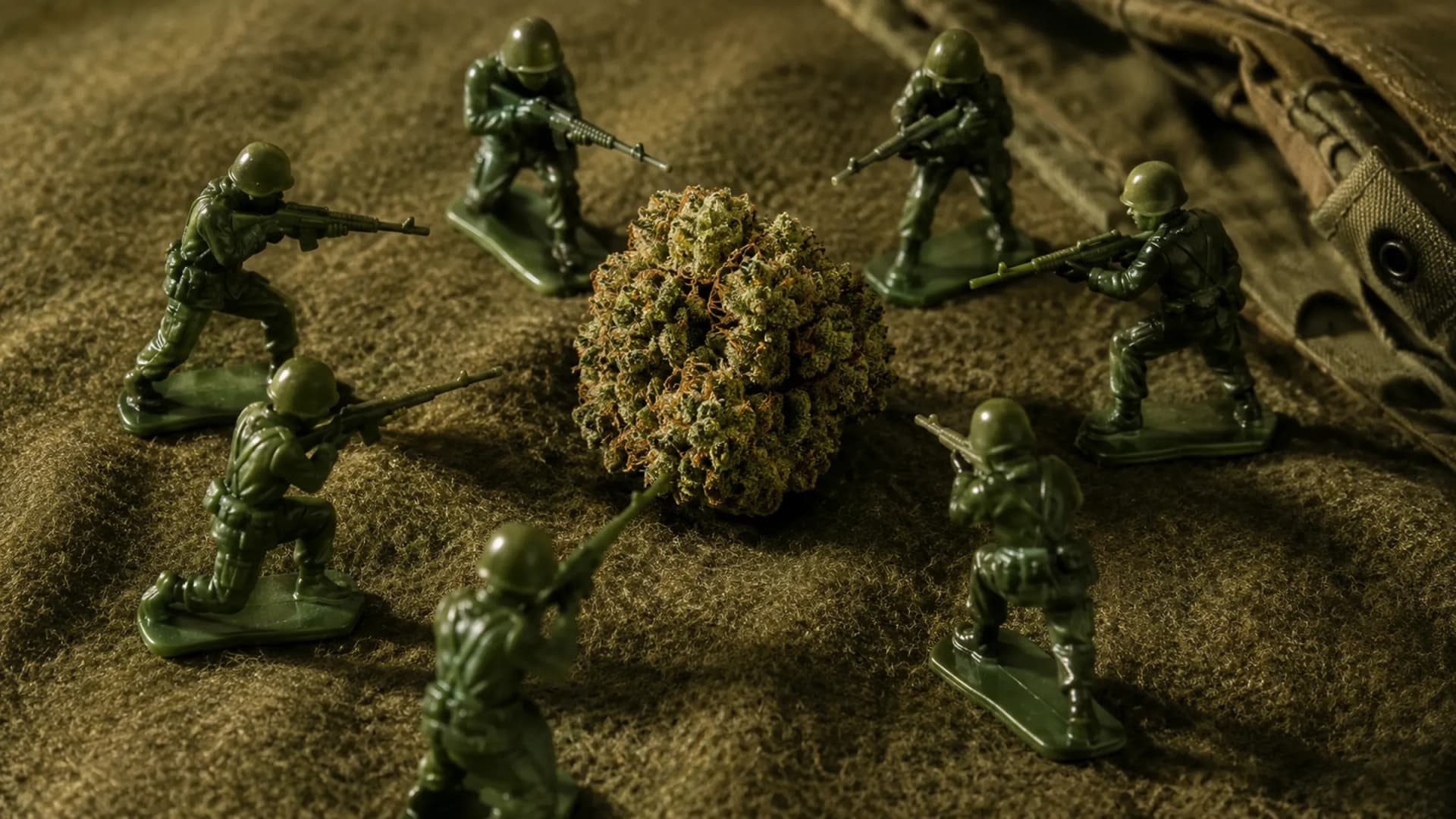
Federal rescheduling has not opened a single legal path to cannabis for American service members. That is the message of a one-page memorandum dated July 9 and signed by Anthony J. Tata, under secretary of war for personnel and readiness, first reported on July 15 by Marijuana Moment.[1]
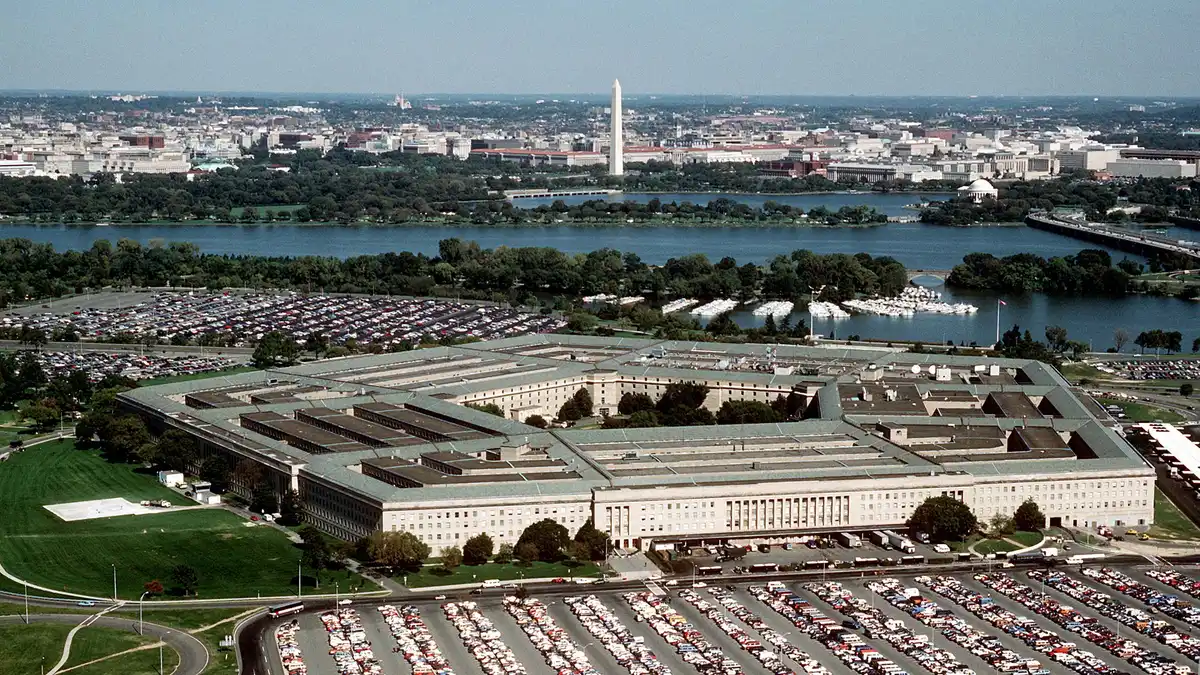
Photo: 'DoD photo by Master Sgt. Ken Hammond, U.S. Air Force.'/Wikimedia Commons (Public domain)
An aerial view shows the Pentagon in Arlington, Virginia, with the Washington Monument across the Potomac River. The Department of Defense says rescheduling would not free troops to use cannabis.
The memo lands three months after the Justice Department moved state-licensed medical cannabis and FDA-approved cannabis drugs to Schedule III. We covered that shift in our earlier rescheduling coverage. For troops, clearance holders, transportation workers and most veterans dealing with the VA, the memo confirms what the fine print already said: almost nothing changed for them.
State legality is no defense in uniform
Tata's memo restates Article 112a of the Uniform Code of Military Justice, which bars the "wrongful use, possession, manufacture, or distribution of marijuana, and attempts to commit such acts."[2]
State law offers no shield. "These offenses remain punishable under the UCMJ, even if a State or local jurisdiction legalizes the use of recreational marijuana or authorizes the sale of marijuana, including medical marijuana, at State dispensaries," Tata wrote. Violators may face "judicial, nonjudicial, or administrative action."[1]
The one exception is narrow: "These prohibitions do not apply to formulations approved as drugs by the FDA with a valid prescription for a legitimate medical purpose."[1] A state medical card and dispensary-bought flower, concentrates, edibles or vape products do not qualify. Army policy goes further, prohibiting hemp and cannabinoid products, including CBD, regardless of marketing claims or stated THC content. Civilian Pentagon employees remain covered by the department's Drug-Free Workplace Program.[1]
Photo: VapeExperts/AI
One caveat on sourcing: the memo has not been posted on an official military website. Its existence and exact wording rest on the outlet that obtained it, though the substance matches Article 112a and standing service policy.
The memo's odd tense
The memo reportedly describes Schedule III as something that, "if implemented," would not decriminalize marijuana. But a partial rescheduling already took effect. Acting Attorney General Todd Blanche's April order moved FDA-approved cannabis drugs and cannabis covered by qualifying state medical licenses to Schedule III effective April 28, 2026. Adult-use cannabis stayed in Schedule I.[3] The memo may refer to the still-pending proposal to reschedule the rest of marijuana, but its wording leaves that open.
Dec. 18, 2025
Trump signs an executive order directing the attorney general to complete Schedule III rulemaking.
April 28, 2026
Partial order takes effect: FDA-approved cannabis drugs and state-licensed medical cannabis move to Schedule III.
June 29, 2026
DEA evidentiary hearing on broader rescheduling opens before Chief ALJ Derek C. Julius.
July 9, 2026
Tata signs the Pentagon memo restating the military cannabis ban.
July 15, 2026
The memo is first reported; the DEA hearing closes after 17 days.
Aug. 17, 2026
Deadline for optional post-hearing briefs of up to 50 pages.
Clearances, trucking and contracts hit the same wall
The April order did not touch Security Executive Agent Directive 4. Guideline H covers all controlled substances, Schedules I through V, not just Schedule I. Standing ODNI guidance from Director of National Intelligence Avril Haines says past use is "relevant, but not determinative," and advises applicants to "refrain from any future marijuana use upon initiation of the national security vetting process."[6]
The Transportation Department reaffirmed its line in May 2026 guidance: "There is no instance when the MRO could verify a laboratory-confirmed marijuana positive drug test result as 'negative' when an employee claims the positive was caused by a State licensed marijuana product." The same document states that "marijuana use is not compatible with safety-sensitive functions."[5]
Photo: VapeExperts/AI
Federal contractors sit in between. The Drug-Free Workplace Act requires covered contractors to bar unlawful drug use in the workplace; it does not by itself impose a 24/7 abstinence rule on every employee. Rules tighten sharply for cleared, safety-sensitive, DOT-regulated or installation-access positions.
Veterans get less than the headlines suggest
The Congressional Research Service found the April order "appears to authorize end users to possess marijuana for medical use without a CSA-compliant prescription" where a state certification carries the required identifying details. That protection does not reach VA property, military law or federal workplace rules.
Under current VA policy, veterans keep their VA care and benefits if they join a state medical program, and clinicians may discuss cannabis use. But VA doctors still cannot sign state registration forms, VA pharmacies do not dispense cannabis, and possession remains banned on VA grounds.[7] The House approved FY2027 appropriations language that would block VA from enforcing the recommendation ban, but as of July 19 it had not become law.
The population affected is not small. A national survey of 4,069 veterans found 11.9% used cannabis, up from a 9% estimate in 2014, with use "particularly prevalent among veterans with psychiatric conditions."[10]
Cannabis measures among U.S. veterans, 2019-2020 survey
Source: National Health and Resilience in Veterans Study
Rachel A. Hoopsick of the University of Illinois, who analyzed 16,350 veterans in federal survey data and found past-year use rose 56% between 2013 and 2019, said the growth is not coming through medical channels: "This is telling us that although marijuana use is increasing in Vets, it's not medical marijuana, it's recreational marijuana."[9]
The paperwork that decides what happens next
DEA's hearing on rescheduling the rest of marijuana closed July 15 after 17 days. Chief Administrative Law Judge Derek C. Julius set an August 17 deadline for optional briefs of up to 50 pages.[4] There is no deadline for his recommendation, and DEA Administrator Terry Cole makes the final call. Separately, the D.C. Circuit is weighing consolidated challenges to the April order, including a pending motion to stay it.[8]
Photo: VapeExperts/AI
None of those outcomes will rewrite Article 112a. Even a full move to Schedule III would leave the UCMJ, clearance guidelines, DOT testing rules and VA directives exactly where they stand, until Congress or each agency changes them one by one.