

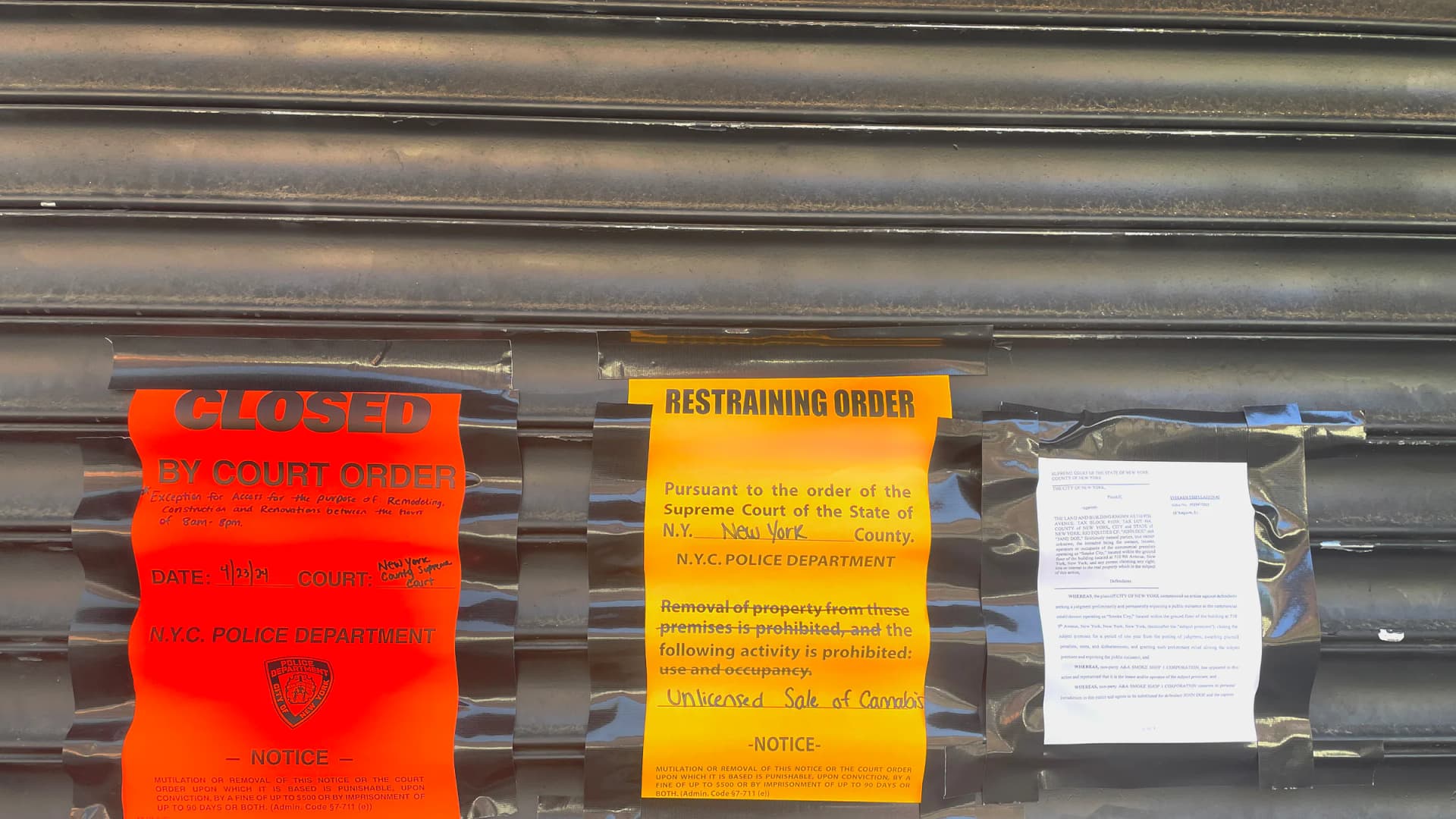
The first half of 2026 ended a 50-year status quo. On April 28, medical marijuana officially became a Schedule III drug, ending its place alongside heroin on the federal list of the most dangerous substances.
But the move was narrow. Recreational marijuana stayed Schedule I, and a separate hemp ban now threatens to wipe out most of the products sold in gas stations and smoke shops nationwide.
The result is a split market. Some operators got billions in tax relief. Others got a lawsuit, a repeal campaign, or a ticking clock.
Here is what happened, and what comes next.
Medical marijuana dropped to Schedule III in April
On April 23, 2026, Acting Attorney General Todd Blanche issued a final order moving two narrow categories of marijuana from Schedule I to Schedule III. The Justice Department order covered FDA-approved marijuana drug products and marijuana sold under a state medical license.[1]
The order took effect on April 28, 2026, the day it was published in the Federal Register.
"The Department of Justice is delivering on President Trump's promise to expand Americans' access to medical treatment options," Blanche said in the announcement.
Blanche skipped the usual rulemaking process. He acted under the Attorney General's power to control substances to meet U.S. treaty obligations under a 1961 United Nations convention. That move let the order take effect fast, but it also handed critics a legal opening.
The change traces back to a December 18, 2025 executive order in which President Trump directed officials to finish rescheduling[3] "in the most expeditious manner."
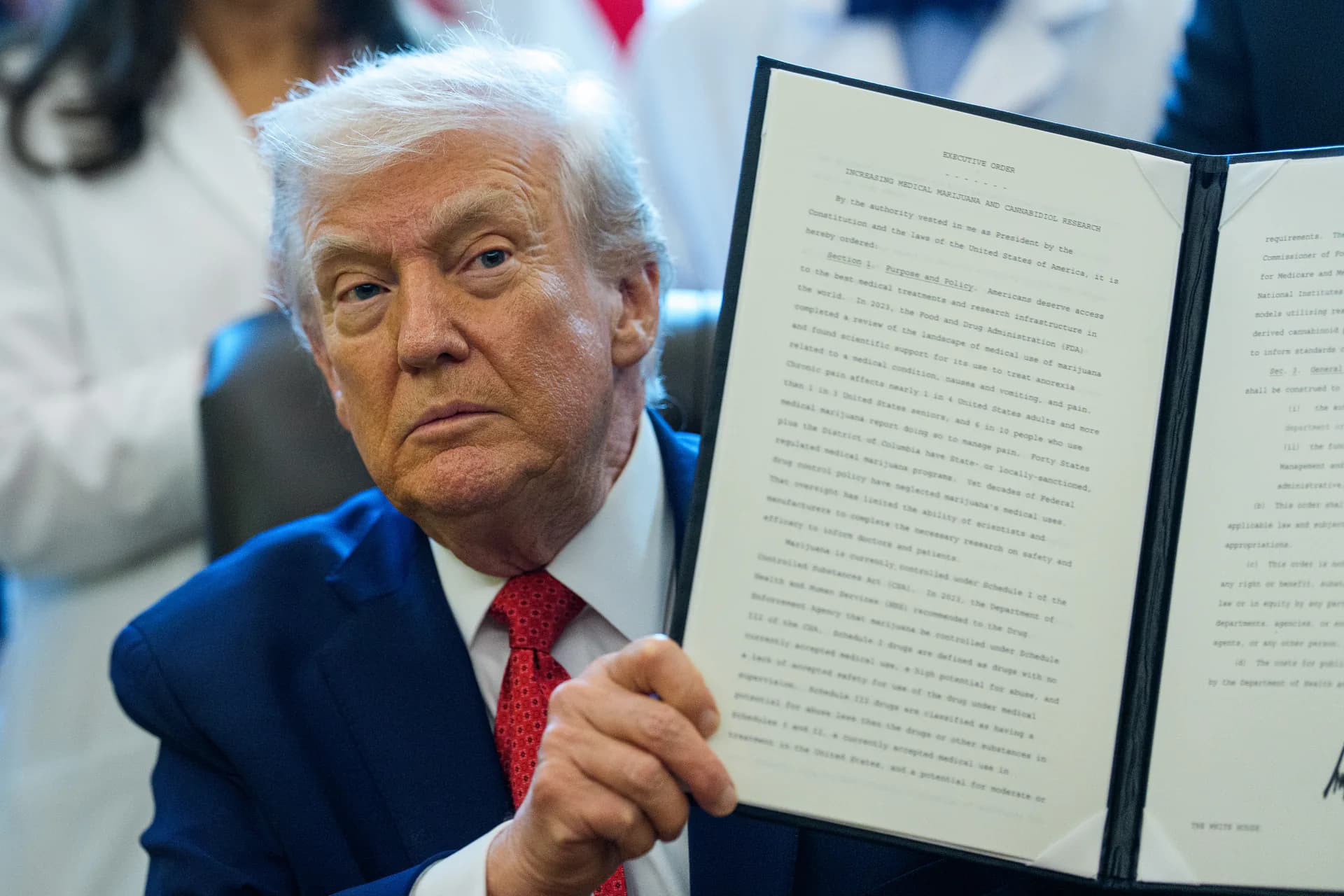
Photo: Aaron Schwartz/Pool via CNP/Newscom
United States President Donald J. Trump displays an executive order to reschedule marijuana from a schedule one to a schedule three controlled substance after signing it in the Oval Office of the White House in Washington, Thursday, Dec. 18, 2025.
What rescheduling does not cover
The headline is big, but the fine print is bigger.
Recreational marijuana remains Schedule I. So do unlicensed crops, bulk marijuana, synthetic THC, and any marijuana not tied to an FDA-approved product or a state medical license.
State medical operators now must register with the DEA. The registration portal opened April 29, with a June 22 hard cutoff for registration. Applications filed within 60 days (by about June 27) get expedited review. The annual fee is $794.
The real prize is a tax cut worth billions
The biggest immediate winner is the medical industry's tax bill.
Section 280E of the tax code blocks normal business deductions for companies trafficking in Schedule I or II drugs. Moving medical marijuana to Schedule III lifts that penalty for licensed medical operators.
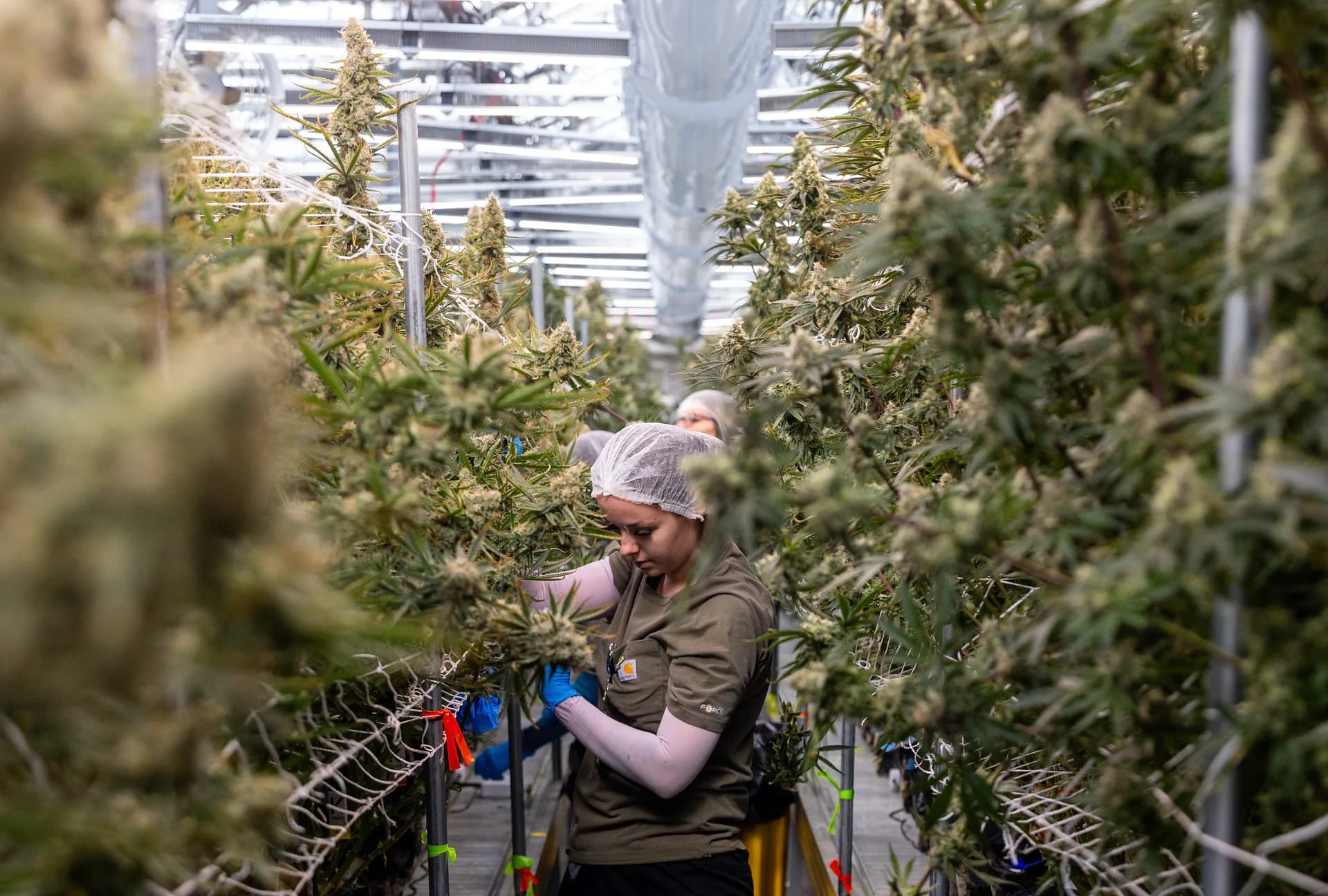
Photo: Dominic Di Palermo/TNS/Newscom
A worker defoliates cannabis plants in a greenhouse and flowering room at the Curaleaf cannabis growing facility in Litchfield on Aug. 15, 2025.
Market research firm Mordor Intelligence projects the relief will deliver $1.6 to $2.2 billion in annual tax savings for licensed medical businesses.
The U.S. Treasury and IRS said they would issue guidance on the change.[2] The relief generally applies to a company's full tax year that includes April 28, so calendar-year filers benefit starting in 2026.
Recreational operators get none of this. They still face 280E's effective tax rates, which the industry estimates often top 70%. That gap creates a sharp split between medical and adult-use businesses heading into the back half of the year.
A July hearing could extend relief to everyone
The single most important cannabis event of the year is still ahead.
A new DEA administrative hearing is scheduled to begin June 29 and conclude by July 15. It will weigh whether all marijuana, including recreational, should move to Schedule III.
If that happens, 280E tax relief would extend to adult-use operators too. The earlier Biden-era hearing process, stalled since January 2025 over bias claims, was formally terminated to clear the way.
The odds are uncertain. Polymarket prediction contracts priced broader rescheduling by year-end 2026 at just 35% as of May.
Opponents are fighting back in court and in Congress
The medical reschedule did not go unchallenged.
On May 5, the anti-legalization group Smart Approaches to Marijuana filed a lawsuit in the D.C. Circuit to block the order. SAM CEO Kevin Sabet said the order "contravenes both law and science." The group argues Blanche unlawfully used treaty authority to skip public comment.
Congress moved against it too. On May 14, the House Appropriations Committee advanced a provision to block funding for rescheduling, by a 32-28 vote, as reported by Marijuana Moment.[4] Similar language has been stripped from final spending deals in past years.
Hemp products face a November cliff
While medical marijuana moved up, the hemp industry is staring at a ban.
A law signed in November 2025 redefined federal hemp, and the changes take effect November 12, 2026. The new rules cap finished products at 0.4 mg of total THC per container and prohibit synthetic cannabinoids like delta-8 and HHC.
The "total THC" standard now sweeps in delta-8, delta-10, and THCA. Most consumable hemp cannabinoid products on the market today, including THCA flower and delta-8 gummies, would be reclassified as Schedule I marijuana.
A bill called the Hemp Planting Predictability Act would delay the ban three years, but it sits in committee. The House passed a Farm Bill in April with hemp provisions but no language to delay the THC ban.[5]
The anti-legalization backlash gained ground
Several states moved against legal cannabis in the first half of the year.
In Florida, a recreational ballot measure fell short of the required signatures, and the state Supreme Court dismissed the legal challenge in a 6-1 vote on February 4.
Ohio rolled back its voter-approved law on March 20. The changes recriminalized homegrown cannabis, cut home cultivation from 12 to 6 plants, and capped dispensaries at 400.
Repeal campaigns are also underway in Massachusetts and Arizona, where signatures are due July 2. Heather Trela of the Rockefeller Institute of Government noted that no U.S. voters have ever dismantled a regulated cannabis market that already took root. If any of these succeed, it would be the first.
What this means for you
If you use medical cannabis through a state-licensed program, your access does not change, and your dispensary may see lower taxes over time. If you buy delta-8, THCA, or other hemp-derived products, expect those to start disappearing from shelves before November as retailers and shippers back away from the risk. Recreational consumers see no federal change yet, but the July hearing could shift that.
What to watch in H2 2026
The next six months will decide how far this goes.
The June 29 hearing is the pivot point. A favorable result could pull recreational operators into Schedule III, though litigation could drag the timeline into 2027.
The hemp ban lands November 12, and supply chains may unravel well before then. The SAFER Banking Act, which advanced from a Senate committee, remains the likeliest standalone cannabis bill to reach the President's desk, but it needs 60 votes and a floor vote that has not been scheduled.
For the first time in decades, federal cannabis policy is moving in two directions at once.