


The biggest federal cannabis policy shift since 1970 landed in April 2026, and cannabis stocks barely moved. The NCV Global Cannabis Stock Index is down 20.3% year-to-date, even after the government rescheduled medical marijuana to Schedule III.
The reason is simple. The change covered medical cannabis only. Recreational marijuana stayed Schedule I, so most of the industry got no tax relief and no real lift.
That split has split the market too. Some operators posted their first profits in years. Others kept bleeding. One stock tripled.
Rescheduling arrived, but only halfway
On April 23, 2026, the Department of Justice and DEA issued a final order[1] moving FDA-approved marijuana products and state-licensed medical marijuana to Schedule III.
It followed a December 2025 executive order directing the attorney general to expedite the process.[3]
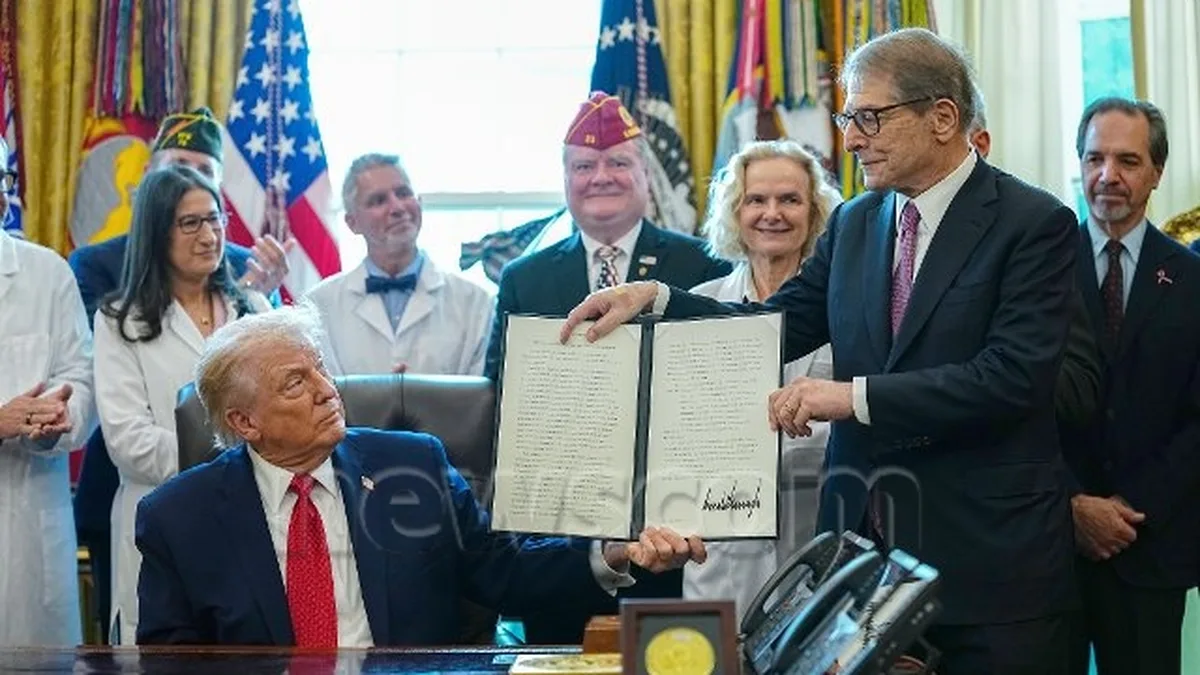
Photo: Aaron Schwartz/Pool via CNP/Newscom
United States President Donald J. Trump displays a document after signing an executive order to reschedule marijuana from a Schedule I to a Schedule III controlled substance in the Oval Office of the White House in Washington, Thursday, Dec. 18, 2025.
"The Department of Justice is delivering on President Trump's promise to expand Americans' access to medical treatment options," Acting Attorney General Todd Blanche said.
But the order left recreational cannabis on Schedule I. That meant adult-use operators kept paying under Section 280E, the tax rule that blocks normal business deductions for federally illegal drugs.
The market read it as a half measure. Holland & Knight attorneys called it the biggest federal shift on cannabis regulation since 1970. The Ohio State University Moritz College of Law has tracked the move closely.[4] The optimism still faded fast.
The winner: Village Farms tripled on German demand
Village Farms International was the clear standout, with a one-year return of about 304% as of May 4, 2026.
The driver was exports. International cannabis export sales surged 171% year-over-year to $14.6 million in the first quarter, fueled by booming demand in Germany. Three Village Farms products hold top-five best-selling strain spots in the German market.
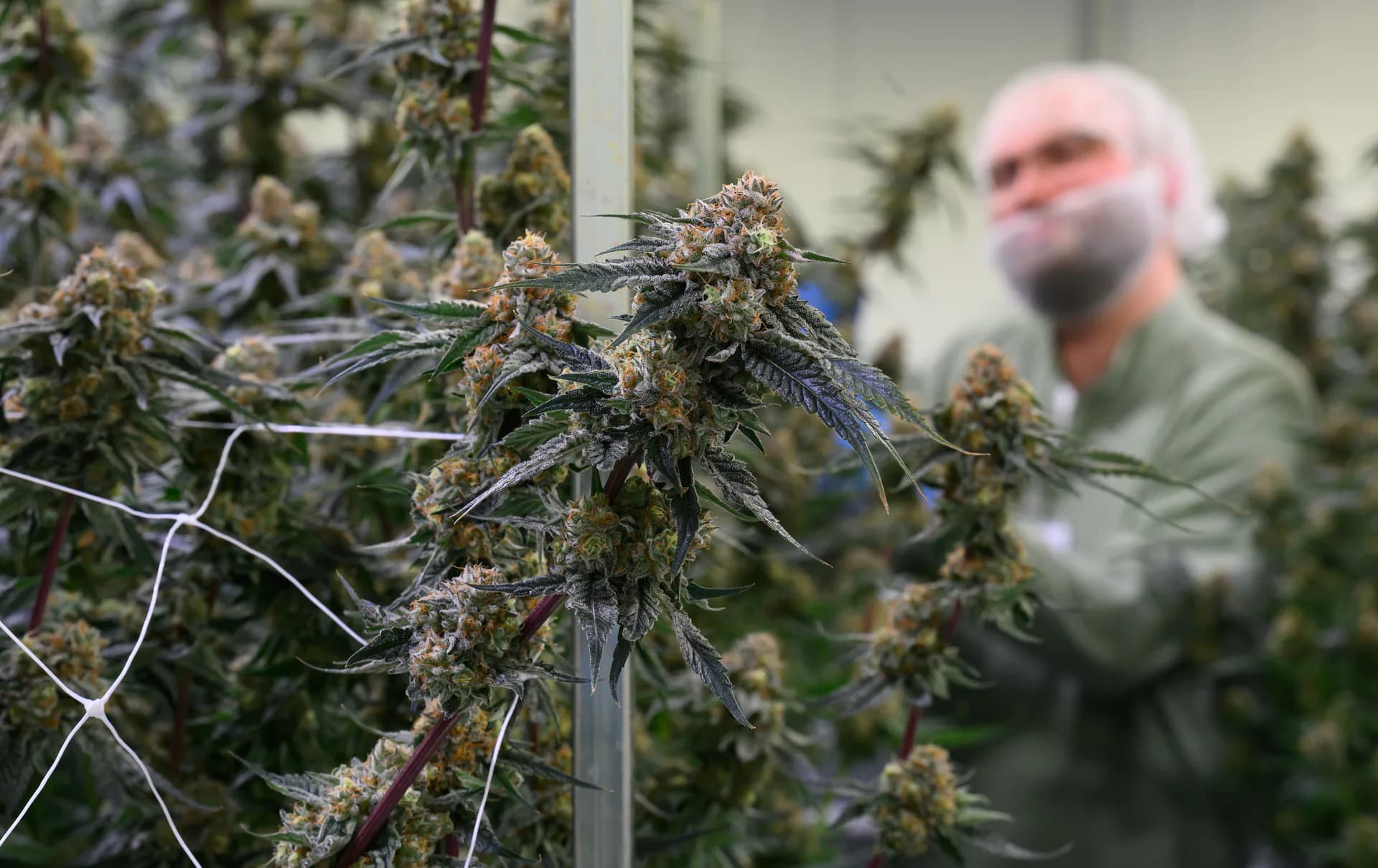
Photo: Hendrik Schmidt/dpa/picture-alliance/Newscom
Stephan Kaster, production manager at cannabis manufacturer Aurora, inspects cannabis plants in a flowering room at the production facility in the Leuna Chemical Park in Leuna, Germany, Tuesday, Feb. 3, 2026.
First-quarter revenue hit $50.2 million, up 27%. The company swung to net income of $2.9 million from a loss a year earlier. It also announced a Delta 2 greenhouse expansion adding 40 tons of annual capacity and a spinoff of its produce business.
CEO Mike DeGiglio pointed to strong German demand as the main engine behind the run.
The profitable surprises: Curaleaf, Green Thumb, Trulieve
Three large U.S. operators posted profits, partly thanks to the rescheduling itself.
Curaleaf Holdings swung to net income of $70.1 million in the first quarter, a sharp reversal from a $61 million loss a year earlier. Revenue rose 6% to $324.2 million. Most of the profit came from a $98.7 million income tax benefit tied to a 280E reassessment after rescheduling.
"Moreover, the historic rescheduling of medical cannabis provides a shift in the trajectory of our business and the industry overall, for which we are well-positioned," Curaleaf Chairman and CEO Boris Jordan said.
Green Thumb Industries reported revenue of $300.2 million, up 7.4%, with net income of $15.4 million ($0.07 per share, up from $0.04). Growth came from Minnesota's adult-use launch and gains in Connecticut and Florida.
"The recent federal action to reschedule medical cannabis from Schedule I to Schedule III is a historic step forward for our business, for investors, and for the country," Green Thumb Founder, Chairman and CEO Ben Kovler said.
Trulieve Cannabis returned to profitability with net income of $2.4 million, up from a $32.9 million loss a year earlier. Revenue dipped 4% to $286.8 million, but adjusted EBITDA reached $100.4 million at a 35% margin.
Here is how the three quarters stacked up:
| Operator | Q1 revenue | Net income | YoY change |
|---|---|---|---|
| Curaleaf | $324.2M | $70.1M | from -$61M loss |
| Green Thumb | $300.2M | $15.4M | $0.07 EPS vs $0.04 |
| Trulieve | $286.8M | $2.4M | from -$32.9M loss |
The loser: Tilray sank as the beverage bet faltered
Tilray Brands was the biggest decliner in the index, down 66.8% year-to-date through mid-May.
Cannabis was not the problem. The cannabis segment grew 19% and international cannabis revenue jumped 73%. The drag came from beverages, where revenue fell 24% to $42.6 million.
Quarterly EPS came in at -$0.24, missing estimates. The company also faced a potential reverse stock split vote in June, adding to investor unease.
Canopy Growth kept losing money too. It beat revenue estimates at $90.39 million but missed on earnings with EPS of -$0.13. Its trailing net loss runs to about $430 million.
Why cheap stocks stayed cheap
The numbers tell a strange story. Some operators run margins above 25% yet trade at low valuations.
Alan Brochstein of New Cannabis Ventures summed up the mood:[2]
"Cannabis stocks seem very cheap, but the path ahead isn't clear. Not in the U.S., not in Canada, and not in the rest of the world!"
The discount reflects real risk. Tax friction from 280E, high capital costs, banking limits, and regulatory uncertainty all weigh on prices. The MSOS ETF traded near $4.68 in late May, down roughly 89% from its 2021 peak.
What comes next
The most important date is June 29. A DEA administrative hearing on broader rescheduling begins then and is set to conclude by July 15.
If it succeeds, recreational operators would finally get 280E relief, the same break medical cannabis just won. That would matter far more to the big multistate names than the April order did.
Two other fights loom. The SAFER Banking Act cleared the Senate Banking Committee on a 14-10 vote in May and awaits a floor vote. And a federal hemp THC product ban, passed in the 2025 funding bill, takes effect November 12, 2026.[5]
For now, the sector sits in a holding pattern. The first half of 2026 proved that policy headlines and stock prices do not always move together.