

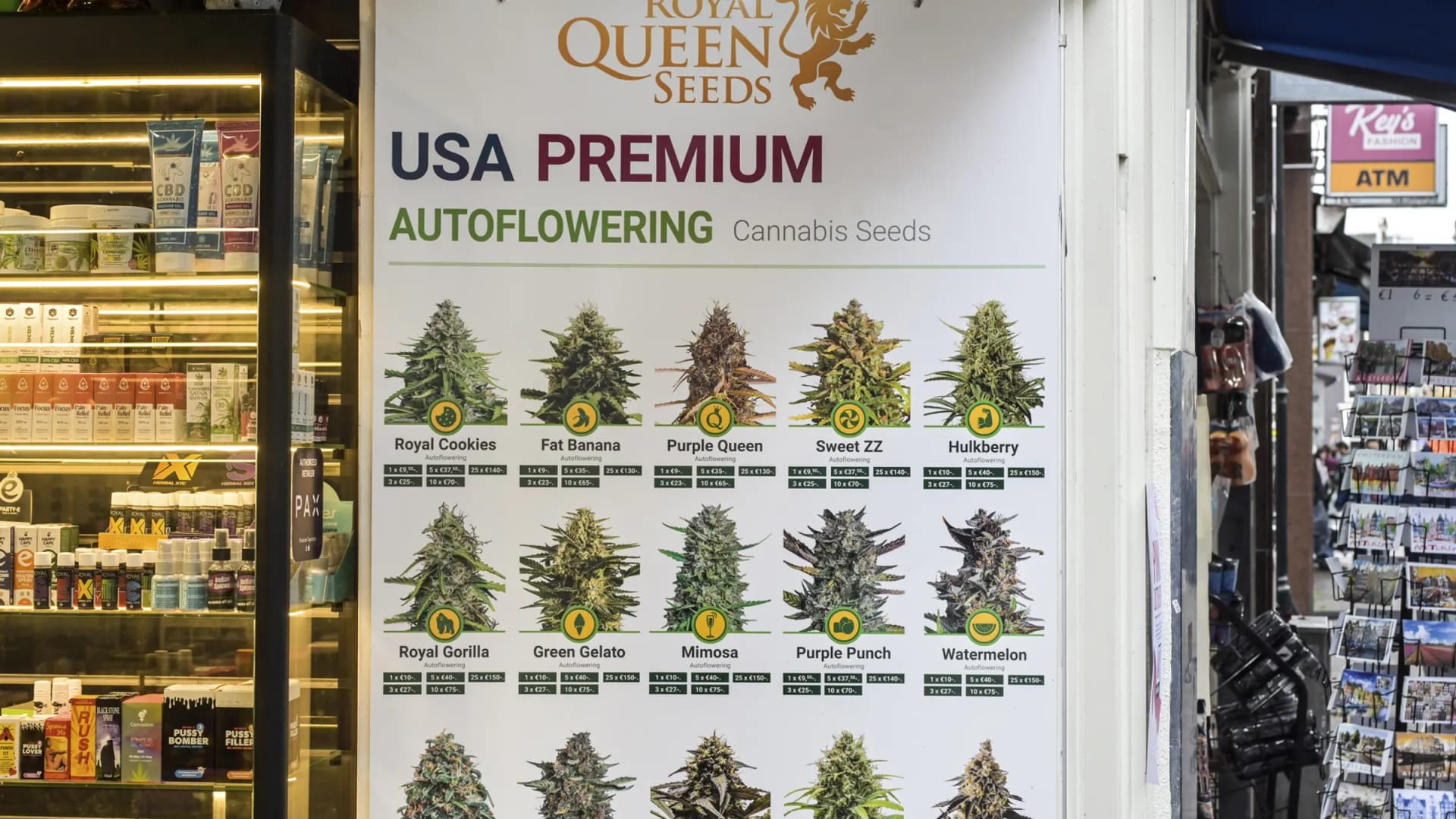
In 109 days, the legal basis for most online cannabis seed sales disappears. Section 781 of Public Law 119-37, signed Nov. 12, 2025, rewrites the federal definition of hemp. When that rewrite takes effect on Nov. 12, 2026, viable seeds produced by cannabis plants exceeding 0.3% total tetrahydrocannabinols (including THCA) will no longer qualify as hemp.[1]
Most drug-type cannabis plants used in seed production exceed that threshold. Seeds that lose hemp status fall back into the Controlled Substances Act's definition of marijuana, which remains Schedule I for adult-use purposes.[2][8] That puts interstate mail-order catalogs, international imports and the seed-bank industry's everyday operations on the wrong side of federal law.
The parent plant, not the seed, decides
The rule's mechanism is counterintuitive. It does not test the seed. It tests the plant that produced it.
Photo: VapeExperts/AI
The new statutory language excludes from hemp "any viable seeds from a Cannabis sativa L. plant that exceeds a total tetrahydrocannabinols concentration (including tetrahydrocannabinolic acid) of 0.3 percent in the plant on a dry weight basis."[1]
Cannabis seeds contain negligible THC. Under a previous reading, seeds whose own chemistry fell below 0.3% delta-9 THC qualified as hemp regardless of what plant they came from. Section 781 replaces that chemistry-based test with an ancestry-based one. Compliance now hinges on provenance records for the seed-bearing plant.[1]
Jim Riddle, organic farmer and former chair of USDA's National Organic Standards Board, said the effect is blunt: "if a cannabis seed comes from a plant that tests over .3% THC, that seed is not hemp. It's essentially [a] Schedule I controlled substance."
The law does not ban every cannabis seed. Nonviable (sterilized) seeds remain exempt from the CSA.[2] Seeds from plants at or below 0.3% total THC still qualify as hemp. Congress also carved out an "industrial hemp" category covering fiber, grain and seed-oil uses.[1] That category does not cover general drug-type seed-bank catalogs.
The statute does not expressly mention clones or address vaporizer hardware. As we covered in our earlier breakdown of the November THC cap, Section 781 also imposes a 0.4-milligram combined-THC cap on retail hemp product containers and shifts the plant-level measure from delta-9 THC to total THC.[1]
Home growers lose the supply line
For anyone who has ordered feminized, autoflower or heritage seeds through the mail, the parent-plant rule threatens the transaction itself. The most exposed activities include:
Photo: VapeExperts/AI
- Interstate shipment of viable seeds produced by over-limit plants
- Imports from European, Canadian and international breeders
- Payment processing, insurance and advertising for seed retailers
- Licensed growers sourcing genetics from outside their home state
A state home-grow law does not authorize interstate controlled-substance commerce.[2] The question for growers in legal states is not whether they can cultivate. It is whether they can still get the genetics they want.
The law contains no clear grandfather clause for seeds acquired before Nov. 12.[1]
White House and Congress push back
On June 24, Office of Management and Budget Director Russell T. Vought wrote House Speaker Mike Johnson requesting Congress consider "revising the Federal regulation of hemp to ensure the fair treatment of hemp products … or, at minimum, an extension of implementation of the regulatory framework put in place by Section 781 of Public Law 119-37."[3]
That letter was the first clear executive-branch call for relief. It addresses hemp products broadly, not seeds specifically, but a repeal or replacement of Section 781 could affect the seed clause.
On July 22, Reps. Andy Barr, R-Ky., and Angie Craig, D-Minn., introduced H.R. 9830, the Lawful Hemp Protection Act, the most detailed replacement framework to date.[4][5] The bill would:

Photo: Lorie Shaull from St Paul, United States/Wikimedia Commons (CC BY-SA 2.0)
Angie Craig in Apple Valley, Minnesota (30740081607)
- Raise the cultivation threshold to 1% total THC
- Create separate industrial and consumable-hemp categories
- Impose a federal sales age of 21
- Tax THC beverages at $0.05 per milligram and other THC consumables at 5%
- Require domestic cultivation, processing and packaging
- Direct FDA to set product cannabinoid limits
"Kentucky farmers helped build America's hemp industry and they deserve certainty," Barr said.[4]
Craig said the legislation would "give regulatory clarity to Minnesota farmers, brewers and small business owners and provide an alternative to short-sighted federal policies that threaten Minnesota jobs and consumer choice."[4]
One caveat: the bill's official summary does not mention viable seeds.[4] Raising the crop threshold from 0.3% to 1% would not, by itself, encompass most mature drug-type seed-producing plants. Whether the bill's operative text restores chemistry-based seed treatment is an open question.
Other bills have been pending since late 2025. Rep. Nancy Mace, R-S.C., introduced H.R. 6209 to strike Section 781 entirely. Rep. Jim Baird, R-Ind., introduced H.R. 7024 to delay implementation by three years. A Senate companion, S. 3686, is backed by Sens. Amy Klobuchar, D-Minn., Rand Paul, R-Ky., and Jeff Merkley, D-Ore. None had passed as of late July.
Dec. 20, 2018
2018 Farm Bill signed. Hemp and qualifying seeds removed from the Controlled Substances Act.
Nov. 12, 2025
President signs P.L. 119-37. Section 781 rewrites hemp definition, excluding viable seeds from over-limit plants.
June 24, 2026
OMB Director Vought asks Congress to revise or delay Section 781.
July 22, 2026
Reps. Barr and Craig introduce H.R. 9830, the Lawful Hemp Protection Act.
Nov. 12, 2026
Section 781 scheduled to take effect unless Congress acts.
Seeds are breeding infrastructure
The seed restriction reaches further than consumer convenience. Seeds are the raw material of breeding. Clonal propagation reproduces a single genotype, but it cannot create new cultivars or develop disease resistance, climate adaptation or novel cannabinoid profiles.
A 2026 Southern Cross University study demonstrated the stakes. Researchers used 16 cannabis accessions, advanced some lines through as many as six inbreeding generations in roughly 18 months and produced five F1 hybrid accessions. Hybrid seed yield ranged from 3.9% to 155% above mid-parent values in the tested crosses.
Photo: VapeExperts/AI
Clones are not genetically static, either. Dr. Yousef Torkamaneh, a cannabis genomics researcher at Université Laval, studied mutations accumulating within a long-maintained mother plant. "Within one plant, we're seeing 1 to 2 million different variations," he said. "It's like looking at three plants all in one place."
USDA's National Plant Germplasm System maintains crop collections for research, managing more than 600,000 accessions across over 13,000 species through 22 genebanks.[6] Its cannabis holdings are hemp-oriented. It is not a comprehensive archive of commercial high-THC cultivars, contemporary terpene selections or breeding lines from the pre-legalization era.
For dry-herb vape users who grow their own cannabis, the downstream effect is plausible if unquantified: fewer genetics crossing state lines could narrow the range of flower available for combustion-free consumption. No reviewed source measures how much home-grown cannabis currently originates from mail-order seeds.
Nobody knows how to prove parentage
The practical puzzle may be as large as the legal one. The law makes compliance depend on the THC concentration of a seed's source plant. Several questions remain unanswered:
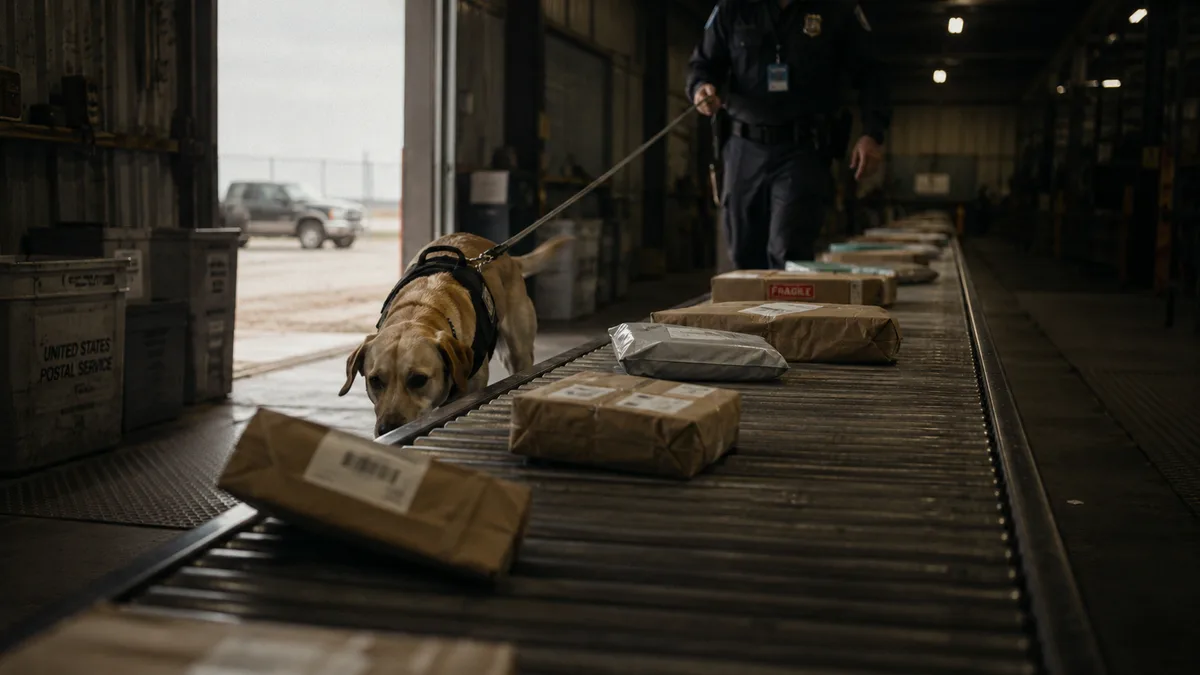
Photo: VapeExperts/AI
- What evidence proves the total-THC level of a seed's parent?
- Must every seed lot carry a parent-plant certificate of analysis?
- How will authorities treat old, mixed, heirloom or anonymously sourced seed?
- Which agency leads at the border: DEA, Customs and Border Protection or USDA-APHIS?
- Does "from a plant" refer only to the seed-bearing female or to both genetic parents?
No federal agency had published seed-specific implementation guidance as of late July.[1]
The hemp sector that depends on seed access produced $739 million in total value in 2025, with 43,707 harvested acres, up roughly 34% year over year.[7] How much of that economy runs through the genetics supply chain that Section 781 disrupts is not publicly measured.
H.R. 9830 was introduced four days ago. The November deadline is fewer than four months away. No federal agency has said how a seller proves what plant produced a seed.