

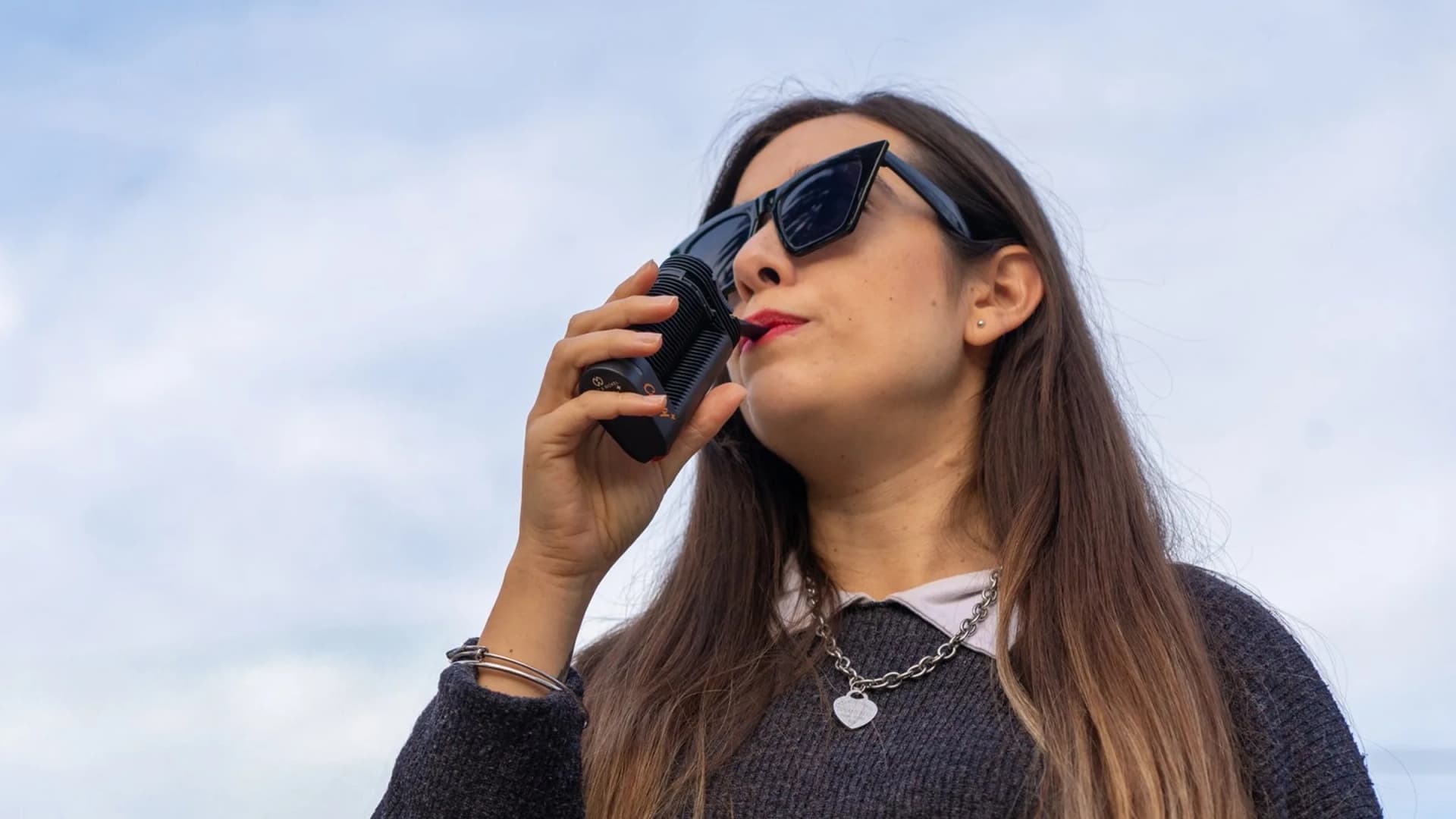
Georgia's medical cannabis patients can now legally vape. On July 1, the expanded program created by Senate Bill 220, the "Putting Georgia's Patients First Act," took effect, and licensed dispensaries began selling vaporizers, vape cartridges, and cannabis flower for vaporization to registry cardholders.[1] Gov. Brian Kemp signed the bill on May 12, 2026.[3]
The law replaces Georgia's old "low THC oil" framework with a broader "medical cannabis" program.[2] It also settles a decade-old gap: patients could hold a registry card, but had almost no inhalable options. That changed on day one.
Flower for vaporization, but no smoking
The Georgia Access to Medical Cannabis Commission says licensed manufacturers may now produce "oils, tinctures, transdermal patches, lotions, capsules, ingestibles, and vaporizers."[1]
The state defines the vape category broadly. "Vaporizer products ('vapes') include medical cannabis flower for vaporization as well as concentrate or 'extract' vaporization devices," the commission says.[1] That covers dry herb vaporizers loaded with whole flower, cartridge-based pens, and extract devices. CBS Atlanta reported the vaping provision applies to patients 21 or older.
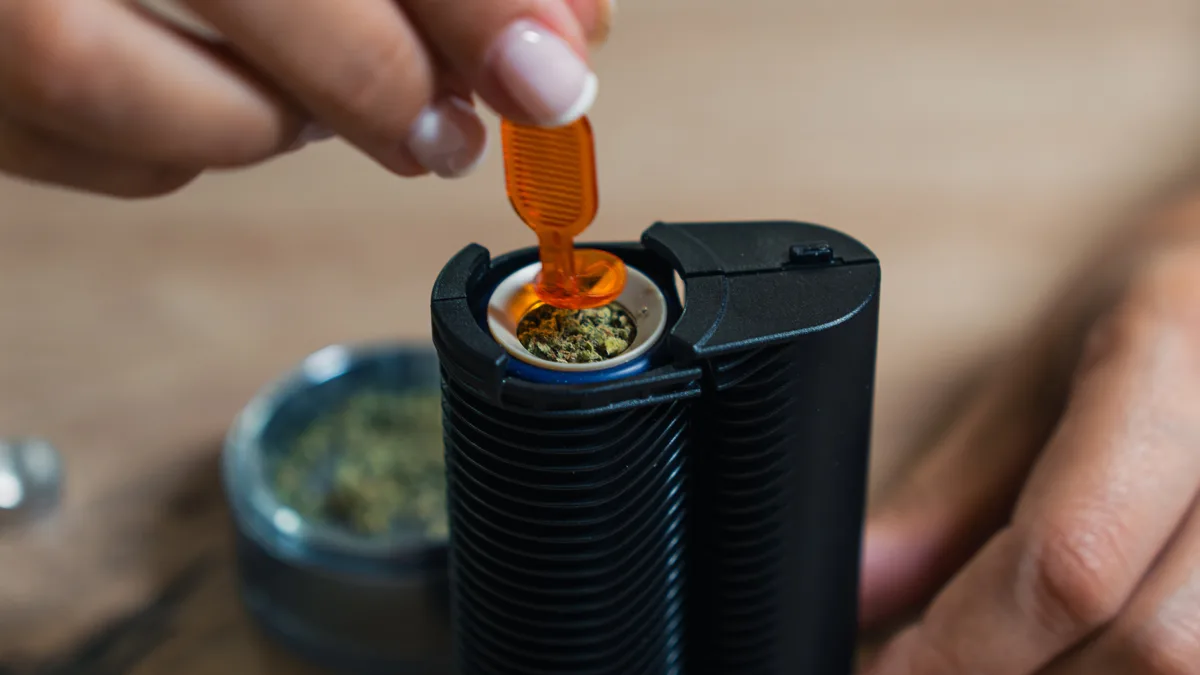
Photo: VapeExperts
A user packs ground cannabis flower into the chamber of a Storz & Bickel Crafty+ vaporizer. Under SB 220, Georgia patients can now vaporize medical cannabis flower, though smoking remains prohibited.
Combustion is another matter. Georgia law "strictly prohibits the smoking of cannabis products and the production of candies and cookies," per the commission.[1] Patients can legally buy flower, but only to vaporize it. Lighting it remains illegal. For readers new to the distinction, our guide to vaping versus smoking cannabis flower explains how vaporizers heat flower without burning it.
Products moved fast. Trulieve held a ceremonial first sale on July 1 at its Marietta location, sold to retired Army veteran Desi Cleveland. The purchase included a Roll One Clutch All in One vape and Modern Flower whole flower, both "available for the first time in Georgia," the company said. Botanical Sciences launched vaporized oil and flower products the same day at its five dispensaries in Pooler, Chamblee, Marietta, West Midtown, and Stockbridge. Fine Fettle told Decaturish it would offer cannabis flower, vape cartridges, and disposable vapes to cardholders.
Milligrams replace the 5% cap
The old program capped products at 5% THC. SB 220 scraps that in favor of milligram limits, according to NORML's legal summary.[4]
The commission says lawful possession now requires three things: 12,000 milligrams of THC or less, a physical or electronic registry card from the Georgia Department of Public Health, and product in a manufacturer-labeled pharmaceutical container stating the THC content.[1] Individual packages are capped at 1,200 mg of THC.[1]

Photo: VapeExperts/AI
Everything else stays illegal. "No. The law does not make the sale, or possession, of all types of marijuana legal in Georgia," the commission says.[1] Home cultivation is not authorized, and "possession of any form of marijuana by an unauthorized person is, and remains, a violation of state and federal law."[1]
Who qualifies and where they buy
The registry now lists 18 qualifying conditions, including cancer (except most skin cancers), seizure disorders, multiple sclerosis, Parkinson's disease, PTSD for adults, intractable pain, and lupus.[1] Certifying physicians must have a principal practice location in Georgia.[1]
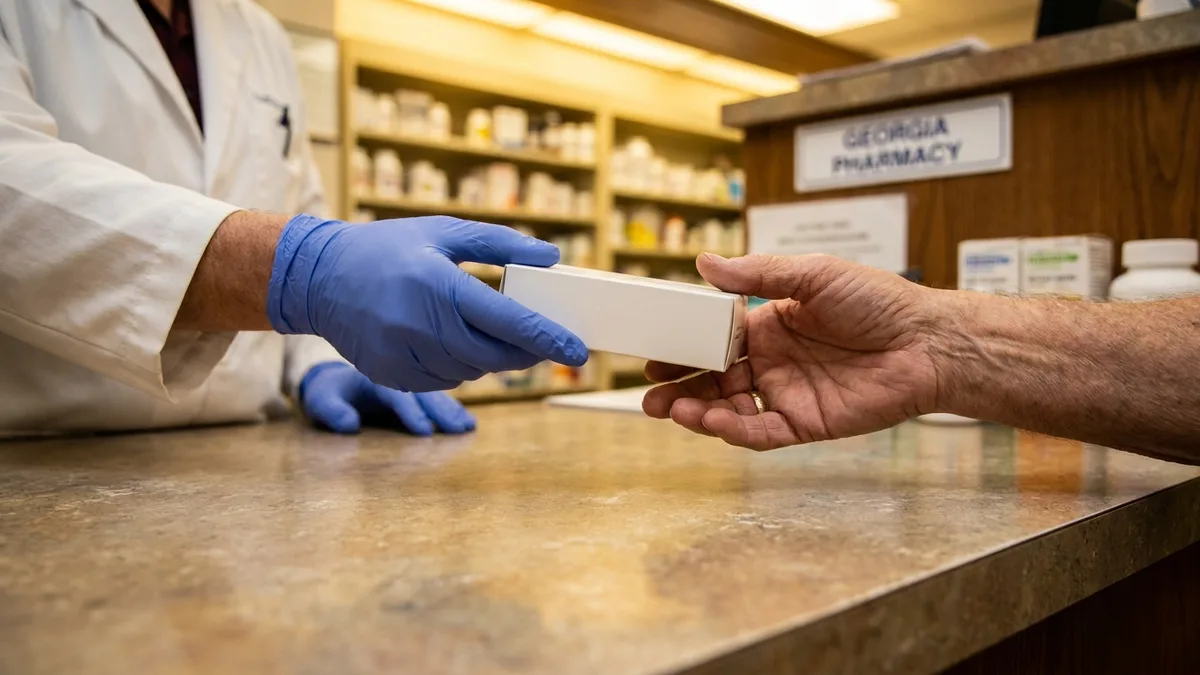
Photo: VapeExperts/AI
Patients can buy at commission-licensed dispensaries or at independent pharmacies licensed by the Georgia Board of Pharmacy.[1] Axios Atlanta reported, citing Botanical Sciences CEO Gary Long, that more than 400 independent pharmacies can now sell medical cannabis. Pharmacy dispensing is rare in US cannabis markets, which makes Georgia's channel worth watching.
Doctors fought the vape provision
Not everyone backed the change. WSB-TV reported a letter from Georgia physicians opposing the bill during the legislative session. "SB 220 would authorize high-risk cannabis products, such as vapes and concentrates, that have no demonstrated safety or benefit for any medical condition and are shown to increase the risk of psychosis, addiction, seizures, heart attacks, cognitive impairment, and other serious health harms," the letter said.
Lawmakers were not persuaded. The bill passed the Senate 39 to 17 in March, per NORML, and Georgia Recorder reported the House approved an amended version 138 to 21. Final margins ran even wider: 144 to 21 in the House, according to The Current GA.

Photo: DPST/Newscom
The gold dome of the Georgia State Capitol rises above the building's columned facade in Atlanta.
Feb. 19, 2025
SB 220 was introduced in the Georgia Senate.
March 6, 2026
The Senate passed the bill 39 to 17.
March 12, 2026
The House passed an amended version 138 to 21, adding conditions and enabling vaping.
May 12, 2026
Gov. Brian Kemp signed SB 220 into law.
July 1, 2026
The expanded program took effect and first vape and flower sales began.
What to watch
Georgia is now broader than it was, but still one of the most restrictive medical programs in the country: no smoking, no home grow, no adult use, no cannabis candies or cookies.[1] The commission notes that 47 states now regulate cannabis in some form, but "no two states have laws that are exactly alike."[1]
Open questions we are tracking:
- How fast the pharmacy channel materializes. The 400-plus figure comes from a single company executive; we want to see how many pharmacies actually stock product.
- How enforcement handles the flower-for-vaporization line. Patients can legally possess flower but not combust it, and it is unclear how that distinction plays out in practice.
- Whether commission rules add detail on device standards, testing, and labeling for the new vape categories.
- How state programs like Georgia's interact with the federal shift we covered in our Schedule III reporting, since the commission stresses that unauthorized possession still violates federal law.
The next signal will come from patient registry numbers. A program that spent a decade limited to low-THC oil now sells vaporizers and flower. Whether patients sign up in larger numbers will tell us if the expansion worked.