

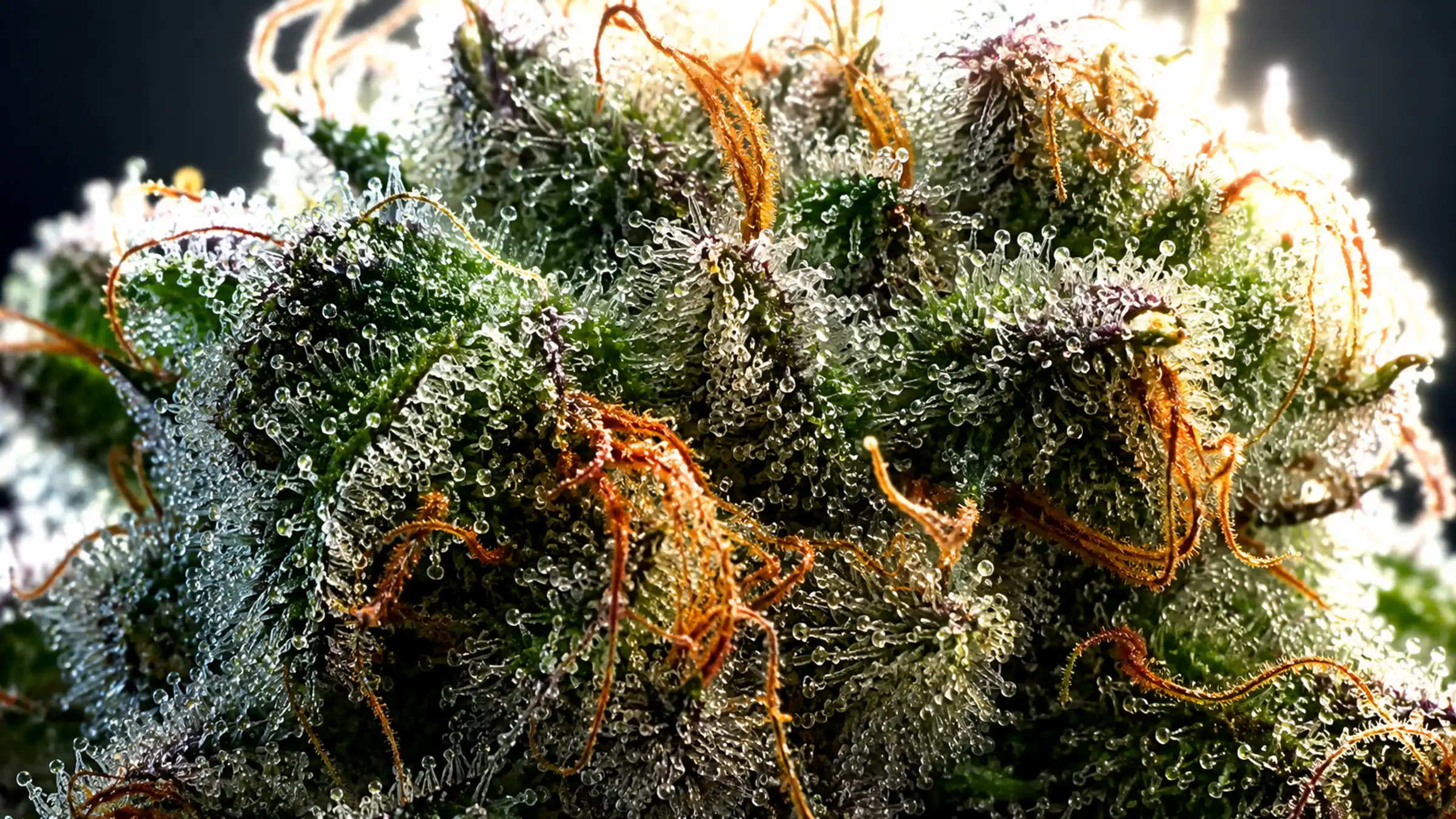
Australian doctors can prescribe cannabis extracts advertised at up to 88% THC. The clinical evidence for those products stops at 22%. That gap sits at the center of two Monash University studies published in May, and it is now driving a regulatory review that has yet to produce a single national potency rule.
More than half of adverse reports point to higher-THC products
The first study, published May 3 in the Australian & New Zealand Journal of Psychiatry, analyzed 614 case reports containing 1,124 adverse events submitted voluntarily to Australia's drug regulator between mid-2022 and May 2025.[1] Myfanwy Graham of the Monash Addiction Research Centre led the work.
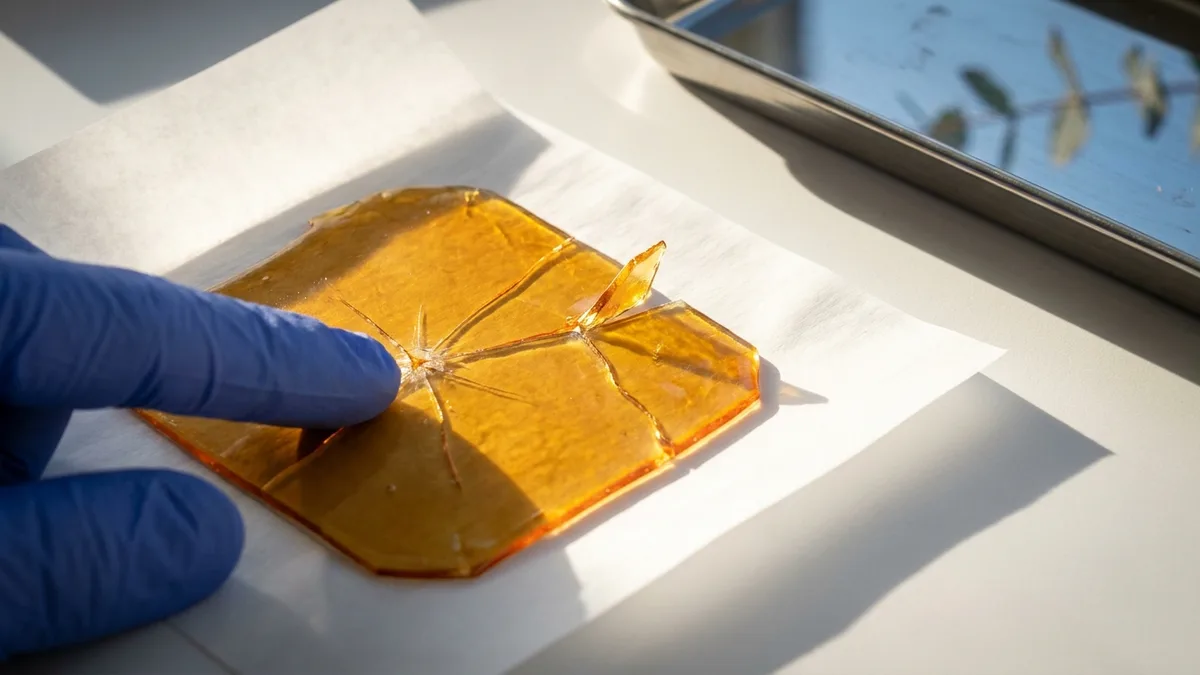
Photo: VapeExperts/AI
54.1% of reports involved Category 5 products, the THC-dominant class in which CBD makes up less than 2% of total cannabinoids. Products in that category ranged from about 13% to more than 88% THC in the dataset. Psychiatric disorders were the leading adverse-event category, accounting for 30.6% of all events and 31.9% of events tied to higher-THC products. Anxiety, psychotic disorder and paranoia topped the list. 14 cases involved suicidal ideation, suicidal behavior or attempted suicide.[1]
"In our earlier analysis, most reports involved combination CBD and THC products," Graham said. "In this study, higher-THC products account for more than half of all reports and psychiatric disorders, including anxiety, psychotic disorder and paranoia, are the leading adverse reactions."
The data come with real limits. Reporting is voluntary, so there is no denominator showing how many patients used each product type, and a report filed after cannabis use does not prove cannabis caused the event. Rose Cairns and Nicholas Buckley, pharmacology researchers at the University of Sydney who were not involved in the studies, put it plainly: "Just because someone reports an adverse event this doesn't necessarily mean the medicine caused it."[6]
Earlier data obtained by ABC News under freedom of information laws largely matched the study's numbers: 615 reports between July 2022 and June 2025, including 76 anxiety reports and more than 50 psychotic-disorder reports.[7]
The clinical evidence stops at 22% THC
The second Monash study, a rapid review in Drug and Alcohol Review, asked a simpler question: what does the research actually say about high-strength products? The answer was close to nothing. Researchers screened 9,969 records and found only 15 relevant studies, six randomized controlled trials and nine observational studies. The strongest products tested contained 16% to 22% THC. Above that line, the review found no safety or efficacy evidence at all.[2]
Photo: VapeExperts/AI
Adverse effects in the available 16% to 22% literature were mostly mild or moderate: dizziness, cough, dry mouth, nausea, anxiety and feeling "high." The authors said those results cannot be extrapolated to the 60% to 88% extracts and concentrates on the Australian market.[2]
A market that outgrew its framework
Australia now lists more than 1,000 unapproved medicinal-cannabis products, and more than 99% of prescribed products have never gone through the standard registration process for efficacy, safety and quality. Only two cannabis medicines, Epidyolex and Sativex, are registered.[4]
The market has grown fast. Penington Institute data show product units supplied nearly quadrupled in two years, and Category 5 products made up about 85% of all units supplied in the first half of 2025. Inhalation product units rose 51% between the second half of 2024 and the first half of 2025.
Medicinal cannabis product units supplied in Australia
Source: Penington Institute
Chronic pain accounted for 43.8% of Special Access Scheme approvals in the year to October 2025, and anxiety for 31.2%, despite official caution about THC in active mood and anxiety disorders. Clinicians have raised alarms about the downstream effects. Brett Emmerson, a psychiatrist and former Queensland chair of the Royal Australian and New Zealand College of Psychiatrists, told ABC News: "We're seeing a lot of people getting medicinal cannabis who end up with their first psychotic episode, or we're seeing it dispensed to people who have psychotic conditions, and these people are relapsing."[8]
The pattern echoes what researchers found in Germany's medical market, where high-THC flower dominates prescriptions. We covered that study in our Germany medical cannabis THC report. In both countries, the open question is the same: whether a prescription framework built for medicine is instead supplying recreational-strength products at scale.
Veterans get a 25% cap; everyone else waits
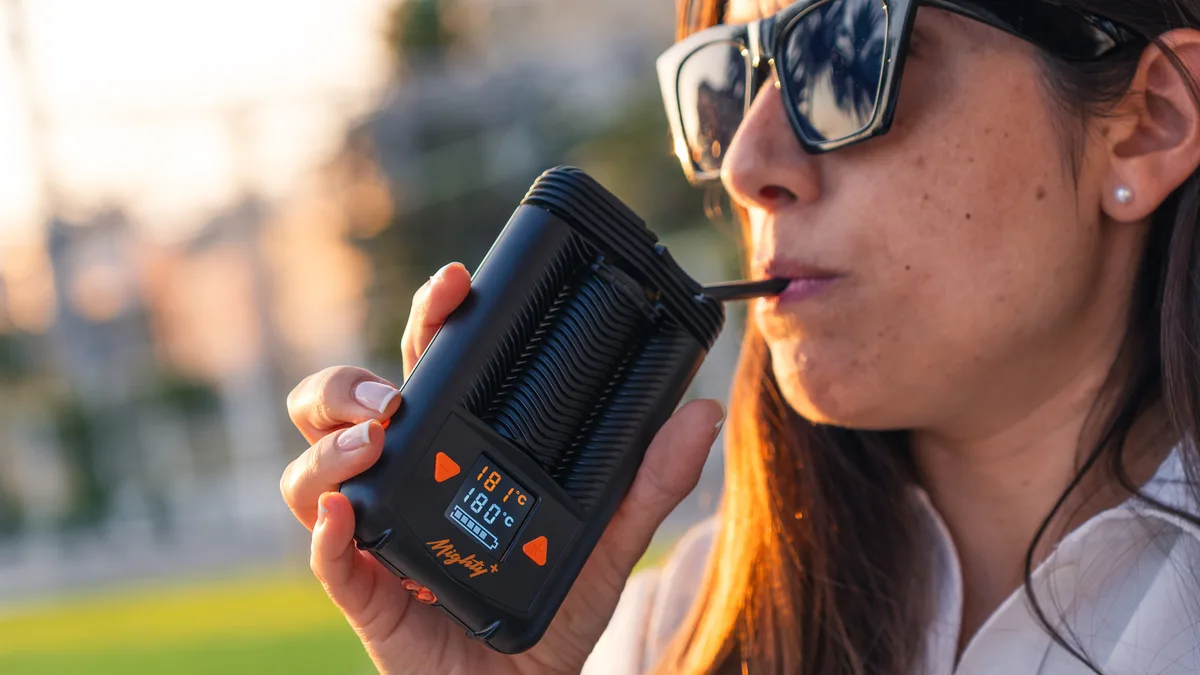
Photo: VapeExperts
A woman uses a Storz & Bickel Mighty+ vaporizer outdoors. Researchers at Monash found no safety evidence for cannabis products above 22% THC, highlighting a market that has outgrown its regulatory framework.
One Australian agency has already drawn a line. Since February 16, the Department of Veterans' Affairs has applied stricter funding rules for new patients: dried flower capped at 25% THC, a limit of 2 grams per day, mandatory mental-health and substance-use screening, and no funded edibles. The agency funds cannabis flower only when used with a TGA-approved medical vaporizer, not smoked.[5] That mirrors the harm-reduction logic behind dry herb vaporizers generally: heat without combustion. Existing patients have a transition period through August 31, 2026.
The national regulator has moved more slowly. In its July sector update, the Therapeutic Goods Administration said its review drew 786 submissions and outlined a staged path: public education in the short term, possible scheduling and quality changes in the medium term, and broader regulatory reform later.[3] No national THC ceiling and no implementation dates have been announced. Consultation submissions suggested "safe" limits ranging from 10% to 100%, a spread that shows how far the sector is from consensus. Medicinal cannabis remains a TGA compliance priority through December 2027.
What the wider science says
The international evidence base is filling in around the Australian debate. A scoping review in BJPsych Open, covering 71 studies of people aged 14 to 25, found cannabis above 15% THC was associated with more and larger adverse mental-health outcomes, particularly dependence, psychosis and cognitive impairment. One included case-control study reported an odds ratio of 12.1 for first-episode psychosis among daily high-potency users.[9] The review did not formally rate study quality and cannot establish causation.
Photo: VapeExperts/AI
A July review in The Lancet Psychiatry concluded there is credible evidence that daily cannabis use contributes causally to psychosis, while calling the evidence on depression, anxiety and suicidality less certain.[10] A companion policy paper warned that poorly regulated medical access without safety and efficacy evidence could increase harm.
Graham argues the reports her team analyzed are only the visible edge of the problem. "These reports capture only a fraction of the adverse events that actually occur," she said. "The fact that we are seeing this volume of psychiatric adverse reactions, even with significant under-reporting, should prompt a closer look at how these products are being prescribed and monitored."