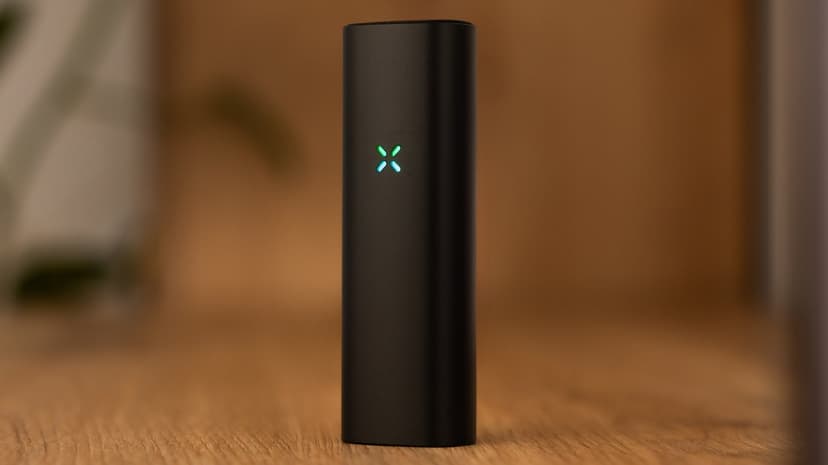

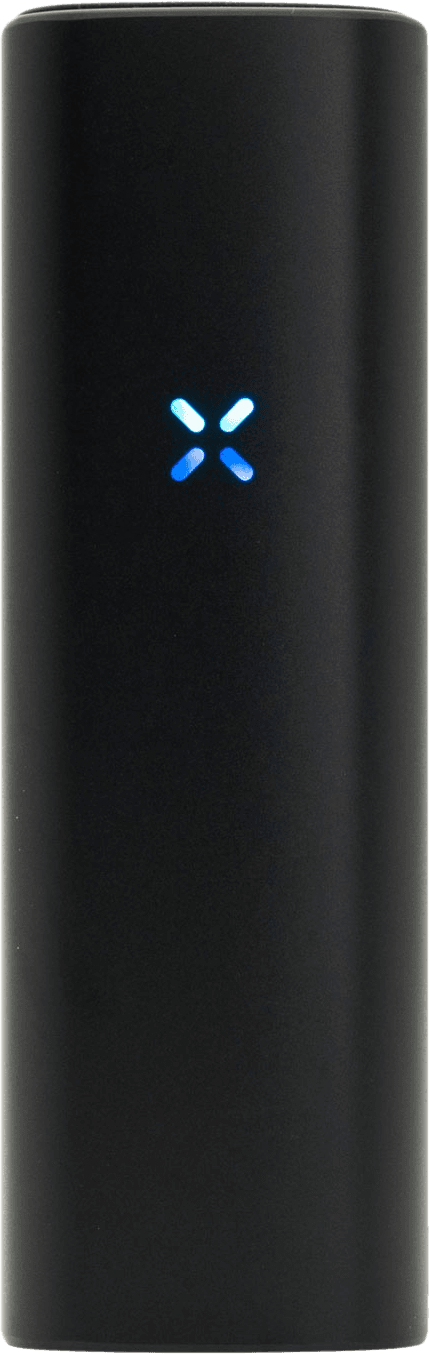

The PAX Mini 2 wins this matchup, scoring 8.4 against 7.9 for the XMAX V3 Nano. It's the better-built vape, with four heat modes, a far bigger oven and a longer warranty. Pick the Nano if you want hybrid heating at a $50 list price and only take a few draws at a time.
Key differences
- Price: US list price of $150 for the PAX Mini 2 and $50 for the V3 Nano.
- Heating: conduction with four heat modes on the PAX; hybrid heating on one automatic cycle in the Nano.
- Oven: 0.5 g on the PAX (0.25 g with the half-pack lid), against about 0.08 g in the Nano.
- Build: the PAX's anodized aluminum scores 8.5; the Nano's metal body and thin glass mouthpiece score 5.5.
- Charging: a proprietary magnetic cable on the PAX, standard USB-C on the Nano.
- Shape: the PAX is an 89 g block, 93 mm tall; the Nano weighs 55 g but runs 133.6 mm long.
- Warranty: 2 years on the PAX, plus a bonus year when you register within 30 days; 12 months on the Nano's electronic base.
Vapor and flavor: heat control against a fixed cycle
The PAX Mini 2 lets you choose from four color-coded heat modes, from low and flavorful to hot and cloudy. We settle on Green for flavor-forward daytime sessions and Yellow for fuller extraction in the evening. Pack the 0.5 g oven snugly and the spent cannabis comes out evenly browned. The draw is tight, though, so it rewards slow mouth-to-lung sips over deep lungfuls.
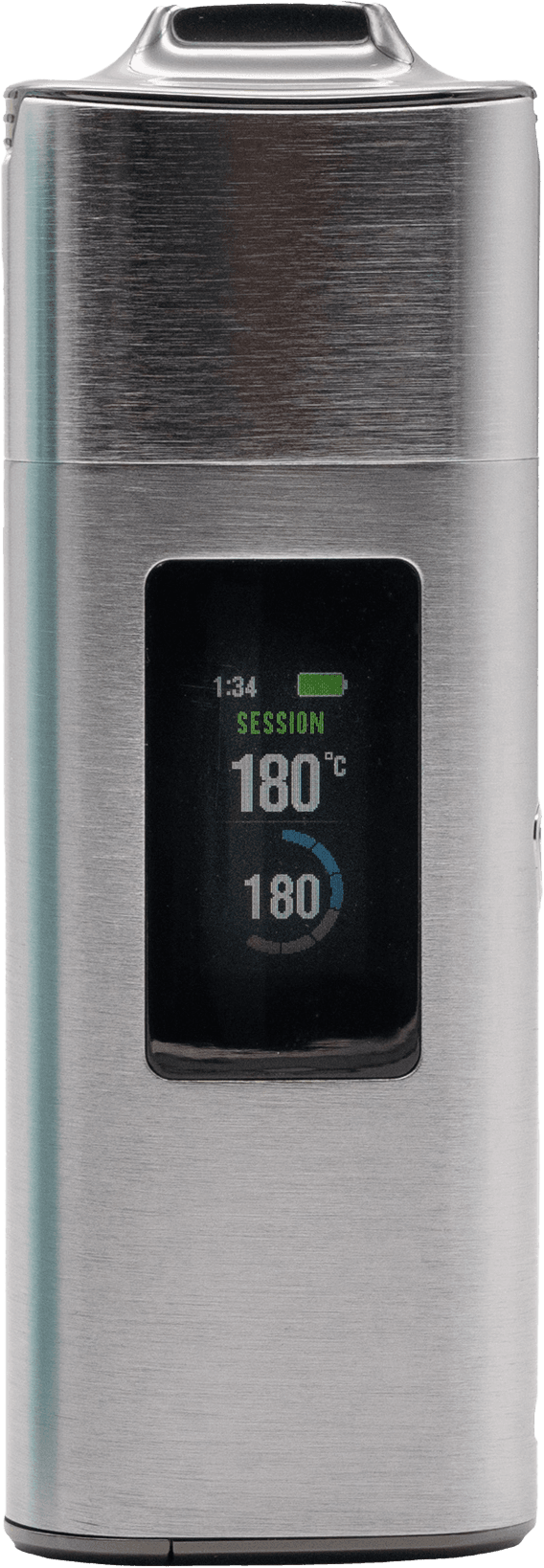
The V3 Nano runs one automatic three-minute cycle between 200°C and 220°C, with no temperature to pick. First draws taste clean and bright through the glass mouthpiece, and its hybrid heater felt smoother to us than the PAX. The catch is the tiny chamber, which gives you a handful of pulls before the load is spent.
Vapor quality still favors the PAX, 7.2 to 6.8. For most sessions, a choice of heat and a real oven beat a fixed cycle and a pinch-sized chamber.
Size, build and daily carry
Both score 9.5 for portability, but they carry very differently. The PAX is a dense aluminum block that nearly disappears in a closed fist. The Nano slips into a shirt pocket like a thick pen, though its glass mouthpiece sticks out above the body.
Build quality is the widest gap in this matchup, 8.5 for the PAX against 5.5 for the Nano. The PAX has no glass parts in its stock setup, so it's an easy vape to toss in a bag. The Nano's thin glass and basic O-ring fit remind you of its price, and replacement glass adds cost over time.
One PAX drawback is heat: the body gets warm toward the end of longer sessions, so hold it by the top half.
Battery and charging
Both batteries are sealed, so neither can be swapped when it wears out. The PAX packs 2,000 mAh, and PAX rates it at 45 to 60 minutes, or 3 to 4 full sessions, per charge. The Nano carries a smaller 1000 mAh cell that charges at 5 V/1 A.
Charging is the Nano's clearest practical win, since any USB-C cable will do. The PAX needs its proprietary magnetic cable, and losing it leaves the vape dead until you source a replacement. That's one of our biggest gripes with the Mini 2, because most rivals at its price use standard USB-C.
Value: is the PAX worth $100 more?
The Nano scores 9.0 for value against 8.5 for the PAX, and it's the lowest-priced pick in our best budget vaporizers ranking. The PAX Mini 2 earns a spot there too, as the discreet pick. For a first try at vaping cannabis, a $50 list price keeps the risk low.
For daily use, though, the PAX earns its extra $100 with a sturdier body, a bigger oven and heat you control. The Nano is built for microdosing with a vaporizer, so heavier users will find themselves repacking constantly.
Which should you buy?
- Daily users who want one pocket vape: the PAX Mini 2, for its oven size and four heat modes.
- Buyers who care about build and warranty: the PAX Mini 2.
- First-timers on a tight budget: the XMAX V3 Nano, at a third of the price.
- Micro-dosers who take a few draws at a time: the XMAX V3 Nano.
- Anyone who wants standard USB-C charging: the XMAX V3 Nano.