

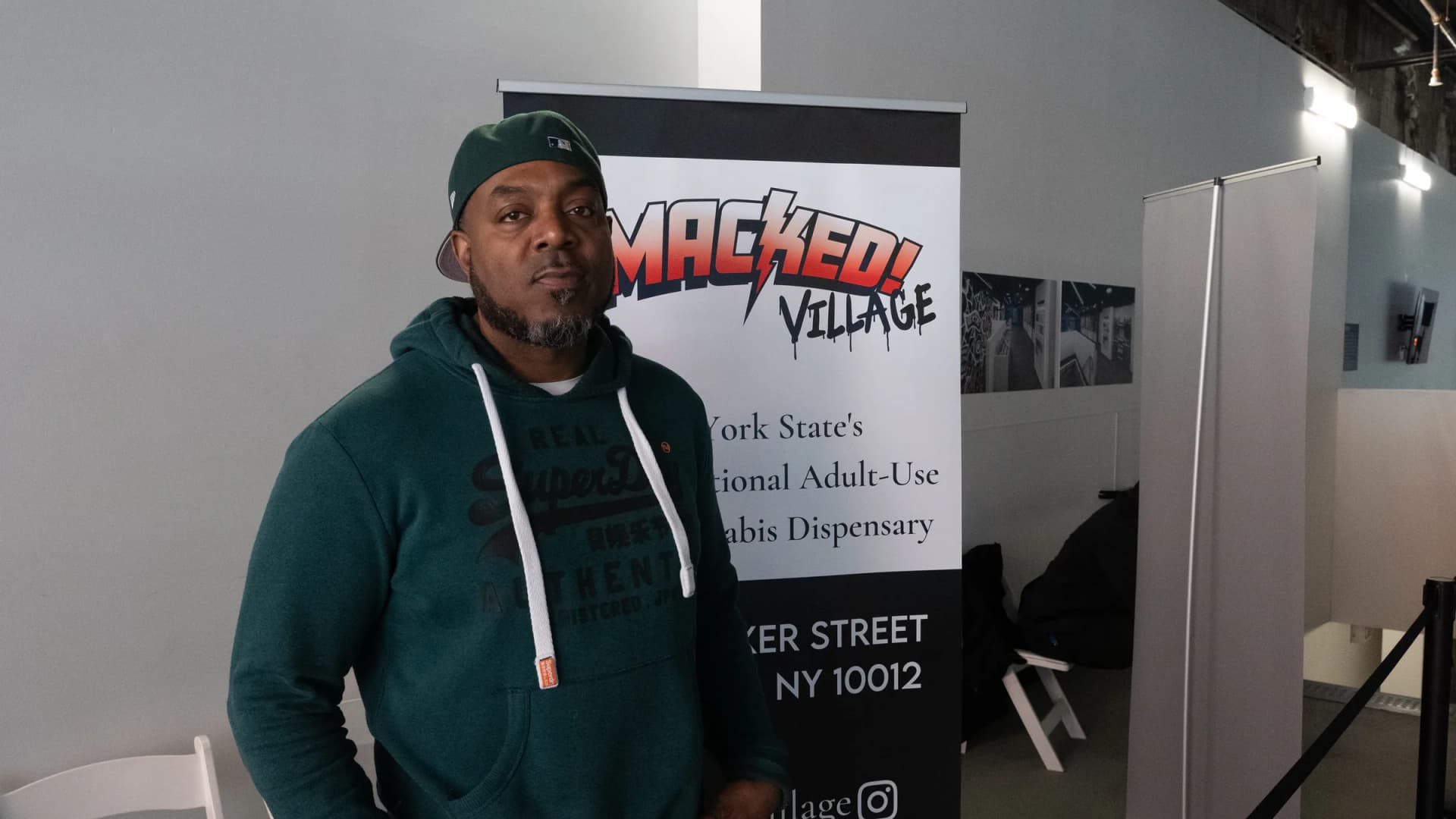
Fernando Pena got the first cannabis retail license in New York. Five years later, his revenue is down 40%, he pays about $18,000 a month in rent, and he owes $300,000 in taxes. He stopped making loan payments in July 2025.
This is what "winning" a social equity license looks like in 2026. The programs meant to repair the drug war are bankrupting the people they were built to help. That is not a side effect. It is baked into the model.
The numbers tell the real story
Equity programs were sold as a way to give people harmed by prohibition a stake in the legal market. The pitch was simple. Hand out licenses to the right people, and ownership follows.
The data says otherwise.
Only 17.5% of non-white operators turn a profit. For white-owned operators, the figure is 33.7% profitable, according to economist Beau Whitney's 2024 Cannabis Business Conditions and Sentiment Survey. The whole industry struggles, with just 27.3% of all U.S. cannabis businesses profitable. But equity operators lose at nearly double the rate.
In Massachusetts, only 101 of 690 open businesses are equity-owned. That is 15%. The state's own Cannabis Control Commission chair, Shannon O'Brien, put it plainly: "We have not met the mission of promoting social equity."
In Washington State, just 9 of 46 authorized equity retail licenses were issued. By 2020, 82% of retail licenses were white-owned.
The defenders have a point worth taking seriously
Now the other side. State officials say the programs are working, just slowly.
They have real wins to point to. Illinois cleared 780,000-plus cannabis records and issued 11,430 pardons. By December 2025, only 94 people remained in prison for cannabis in the state. Illinois also put $330 million into community reinvestment grants for neighborhoods hit hardest by the drug war.
New York's numbers look strong on paper. Governor Hochul's office reported in March 2026 that 56% of adult-use licenses went to Social and Economic Equity applicants, beating the 50% legal target. Of 342 CAURD licenses approved, 86% of dispensaries are open.
This is the strongest version of the "progress" case. Expungements are real. Licenses are real. And the public wants this work to continue. A 2024 survey by the Parabola Center found 68% of Americans say legalization should prioritize social equity. That finding rests on a small sample of about 200 respondents from an advocacy group, so treat it with care.
We do not dismiss these gains. Clearing 780,000 records is a genuine act of justice. But there is a gap between handing out a license and building a business that survives.
A license is not a business
Here is the flaw at the center of every failing program. States give people licenses without the capital, expertise, or tax relief needed to compete.
In Illinois, only 64% of social equity dispensaries were operational by January 2026. Across all license types tracked by the state, the operational rate is even lower.[2] A license you cannot afford to open is not ownership. It is paperwork.
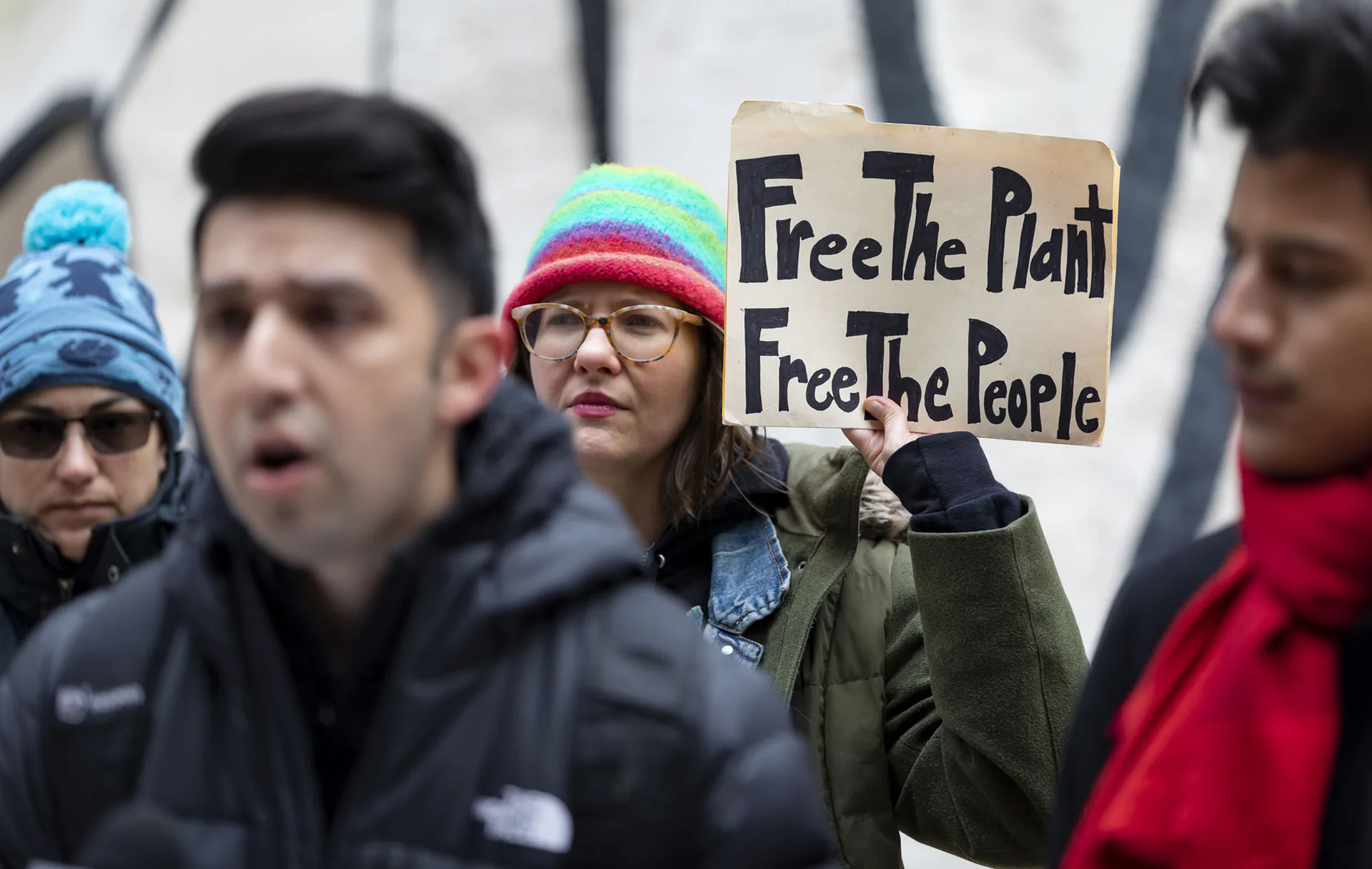
Photo: Brian Cassella/Chicago Tribune/TNS/Newscom
Anna Rose Li-Epstein holds a sign Tuesday, March 29, 2022, during a rally outside the Thompson Center in Chicago organized by the group True Social Equity in Cannabis.
New York's flagship equity fund tells the same story. The state promised a $200 million fund. It attracted only $78 million and leased just 24 properties before shutting down in 2024. Operators who did get backing signed loans at 13% interest. Roland Conner, the first fund-backed operator, took a $1.9 million loan and was struggling to make payments within a year.
The buildout terms made it worse. One licensee was invoiced $1.6 million for construction that a subcontractor would have done for around $250,000. New York's own Chief Equity Officer, Damian Fagon, said the system "converts our licensees into ATM machines for landlords, investors, fund managers, and contractors before inevitably bankrupting them."
Cory Waggoner, CEO of Higher Yields Cannabis Consulting, said it bluntly: "They create a lot of false hope, and in a lot of ways they set people up for failure. Most of [the equity programs] fall flat on their face."
The predators saw the opening
When you hand undercapitalized people licenses but no money, you create a market for sharks.
Missouri shows what happens next. The state revoked 34 of 96 microbusiness licenses, roughly 35%, mostly over predatory investor arrangements. One out-of-state investor, Michael Halow, was connected to 22 of the revocations.
Missouri's regulator, Amy Moore, described the scheme directly. The eligible applicants showed a "lack of knowledge, control, agency or decision-making" that "does not meet even the most generous interpretation of owning and operating a business." Translation: the names on the license were fronts.
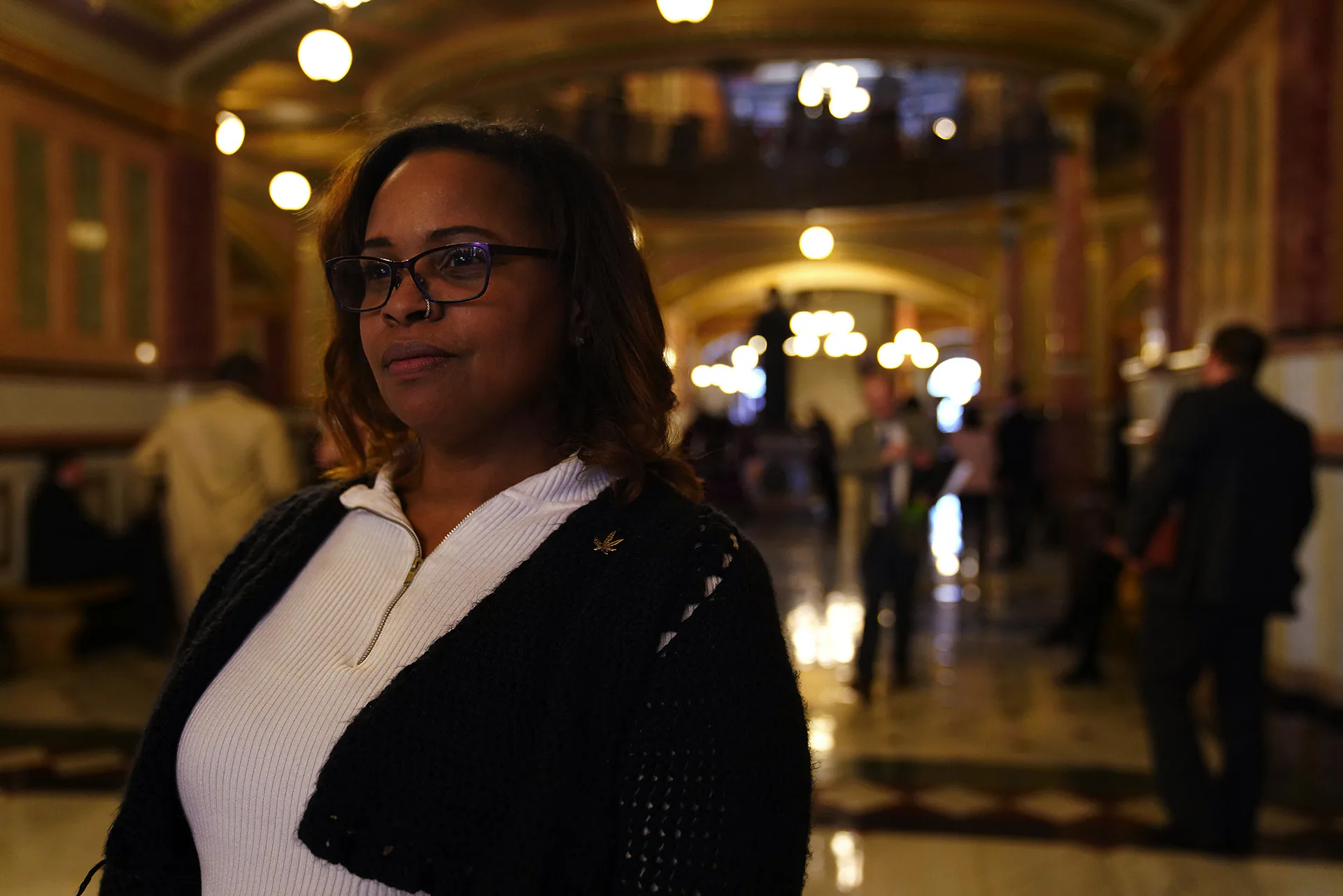
Photo: E. Jason Wambsgans/Chicago Tribune/TNS/Newscom
Cannabis equity advocate Edie Moore at the Illinois State Capitol in Springfield on April 12, 2024.
An FBI investigation is now looking at corruption around cannabis licensing across multiple states.
Federal law is loading the dice
Even a perfectly run state program runs into a wall: federal prohibition.
The tax code section known as 280E bars cannabis businesses from deducting normal expenses. The result is effective tax rates above 50%. A well-funded multi-state operator can absorb that. An equity operator running on a thin loan cannot.
Banking makes it worse. Federal law keeps most banks away from cannabis, which pushes operators toward cash-only operations or the same predatory lenders who are already bleeding them.
There was movement in 2026. In December 2025, President Trump ordered the attorney general to speed up rescheduling. On April 23, 2026, Acting AG Todd Blanche moved medical marijuana to Schedule III. But recreational cannabis stayed on Schedule I, according to Ohio State's Drug Enforcement and Policy Center. Most equity operators work in recreational markets. They get no relief from the partial move.
A broader rescheduling hearing begins June 29, 2026. It matters. But even Schedule III would not fully fix 280E for recreational businesses, and Senators James Lankford and Pete Ricketts have introduced a bill to block the deductions regardless.
What actually works
We are not arguing equity should be abandoned. The goal is right. The delivery is broken. The research backs this. A peer-reviewed George Washington University study found wide variation across states and called for support that goes well beyond handing out a license.[6]
Here is what the evidence points to.
Fix the loans first. New York operators are organizing through CAURD Inc. to convert predatory debt into forgivable loans, modeled on Illinois. The state should cap interest, forgive what it can, and let licensees control their own buildouts instead of mandating expensive contractors.
Fund the support, not just the license. In Colorado, BIPOCann runs a year-long accelerator and reports working with 50-plus equity businesses, several of which expanded to multiple states. Sustained help works better than a license and a handshake.
Use merit, not lotteries. The GWU researchers found lottery systems invite gaming. Merit-based allocation, paired with real anti-consolidation rules, keeps licenses from flowing to fronts and multi-state operators.
Punish the predators. Missouri's model of revoking licenses and banning connected investors should be the national standard, not the exception.
Protect the money. Ohio's Senate Bill 56 redirected cannabis tax revenue away from equity programs and toward law enforcement and jail construction, overriding what voters approved. That is the risk every state faces. Reinvestment funds need legal locks.
The honest conclusion
The pattern is clear across seven states. Licenses without capital, support, and tax relief do not create owners. They create debtors.
The defenders are right that expungements matter and that some licenses are real. But a program that leaves 85% of open businesses in white hands, bankrupts its first licensees, and feeds predatory investors has not met its mission. Its own officials say so.
The fix is not to give up on equity. It is to stop pretending a license is the same thing as a business. Capital, sustained support, fair loans, merit-based allocation, and federal tax relief are what turn a license into ownership.
Until states deliver those, every new equity program is just a more polished way to set the same people up to fail.