

A worker smokes a joint on Saturday night. They show up Monday morning sober and sharp. They fail a drug test anyway.
That worker just lost a job for a legal act that had nothing to do with their performance. This is the core problem with how most American employers still test for cannabis, and it is getting harder to defend.
The debate is no longer really about whether to test. It is about what we are actually testing for.
The old test answers the wrong question
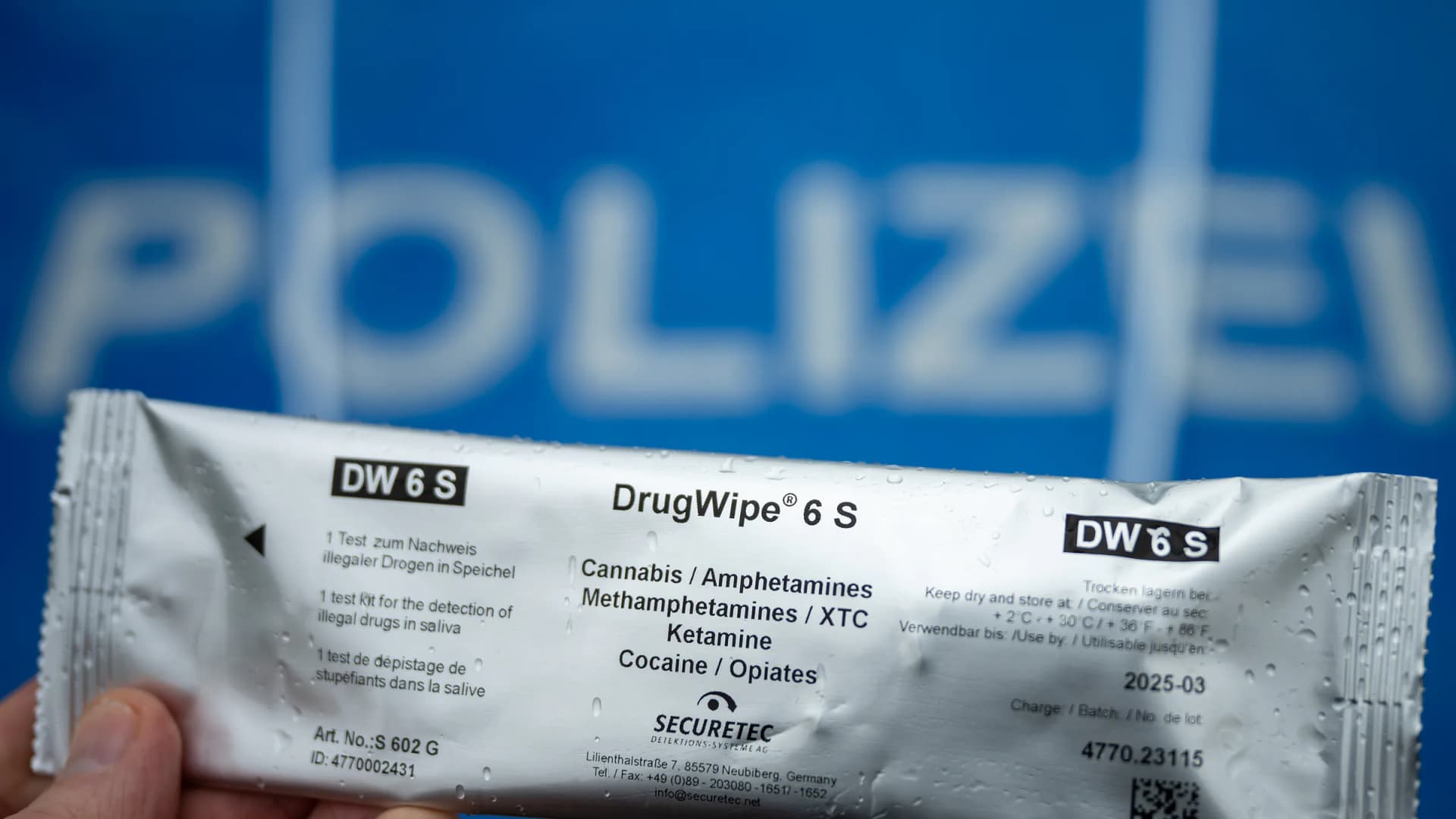
A standard urine drug screen does not measure whether someone is high. It measures whether they have THC metabolites in their system.
Those metabolites can linger for weeks after the last use. Common biological tests do not reliably indicate impairment timing.
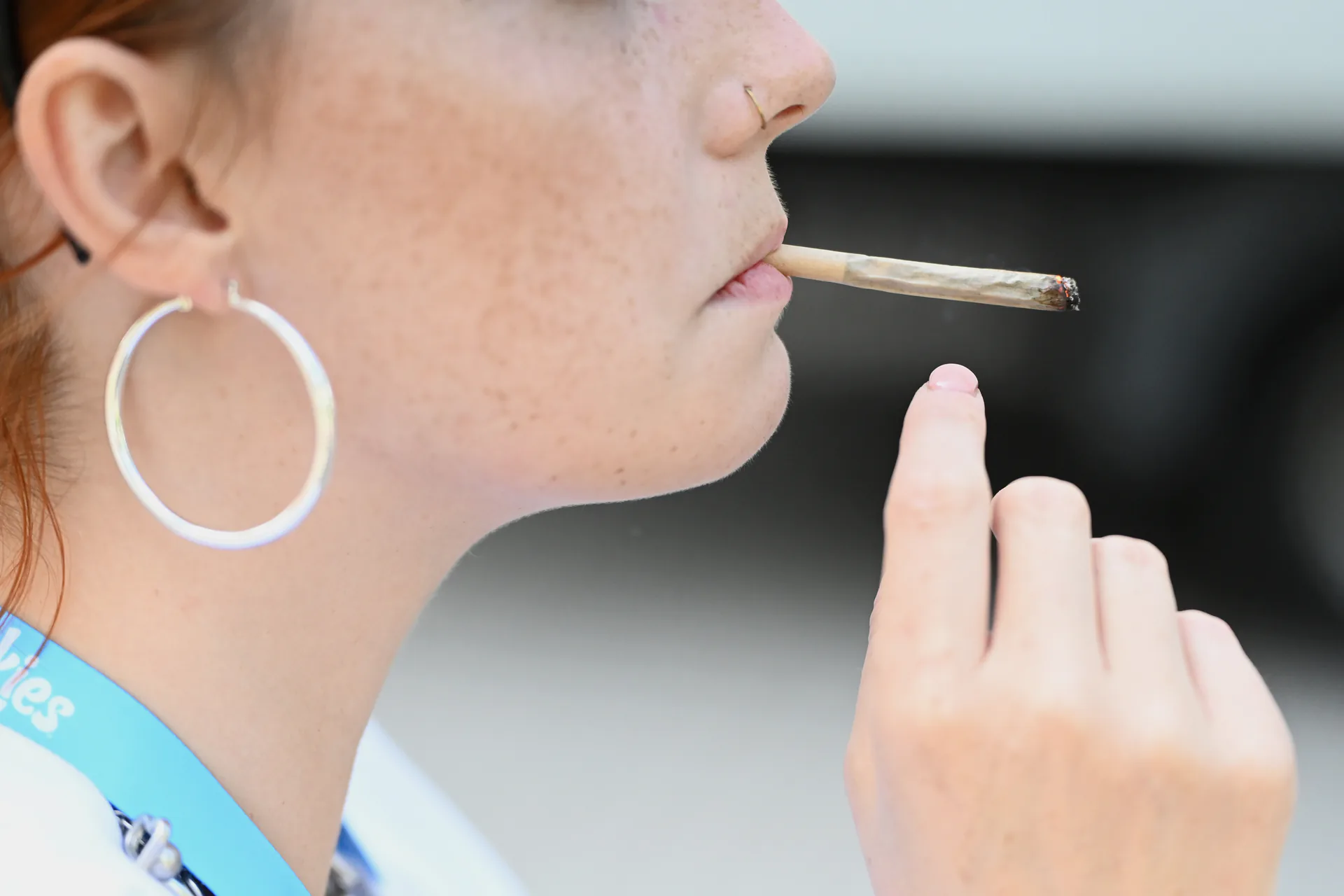
Photo: Michael Brandt/dpa/picture-alliance/Newscom
A woman smokes a joint on the fringes of the Mary Jane cannabis fair in Berlin, Thursday, June 19, 2025.
The drug testing industry agrees on the science, even when it defends the practice. The major law firm Ogletree Deakins wrote in January 2026 that "drug tests are unable to measure impairment."
So the standard cannabis test flags past behavior, not present risk. In states where that behavior is legal, the test punishes a right rather than a hazard.
The safety case is real, and it deserves a fair hearing
We will not pretend the other side has nothing. It does.
Post-accident cannabis positivity hit 7.3% in 2024, just below the record 7.5% the year before, per the Quest Diagnostics 2025 Drug Testing Index. That rate has more than doubled since 2015.
A February 2024 study in JAMA Health Forum linked recreational legalization to a 13% increase in workplace injuries among workers aged 24 to 34. Cannabis remains the most detected substance in the general workforce at 4.5% positivity.
Employers feel this. In the Current Consulting Group's 2025 survey, 70% called testing very effective and 84% said it improved safety. Bill Current, who founded the firm, argues that the expanding availability of legal cannabis makes it likelier some employees will be impaired on the job.
Those numbers matter. Nobody wants an impaired forklift operator. The question is whether a metabolite test actually stops one.
A metabolite test cannot tell the difference
Here is where the safety argument breaks down. A positive urine test does not separate the impaired worker from the sober one.
Ken Fichtler, CEO of the impairment-detection firm Gaize, framed it well in April 2026. "Someone could legally use cannabis on Saturday night, show up to work completely sober on Monday morning, and still test positive on a drug test," he said. "Chemical tests can't tell the difference between someone who smoked a joint two days ago and someone who's currently impaired on the job."
That rising post-accident positivity rate, then, may reflect rising legal use across the population, not rising on-the-job intoxication. With 23.4% of Americans using cannabis in 2024 (per NCDAS) and 57% favoring full legalization per Pew Research, more positive tests are simply expected.
A test that flags Saturday's joint after Monday's accident proves the worker uses cannabis. It does not prove cannabis caused the accident.
The law is already moving without employers
States are not waiting for the science debate to settle. At least eight states now limit cannabis-based employment actions, with more bills advancing.
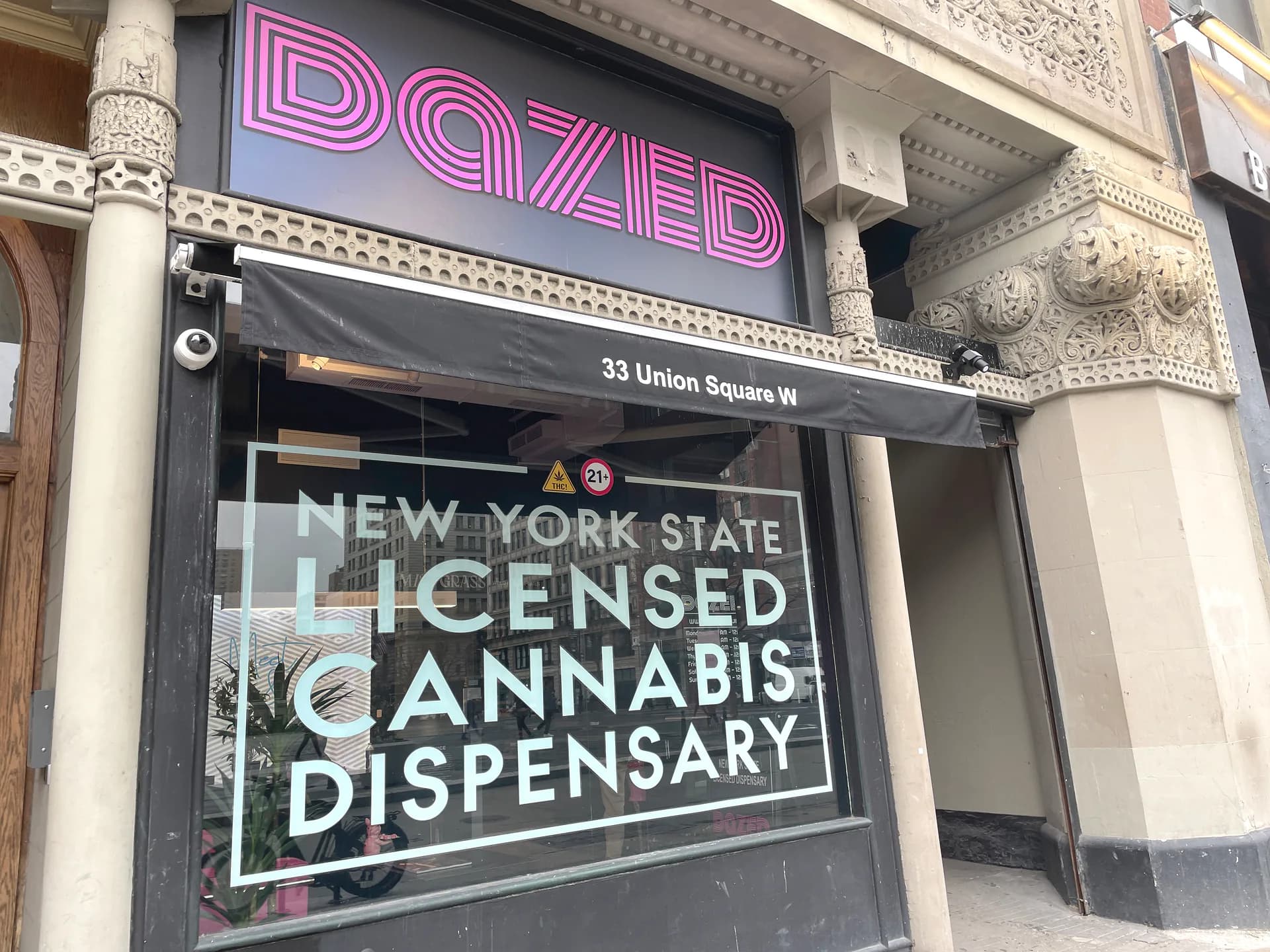
Photo: Deb Cohn-Orbach/UCG/Universal Images Group/Newscom
Signage for Dazed, a New York State licensed cannabis dispensary, is displayed at 33 Union Square West near 14th Street in New York.
| State | Core rule |
|---|---|
| California | Bans metabolite-based testing; requires impairment-based tests |
| New York | Prohibits most pre-employment cannabis testing |
| Nevada | Cannot refuse to hire based on a cannabis screen |
| New Jersey | Requires an impairment recognition expert alongside a positive test |
| Michigan | Public employers cannot test most applicants pre-employment |
California's AB 2188 took effect January 1, 2024. New Jersey's CREAMMA requires a Workplace Impairment Recognition Expert to confirm a physical exam, not just a lab result. Massachusetts and Pennsylvania have bills moving now.
In October 2025, a Florida circuit court ruled that public employers must accommodate off-duty medical cannabis use, shifting them from automatic suspensions toward an interactive process. It is one court, and it may be appealed. But the direction is clear.
What rescheduling does and does not change
On April 28, 2026, the Justice Department moved FDA-approved and state-licensed medical cannabis products into Schedule III.[1] On June 29, 2026, the DEA opens a hearing on rescheduling all cannabis, including recreational.
This does not legalize cannabis. It does not change SAMHSA federal workplace panels.[2] It does not override an employer's drug-free policy.
It does change expectations. Recognizing accepted medical use under federal law will fuel accommodation requests and open new gray areas under disability law.
The ground is shifting under every employer who still treats a positive cannabis test as automatic grounds for action.
The tools to do this right already exist
The honest objection to reform used to be practical: how do you measure impairment in the field? That objection is fading.
Oral fluid testing detects active delta-9-THC, the compound that actually gets you high, within a roughly one-to-24-hour window. The Department of Transportation authorized it in 2023, and 31% of employers plan to add it this year.[3]
Gaize uses a headset and eye-tracking to flag impairment in six minutes, and says 30% of top US construction firms now use it. Fichtler reports adopters seeing reasonable-suspicion incidents drop more than 80%.
Even cannabis reformers accept this approach. The Marijuana Policy Project does not oppose impairment-based testing. It opposes metabolite testing, recommending performance-based tests that catch any worker who cannot safely do the job, "regardless of the cause."
Where we land
Safety-sensitive federal roles are a separate track. DOT was blunt in December 2025: cannabis remains unacceptable for transportation workers, and nothing changes until rescheduling completes.[3] Pilots and truckers will keep facing zero tolerance, and that is defensible given the stakes.
For everyone else, the case for the old test has run out of road.
It flags legal off-duty behavior. It cannot find the impaired worker it claims to catch. It shrinks the hiring pool while 54% of cannabis consumers say the plant helped their careers, per a July 2025 NuggMD poll of people who use it.[4]
We are not arguing employers should stop caring about safety. We are arguing they should test for the thing that actually threatens it. Stop testing for last weekend. Test for right now.