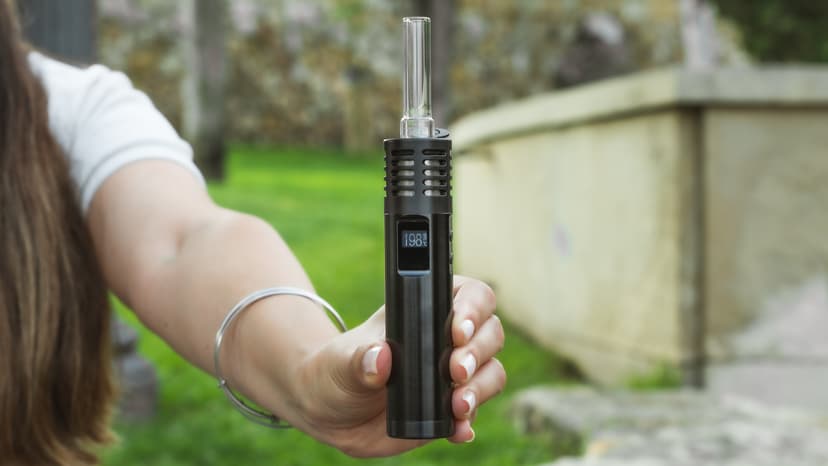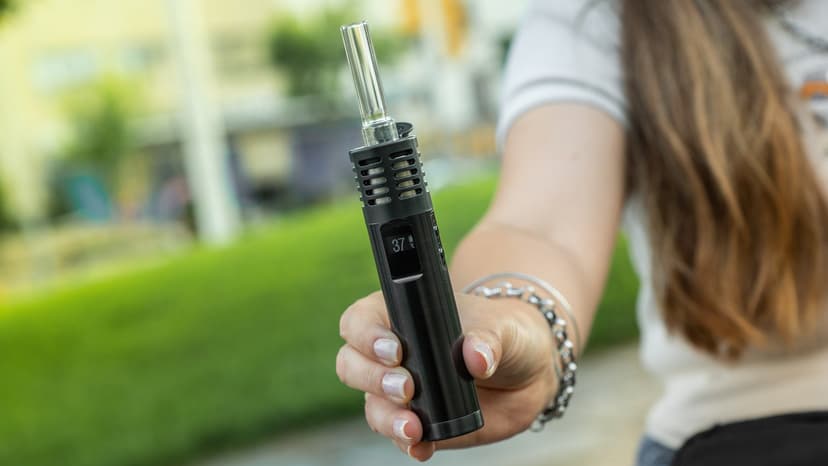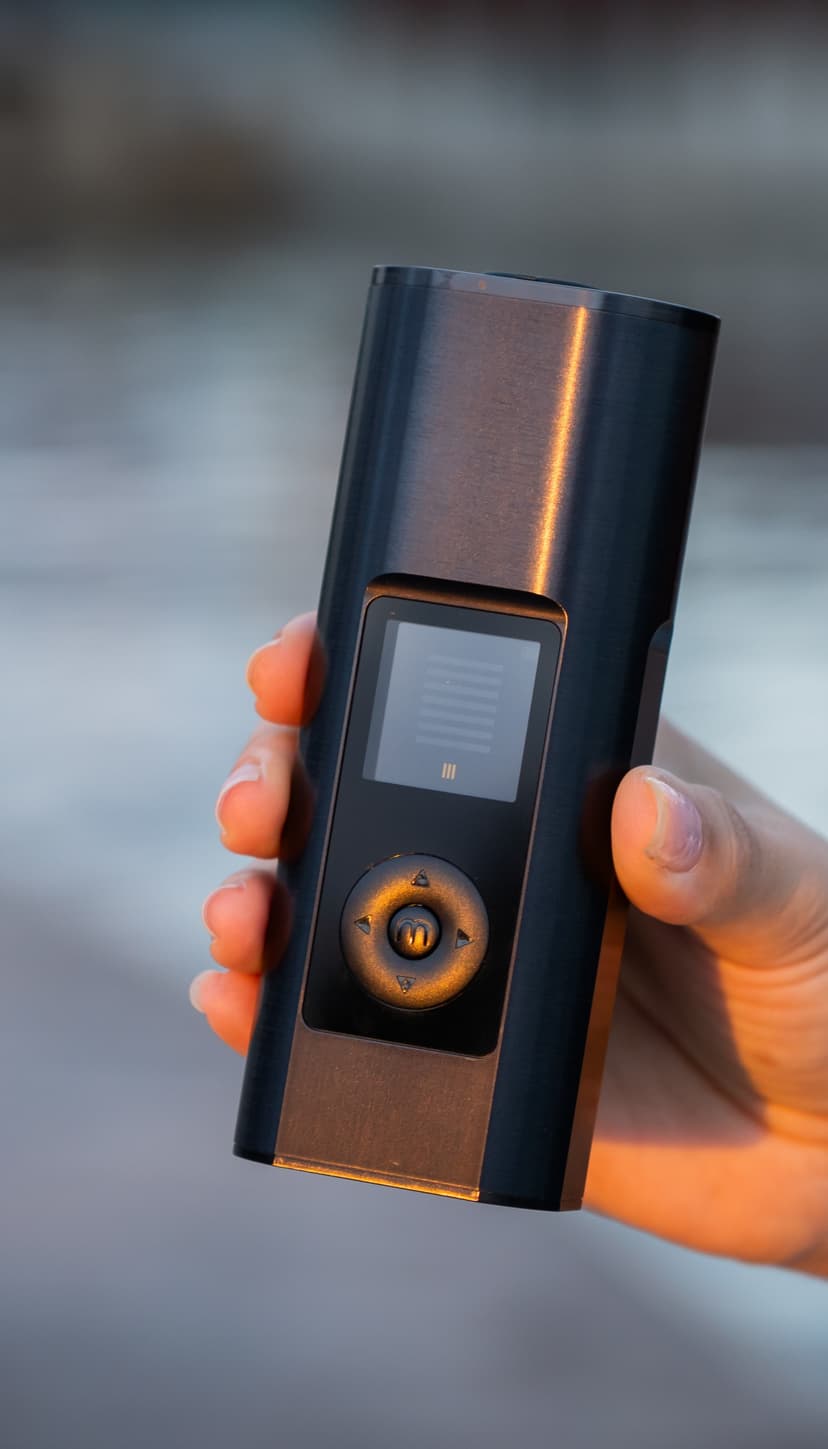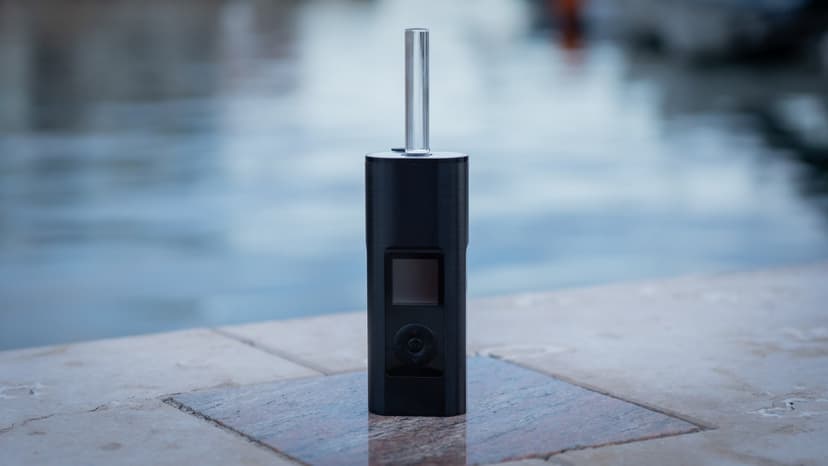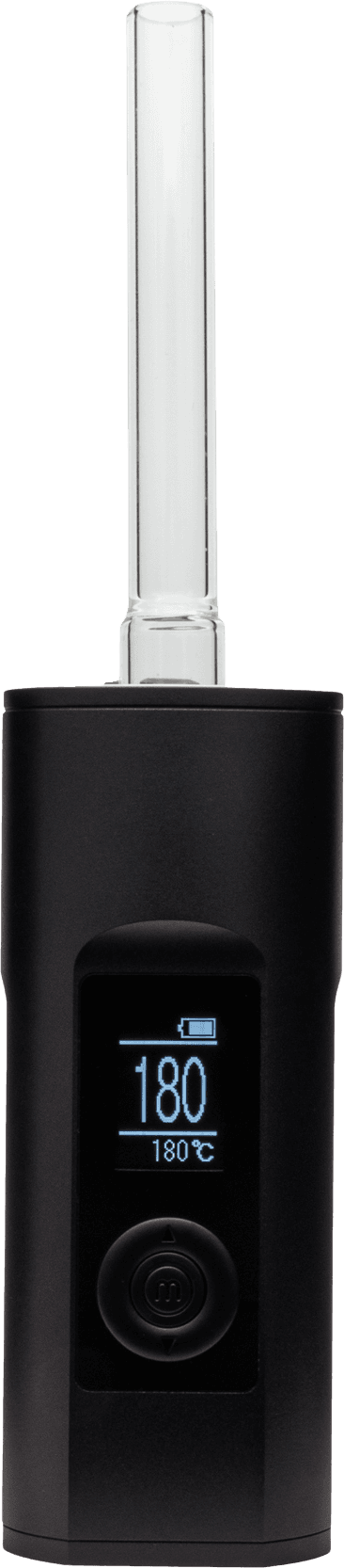


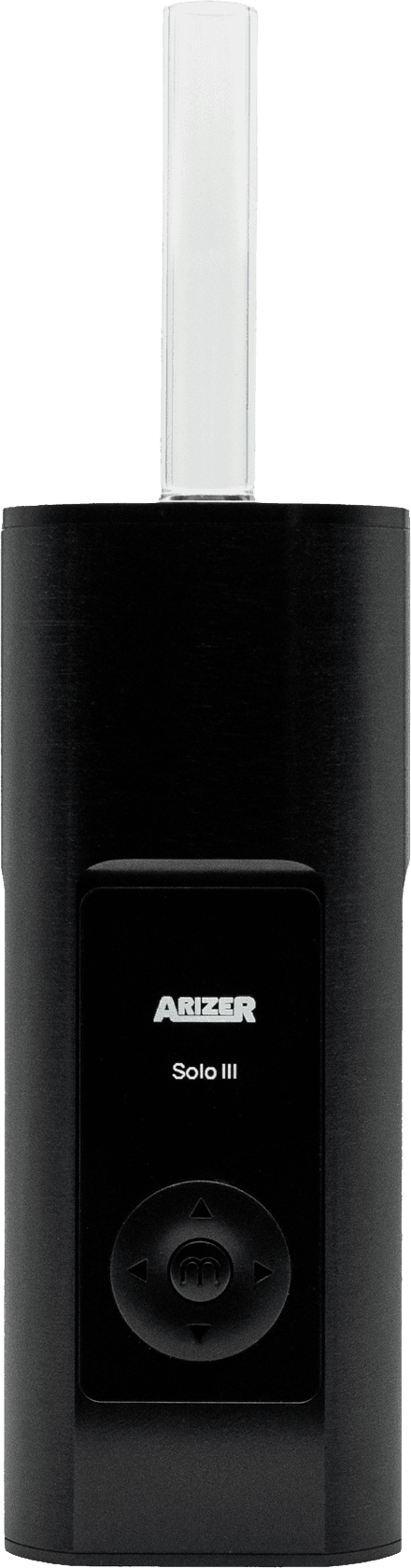
The Arizer Solo 3 wins, 8.4 to 8.0, with clear leads on vapor, build and value. It also adds on-demand hits and a far quicker heat-up. The Arizer Air Max is the better pick if you want a slim, lighter Arizer with a battery you can swap yourself, for $80 less. We tested the Solo 3 V2.0, the version Arizer sells now.
Key differences
- Price: a $299 US list price for the Solo 3, $219 for the Air Max.
- Heating: the Solo 3 runs roughly 80% convection and 20% conduction. The Air Max is a hybrid that leans less on convection.
- Modes: the Solo 3 offers session and on-demand. The Air Max is session only.
- Battery: the Air Max takes a swappable 26650. The Solo 3's cells are sealed.
- Size: the Air Max weighs 160 g and measures 30 mm across. The Solo 3 weighs 280 g at 49 x 32 mm.
- Bowl: the Solo 3's XL stem holds up to 0.5 g. The Air Max stem scoops about 0.15 g.
- Shared: an all-glass vapor path, 50-220°C in 1°C steps, pass-through USB-C charging and a 2-year warranty with a lifetime warranty on the heater. The Solo 3's sealed battery has its own 1-year cover.
Arizer Air Max vs Solo 3: vapor and flavor
Vapor is where the Solo 3 pulls ahead, 9.0 to 8.2. Both carry your cannabis in a borosilicate aroma tube, so both taste clean. The Solo 3's convection-dominant heater adds density the Air Max can't match, and its vapor is noticeably thicker at every temperature.
The Air Max is a flavor-first sipper that shines below 190°C, where delicate terpenes come through clearly. Clouds take technique, though: slow 8 to 10 second draws after a 30 to 60 second oven soak.
The Solo 3's draw is on the restricted side, so it also rewards slow sips, and our draw technique guide helps with either vape. Through a water piece, the Solo 3 gets smoother and cooler, and it ships two stems made for it. The Air Max comes with a 14 mm glass water pipe adapter in the box too, and its screen flips when you turn it upside down.
Session style: on-demand vs session only
On-demand mode is the Solo 3's best trick: a press of Up fires a short timed heat cycle, and the heater cools between hits. That suits a quick draw between breaks, while Session mode holds your temperature for up to 20 minutes.
The Air Max is built for unhurried sessions only. It suits slow sipping where you step the temperature up through the load, say from 175°C to 210°C. It's listed at about 60 seconds to heat, against 15 for the Solo 3. At three sessions a day, that is about two extra minutes of waiting daily on the Air Max, and the 30 to 60 second soak comes on top.
Ease of use is level at 8.0, and the Air Max's three buttons need no manual at all. The Solo 3's unlock sequence felt clunky for a few days before it became muscle memory.
Battery, size and carry
Runtime is even: both lasted 13 sessions per charge in our testing. That makes both of them strong all-day picks, and the Solo 3 is the endurance pick in our best portable vaporizers ranking.
The long-term story differs, though: the Air Max's 26650 slides out in seconds, so a worn cell is an easy fix. The Solo 3's battery goes to Arizer's replacement service and carries a 1-year warranty of its own.
The Air Max wins portability, 8.5 to 7.8, as a slim 160 g cylinder that fits a jacket pocket. The Solo 3 is 280 g before its stem, and with a stem fitted it rules out pocket carry.
Is the Solo 3 worth $80 more?
For most buyers, yes, since the Solo 3 leads value 8.5 to 7.8 even at the higher price. You get denser vapor, on-demand hits and four glass stems in the box, including an XL stem and two water pipe stems. The Air Max box is lean but complete: one 70 mm stem, the 14 mm water pipe adapter, three travel tubes and a USB-C charger. The Air Max still delivers Arizer's glass-path flavor for $219, just above the $200 ceiling of our budget vaporizers ranking.
Which should you buy?
- Flavor and density: the Solo 3, with its convection-dominant heater.
- Quick single hits: the Solo 3, in on-demand mode.
- Water pipe sessions at home: the Solo 3, with two water pipe stems in the box.
- Slim carry: the Air Max, at 160 g and 30 mm wide.
- DIY battery swaps: the Air Max and its 26650.
- A tighter budget: the Air Max, at $80 less.