
South Africa signed its private cannabis law two years ago. It still has not taken effect. Selling cannabis remains a crime, and the law that protects private use has never formally commenced.
That gap has left a R28 billion (£1.28 billion) market running in plain sight, with roughly half of it illegal and no clear path for sellers to go legal.
The law that nobody can use yet
President Cyril Ramaphosa signed the Cannabis for Private Purposes Act into law on 28 May 2024, the day before national elections. It was published in the Government Gazette weeks later.
But the Act is officially listed as "Not commenced." The regulations that would bring it to life are still in draft form.
That means South Africa is still governed by its old 1992 Drugs and Drug Trafficking Act when it comes to cannabis. As one legal expert put it: "It's law, but it's not active law. So we are actually still under the Drugs and Drug Trafficking Act in relation to cannabis."
The 2018 Constitutional Court ruling that started all this protects private adult use and growing at home. That right stands. What does not exist is any legal way to buy or sell.
A R28 billion market with no front door
In a March 2026 parliamentary briefing, the government laid out the numbers. Ncumisa Mcata-Mhlauli, a chief director at the Department of Trade, Industry and Competition, said the state is targeting 10% annual growth from a R14 billion base[5], while the total market could reach R28 billion.
About half of that runs in the illicit economy. The formal industry, mostly medicinal cannabis, brings in around R5.5 billion a year, Business Report reported.[1]
Cannabis policy specialist Charl Botha estimates the retail economy alone at R9 to R10 billion a year. He says the core question is how to bring an existing multi-billion-rand market into the formal, taxable, and regulated economy.
His answer is blunt. "These producers are not refusing to join the regulated space, there is simply no accessible door for them to walk through," Botha said.
By his count, around 8,500 retail stores and 2,500 cannabis clubs serve consumers daily. No government source confirms those exact figures.
What the draft rules would actually allow
On 2 February 2026, the Department of Justice published its first draft regulations under the Act.[3] Public comment closed on 5 March 2026.
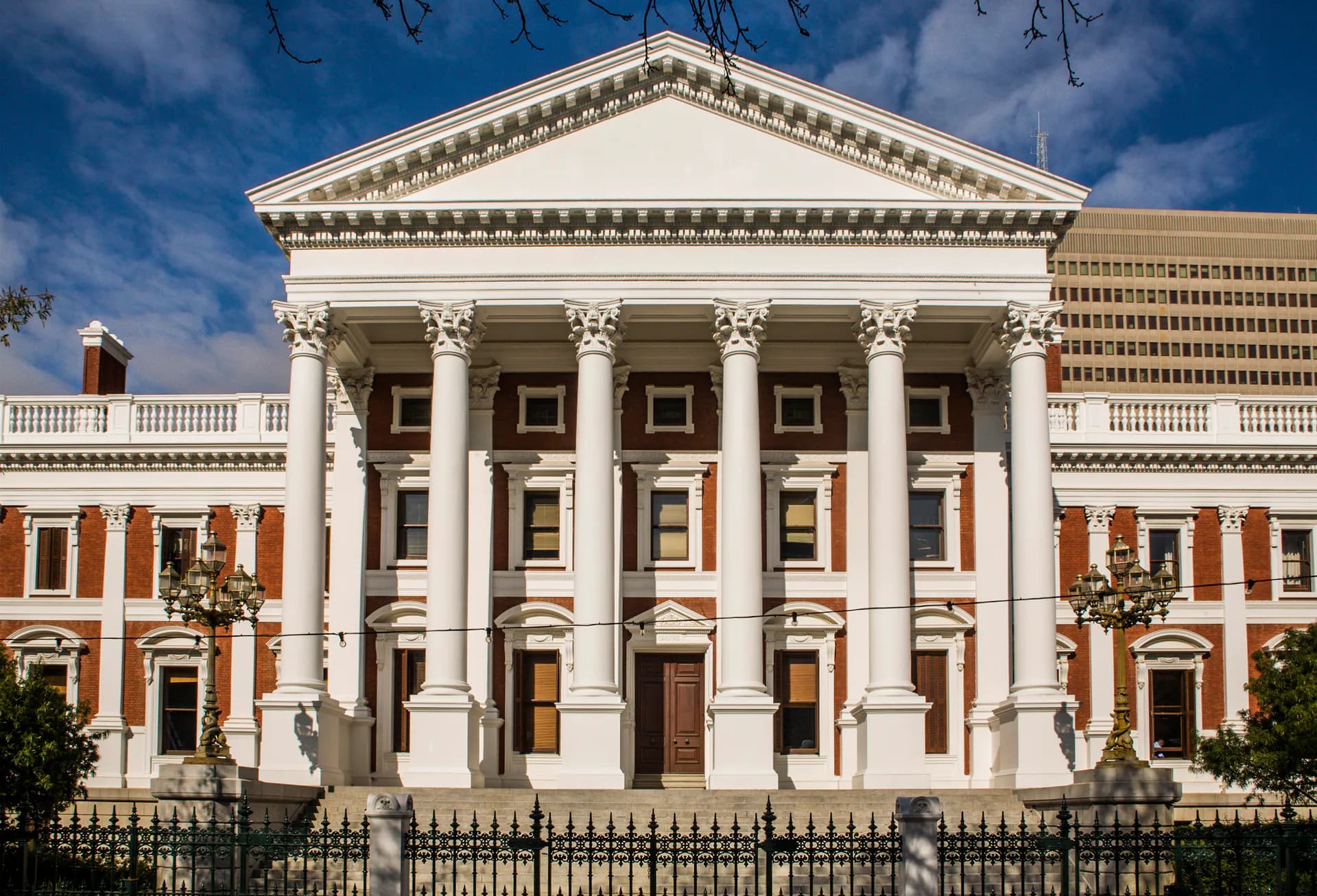
Photo: Raimund Franken/imageBROKER/Newscom
The Corinthian columns of the Houses of Parliament stand against a blue sky in Cape Town, Western Cape, South Africa.
The proposed limits, none of them final, are:
- 750g of cannabis per adult per day to possess in a private or public place
- 750g per adult per day to transport, kept concealed
- 5 cannabis plants per adult at any time
Even after the Department reviews comments, the limits must still go to Parliament for approval before they take effect. No firm date has been announced.
Hemp got a real win
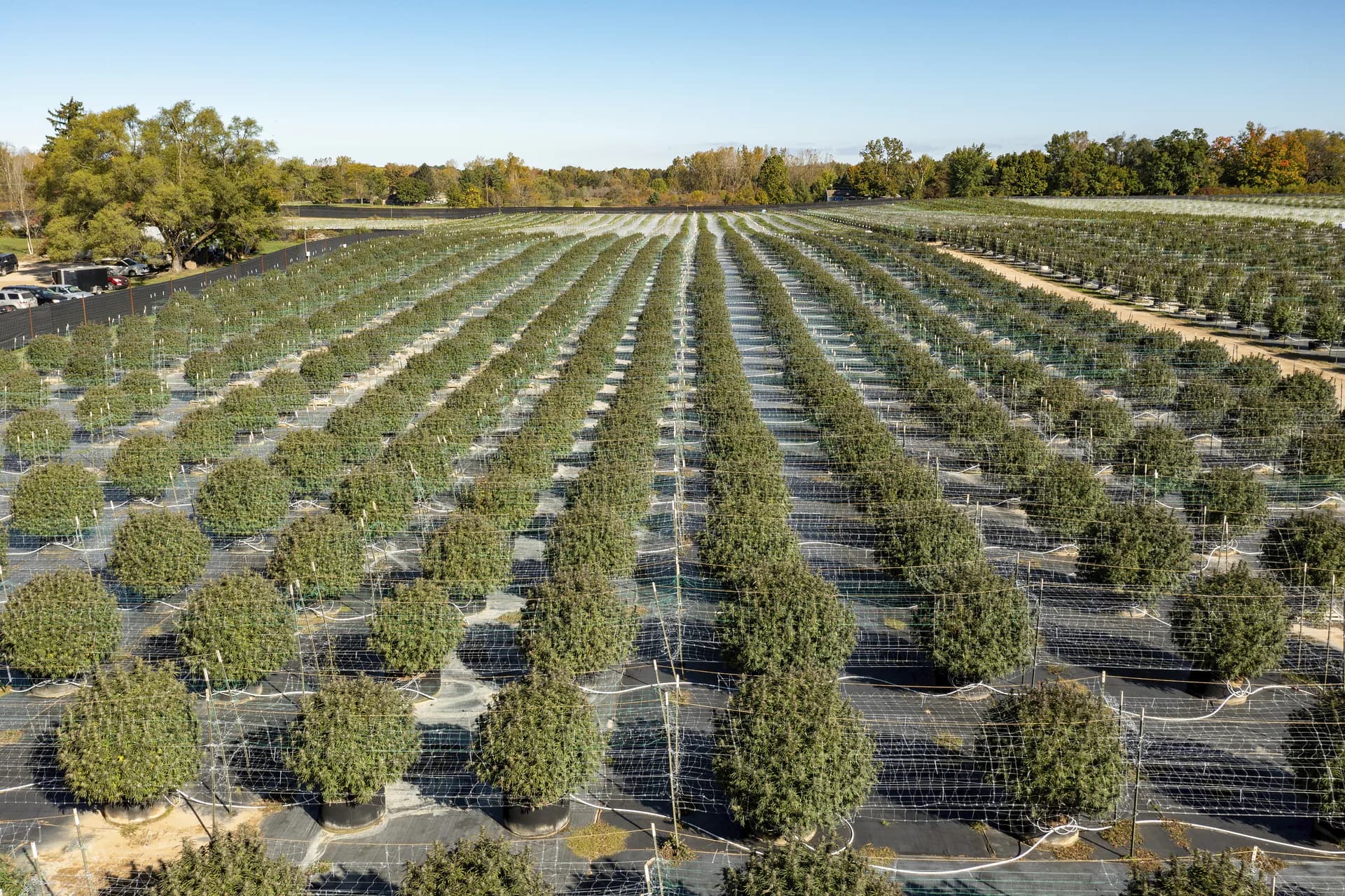
Photo: Jim West/imageBROKER/Newscom
Rows of cannabis plants grow in protective netting at Grasshopper Farms, a large outdoor cannabis grower in Paw Paw, Michigan.
One change did land. On 1 December 2025, a new Plant Improvement Act commenced and raised the legal THC limit for hemp from 0.2% to 2%, the government confirmed.[4]
That tenfold jump makes far more of the crop legal for farmers to grow. The Department of Agriculture has issued more than 2,031 hemp cultivation permits, with 1,725 permits granting cultivation rights across 29,000 hectares.
Industry sees room to grow. A March 2026 study projected hemp could become a R40.4 billion domestic industry by 2040, up from R7.3 billion in 2025.
Ten departments, one tangle
The deeper problem is not opposition. All the relevant departments broadly agree on the goal. The trouble is fragmentation.
Cannabis sits across about 10 departments with overlapping mandates and no single legislative vehicle. The result is confusion that lands on consumers and sellers alike.
The clearest example came in March 2025. Health Minister Aaron Motsoaledi gazetted a blanket ban on cannabis and hemp edibles without public consultation. After backlash, Ramaphosa intervened and the ban was withdrawn in 19 days.
The industry also lacks a unified voice. "There is not a single industry body that represents every facet of the cannabis industry. This makes it virtually impossible to make representation on behalf of the industry," said advocate Simi Pillay-van Graan, CEO of Trikar Enterprise Solutions, who spoke to the Daily Maverick.
What this means for you
If you're an adult in South Africa, your right to use and grow cannabis privately is protected by the Constitution. That has not changed.
What you still cannot do legally is buy or sell it. The shops and clubs operating openly do so in a grey zone, and seizures and raids continued across several provinces through early 2026.
What happens next
The Commercialisation Policy that signals the direction of trade was targeted for Cabinet by April 2026. As of late May 2026, no source had confirmed it was submitted.
The bigger prize is the Overarching Cannabis Bill, the legislation that would create a real licensing system for growing, making, and selling. It is targeted for Parliament by mid-2027 at the earliest.
Most analysts expect full commercial licensing will not be running before 2027 or 2028.
As Botha put it: "The constitutional debate is settled. The policy direction is clear. What remains is delivery."